My essay on Kabir, Varanasi’s weaver-saint, in DNA.
A Hindi translation of the essay appears in Dainik Bhaskar’s edit page.
An earlier blog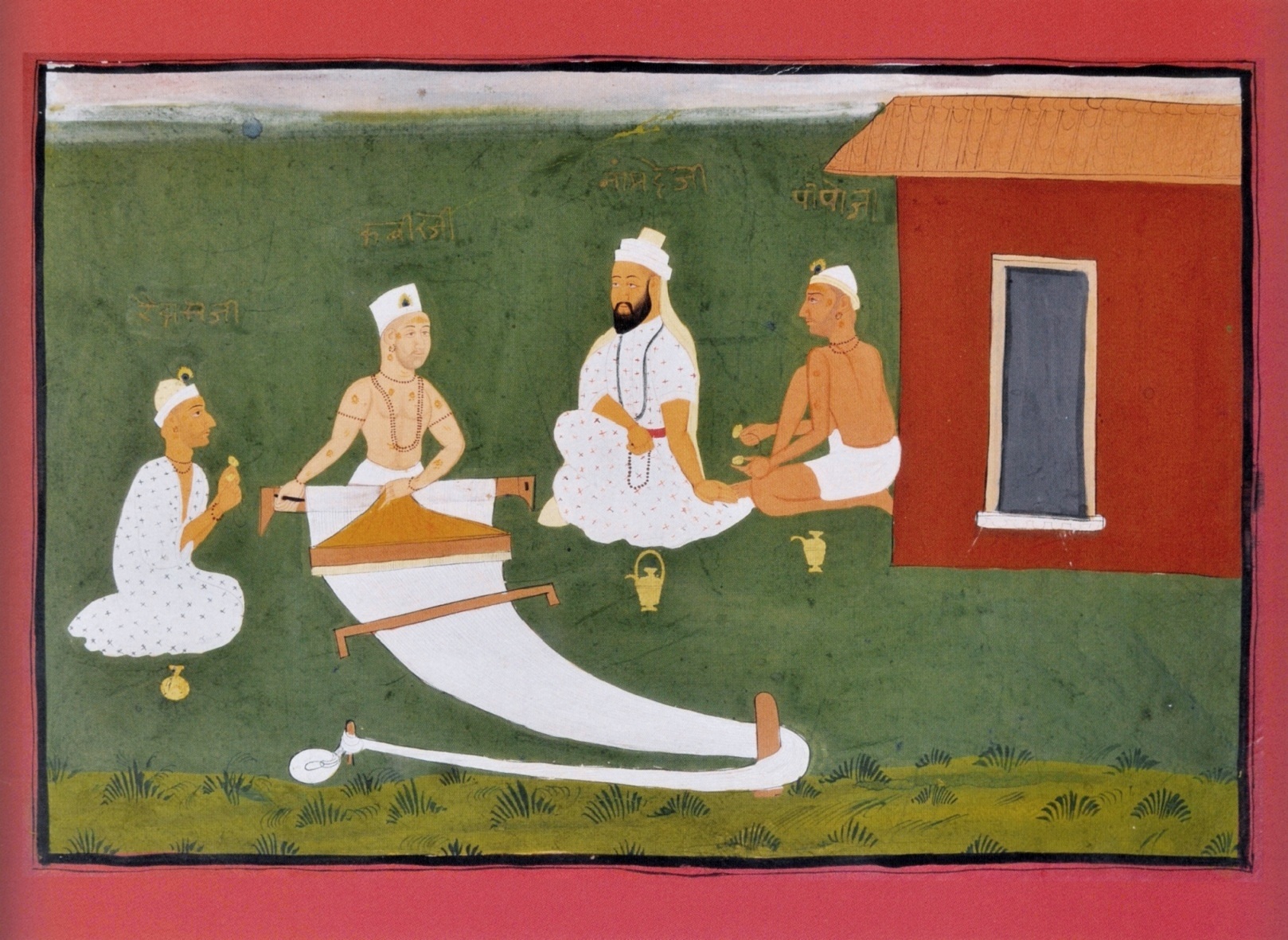 post on Kabir.
My essay on Kabir, Varanasi’s weaver-saint, in DNA.
A Hindi translation of the essay appears in Dainik Bhaskar’s edit page.
An earlier blog post on Kabir.
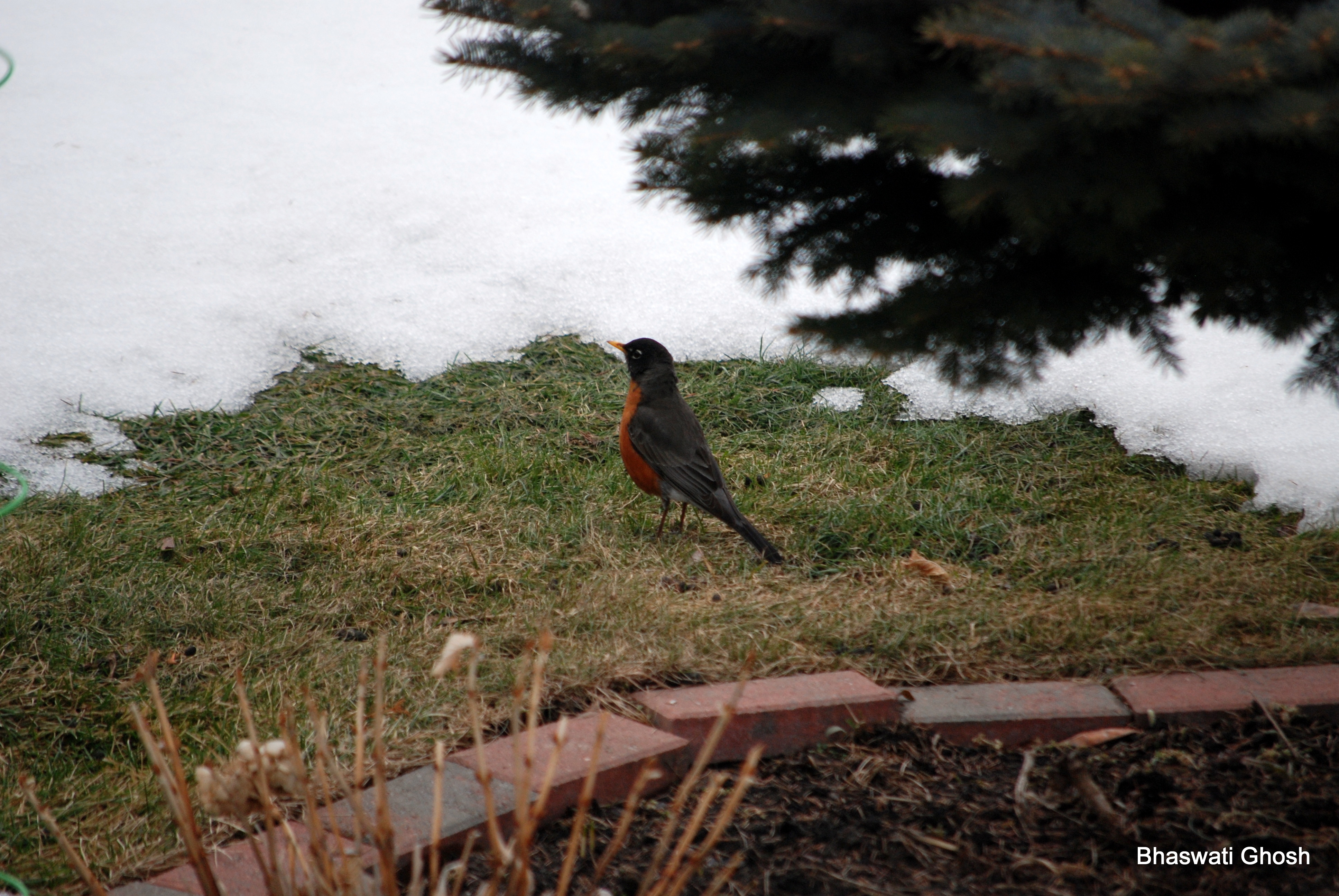
You might hide behind the clouds
and sprinkle snow in place of sun
But the birds, they can see you fine,
come out, there is no place to run.
True, the trees are still all bare
and the ground is missing shades of green,
but birdcalls herald happy tidings
and sing aloud, “Spring is in!”
Seize this day while you can
show us how to make it right
the things you need are easy enough,
tulips, fresh sprigs and sunlight.
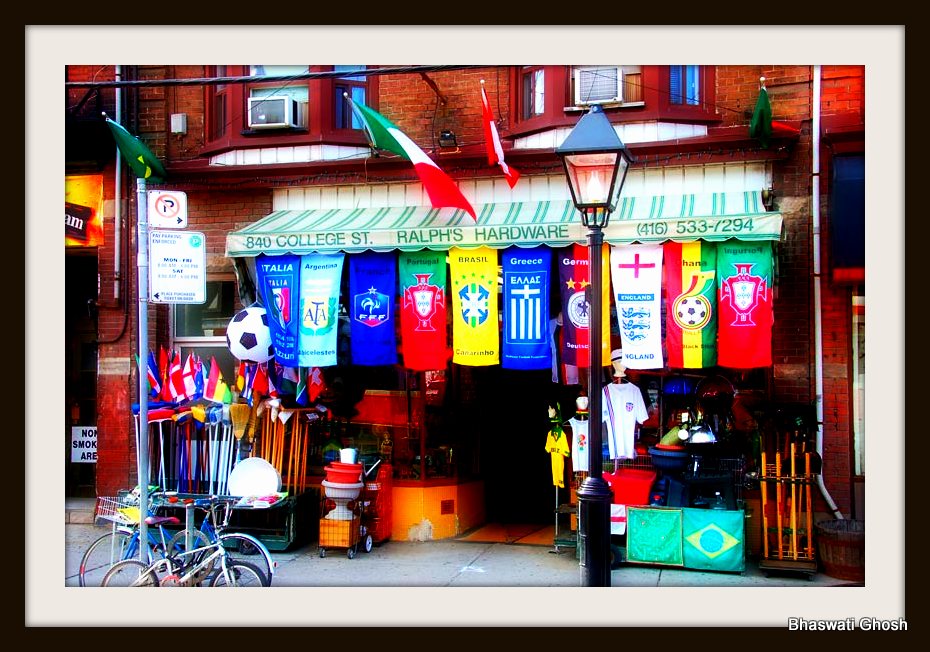 Flags. They had become the latest automotive displays, fluttering atop cars – sedans and pickup trucks, SUVs and smart cars – in crazy abandon. The tiny flags caught my eyes in the summer of 2012, as I drove around Mississauga, the Toronto suburb that was my home. Canada Day, the official holiday to celebrate the unification of three colonies into a single country called Canada, was still nearly a month away. So the sudden show of patriotism puzzled me.
As more flag-bearing cars cruised along in the days to come, I discovered not all sported the red maple leaf of Canada against a snow-white backdrop. If anything, the colours and images of the flags far outnumbered the colours or breeds of the cars that flew them with pride. That’s when the reality – its transience – of Euro Cup struck me. Admittedly a provisional vexillologist for the period of the tournament, I turned to Google with curious search terms – ‘Red and white flag with pigeon,’ and ‘Red and green flag with emblem on top.’
As the Euro soccer mania gained momentum, television news channels in Toronto didn’t have to send correspondents to different European countries to get viewer reactions. Nor did they pick up news feed from international agencies. That’s because Europe itself lives in Toronto – people of European descent form the largest bloc of immigrants in the city. When Italy entered the tournament’s final, the TV channels needed to do little more than to place a camera in Toronto’s Little Italy, where all hell had broken loose as fans erupted to celebrate their home team’s victory over Germany in the semi-finals.
My own move to the land of abundant maple syrup and universal healthcare marked a diagonal shift in more ways than one. From the sun-dappled mountains of San Francisco, California, my husband and I decided to come to Canada as landed immigrants. ‘You will like it in Canada,’ he had reassured the writer in me, while we were still contemplating the move. His observation alluded to his comparison of the US west and east coasts (the latter being closer to Toronto). Occasional work-related trips to certain parts of New York exposed him to the thriving diversity there, manifesting in a rainbow of costumes in the streets, words from different languages drifting into one’s ears as well as the vibrancy of the region’s arts and literature scene.
A year ago, as a potential resident of London, ON, I spent a gorgeous summer afternoon in Victoria Park. My husband was coming to the city for his final round of a job interview, and I tagged along, just in case we didn’t get a chance to visit the city again. Sitting in this expansive park that afternoon, I contemplated what it would be like to live in London. As I complete a year in the forest city, here are my impressions from a summer ago.

A children’s festival is in progress in Victoria Park. I sit on a bench and see squirrels and birds engaging in mini battles over morsels.
Squirrels scamper in ceaseless motion–climbing up and down trees, scurrying across the grass, pausing in wonderment for a few seconds before taking off again.
Dogs, kids in strollers enjoy free walks, rides.
Church bells ring; lunch-goers emerge from offices, heading to big and small eateries to satiate the hunger god.
A man sprawls on the grass, reading a newspaper.
Beside me, on the bench, the pages of a national daily flutter in midsummer’s breeze, letting go of the heaviness of yesterday’s news.
Under a tree, a girl sits alone, ear-phones plugged into her natural audio sockets.
I turn behind and find a brown squirrel looking at me intently.
A young couple sleeps on the grass, embracing each other, oblivious of the world around them.
By Bhaswati Ghosh
An excerpt from a short story, published in the latest issue of Stealing Time (a literary magazine for parents), themed Relations. To read the full story, purchase the issue here. As she hurried for her train, a blast of snow slapped her cheeks, reminding Aruna of when she had landed at Toronto’s Pearson International Airport for the first time. The frigidity had made her question her decision to come to Canada. It was too late, she had reminded herself.
When she landed in this haven for immigrants nine years ago, Aruna had been nervous. At their parting, her husband Raghu assured her, “It’s only a matter of a few months, maximum a year, Aru. I will be there after that.”
But those few months had multiplied into as many as it took to make nine years. Years that taught Aruna that time was as slippery as her husband’s promise to join her in Canada. Between trying to make a living and raising twelve-year-old Vishnu, she had aged by two decades instead of one. Looking at the mirror one day, Aruna tried to make sense of how it turned out to be like this—three lives that were supposed to make a family now fragmented like left-over noodle strands on a diner’s plate. Those early years they had spent together contained no suggestion of the later distancing. Her husband had seemed caring and involved, if excessively guided by his quest for a “good life.”
Now, snow and coffee — once alien to her– had become second nature to Aruna. And her good life had little to do with what her husband had imagined. She reflected on how time changes a person’s inner landscape in accordance with the outer one.
The train sped past white houses, streets, trees. Aruna planted her cheek, covered with the woolen scarf she’d wrapped around her neck, to the window. The thickly snow-decked walls that vanished and re-appeared on the horizon were home. She rubbed her glove-clad hands and sipped coffee from the paper cup that danced slightly to the train’s motion on a tray table in front of her.
Arriving in the province, she had felt confident of getting a job. Her many years as a lifestyle journalist in India couldn’t have been for nothing. So she consumed herself with the other variables—managing her son’s education, getting a health card made, securing a driver’s licence, and all the other minutia of moving to a new place.
But she rented a damp basement apartment and managed the other details with ease. Only the job eluded her.
In three weeks, the city had turned from an indifferent host into an unforgiving master. The city demanded labour from Aruna in order to grant her an extended stay. A conversation with her widowed landlady made the prospects look bleaker than the foggy winter mornings…
Reader’s reviews:
The story very well opens the eyes of ‘outsiders’ in India etc., who look longingly towards the West as a utopia, to its sordid reality. The life of the immigrant, the brutal self reliance it has to fall back on in an unknown land, is nicely stated. In a way the story shows how non self reliant we are in India with all our relatives ready to absorb the shocks of our life and to make it more tolerable; in this sense, it is to the essentially relations-bound Indian mind to which the story speaks. ~ Prathap Kamath Your story brings out both the struggle and the elation after a successful struggle very beautifully. At first, it is quite unbelievable why Aruna was putting up with Raghu. Couldn’t she just pack up and start life afresh? And then it dawned upon me that life wasn’t so easy. Breaking all ties isn’t easy at all. And this difficult life is what you have described so well in this story. …Just the feeling that Canada is so far away from home – and Raghu, in India – and is so, so cold makes this entire struggle so sublime and so worth it. Congrats to you for making some kind of a comparative study between the bleakness of Canada’s climate and the bleakness within Aruna to more beautifully sketch her struggle.Another good thing about the story is its length. You haven’t wasted words and sentences. ~ Hansda Sowvendra ShekharWind rips through
the city,
shredding silence
into nameless
shards.
Tall glass buildings
gather the echoes.
Freezing rain cloaks
the city in
a haze.
Crystal droplets
remain suspended
like sticky sorrow.
And then, rain
pours down.
Washing away sleet,
the smell of barbeque sauce,
arresting speed.
The city retreats
under umbrellas
shivering in their
coloured skins.
“Let my love like sunlight surround you
and give you illumined freedom.” ~ Rabindranath Tagore
Sunshine isn’t an easy paramour.
In my hometown,
it spills over in
volcanic excess–
scorching land,
human bodies,
cattle and crops,
even as it gently
rocks the hills
with its undulating dance
on terraced tea gardens.
Yet in this frosty city,
it plays hard to get.
Deaf to pleas,
appearing on whim,
the hometown beau
avenges yesterday’s curses
by spurning today’s
advances.
Sunshine is a tricky lover.
Also see Alien Winter — I
Sun erases snow
wind howls
winter beseeches.
The church spire
stands mute,
unmoved,
cold.
The wind pauses
its howl,
lunchtime beckons.
School children run
to grab a
windfall of leaves.
Snow motes swirl
ruffling the air’s hair,
the earth’s an eager
bosom.
Children conjure up
castles, snowmen.
The wind screams
tearing through
flags, bare trees
windows
and a sheet of
congealed memory,
unfreezing on the
surfacce–
a foggy morning in
my hometown
half a world
away.
Note: This personal essay appears in Cafe Dissensus
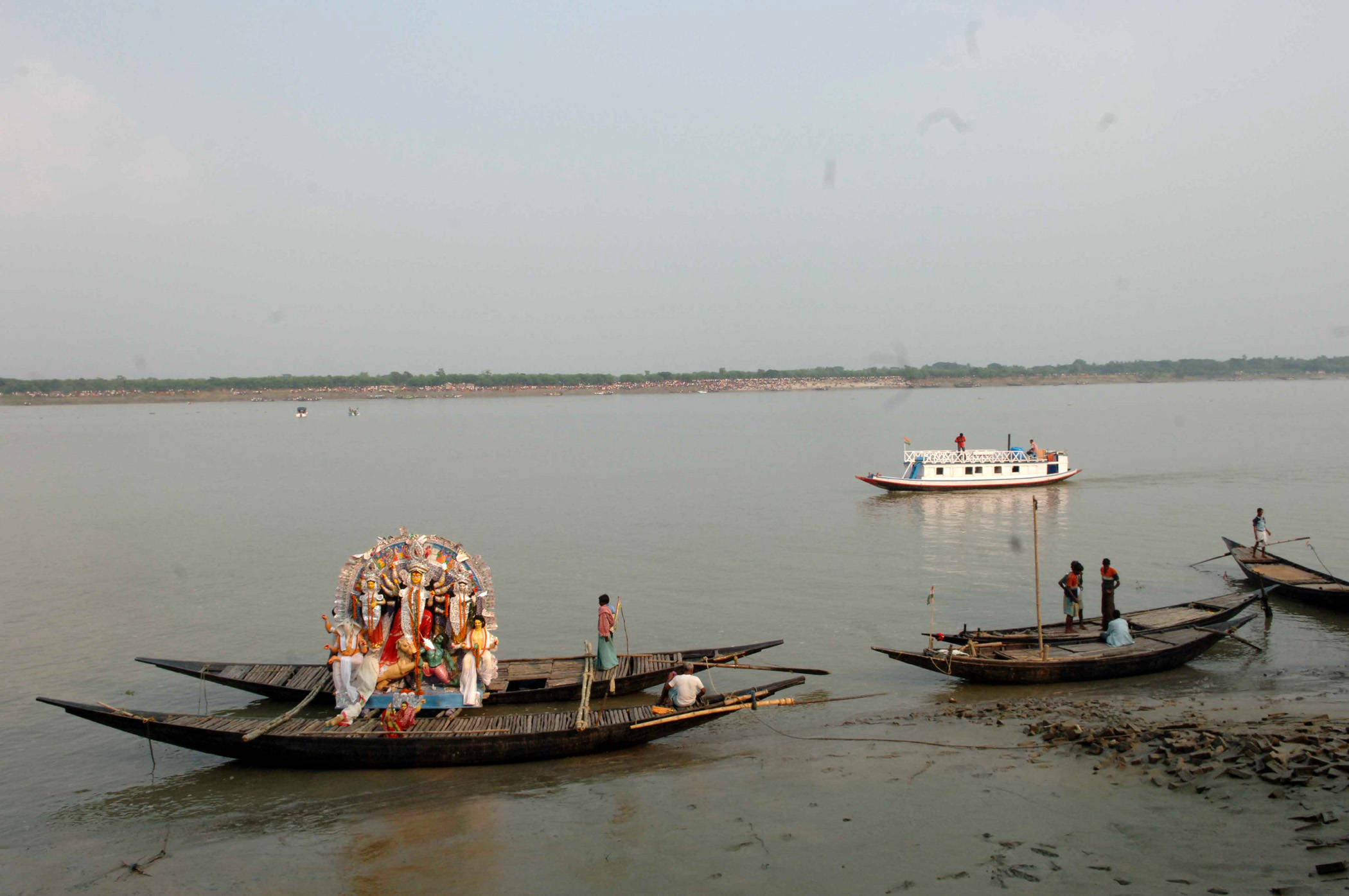
A group of children–between six to eight years in age–sat on a dusty rug on the ground with drawing sheets on boards before them. After drawing out scenes depicting one of the three theme choices provided to them, they furiously pushed crayons over the penciled sketches. My brother was one of the contestants of this on-the-spot- painting competition, interestingly called “boshey anko protijogita” in Bengali, literally meaning sit-and-draw contest. He drew a Christmas scene, having chosen the theme, “Your favourite festival.” A couple of hours later, when the results were out, he had real reason to celebrate– he had won the first prize.
There was nothing unusual about this except his choice of festival; the contest was part of a Durga puja celebration. Given that most of the festival entries depicted the ten-armed goddess and her rejoicing devotees and a few portrayed Diwali, which would approach in less than a month, the judges must have been either too brave or too liberal to adjudge a Christmas image as the best entry.
Was this because the venue of the puja and therefore the contest was outside mainland Bengal, in Delhi? I can’t really tell, for I was born and raised in what bonafide Bengalis call probaash–a sentiment-laced word for foreign land.
Photo source: Hinduism.about.com
A series on my experiences as an immigrant to Canada
It’s my first visit to the doctor’s office in my new city. The pain in my right leg is nagging to the point of being obstinate. Right at the entrance, next to the reception window, a sign says “If you are rude to my staff, I won’t see you today.” That’s not a very friendly doctor, I whisper to my husband, who is accompanying me to lend moral support. After the initial wait time (about 15 minutes), my name is called, and the clinic assistant checks my blood pressure, a routine exercise. Then begins the wait for the doctor. A good 20 minutes go by, until she knocks the room before entering it.

After the initial pleasantries, the doctor asks me if I speak Hindi. I nod yes.
I tell her that my pain worsens upon standing on any hard surface for a while. She asks if I have to stand in the kitchen a lot.
“Yes,” I say.
“There’s a particular type of mat that has a cushioning effect. Place that in your kitchen,” she tells me, even suggesting the store from where to get it.
After writing a prescription for anti-inflammatory medication, the doctor returns to the thread she had left off with her reference to Hindi.
“Where in India are you from?” She asks.
“Delhi,” I say, hastening to add that my husband is a Sikh, from Punjab.
“We are from Lahore and speak only Punjabi at home.” She says, making it a point to let me know that the Punjabi she speaks is “very similar to what Sikhs speak.” That’s because she belongs to the jatt caste, one of the many who were converted to Islam, she informs.
She ends the (very friendly) conversation by recommending the cushioning mats again. “I too have this pain and always use the mats whenever I have a daawat at home and have to stand in the kitchen for long.”
It is technically India’s Independence Day. Two women from opposite sides of a land split into two in a cleaving that saw insane bloodshed share slices of history and culture over a medical visit.
And, they share insights on lessening pain.
READ ALL IMMIGRANT’S POSTCARDS HERE
 Bhaswati Ghosh