Afternoons in Bengal Countryside ~ Rabindranath Tagore

                                    Shazadpur,
                                    September 5, 1894

After spending a long time on the boat, it feels wonderful to have suddenly arrived at the Shazadpur house. Light and air streams in unrestrained through the large windows and doors — wherever I look, I see green branches of trees and hear bird call. The moment I step out to the southern verandah, all the veins of my brain fill with the fragrance of Kamini flowers. All of a sudden I realize a hunger lurked within me for an expansive sky — being here has fulfilled it completely.

I am the sole master of four large rooms — I sit with all the doors open. The inspiration and motivation that I receive here to write is unlike that in any other place. A living essence of the outside world enters me unhindered through the open doors — the light and the sky and the air and the sounds and the smells and the waves of green mingle with the passions of my mind and create innumerable stories. The afternoons here, in particular, have a deep spell. The sun’s heat, the silence, the quiet, calls of birds, especially the crow’s and an extended period of leisure make me pensive and eager.

Shantiniketan 036

I don’t know why I have a feeling that Arabian stories are made of afternoons like these brimming with golden sunshine. Those Persian and Arabian lands of Damascus, Samarkand, Bukhara…those grape clusters, rose gardens, the nightingale’s songs, Shiraz wines, desert paths, rows of camels, horse-riding wayfarers, a clear source of water amidst a thick curtain of date trees…cities with narrow royal lanes festooned with awnings, a shopkeeper wearing a turban and comfortable, loose-fitting clothes — selling melons and mewa at the end of the street…a massive royal palace by the roadside with incense smell wafting out of it, a huge mattress covered with kimkhwāb placed by the window…Amina, Zubeidi and Sufi in zari footwear, wide pajamas and colourful corsets as they inhale smoke rising off a curled hubble-bubble near their feet, at the door, a habshi dressed in flashy clothes stands guard…and in this mysterious, unfamiliar faraway land, in a wealth-filled, spectacular yet eerie royal palace, thousands of stories — possible and impossible — are being created out of the laughter and tears, hopes and anxieties of humans.

These afternoons I spend in Shazadpur are fabled afternoons. I remember writing the story “Postmaster” sitting at the table fully engrossed right at this hour. As I wrote, the light around me, the breeze and the shivering tree branches all added their language to it. There are few joys that come close to creating something close to one’s heart by being immersed in one’s surroundings. This morning I became inclined to write something on limericks and could become thoroughly involved in it, which brought me immense delight. Like the world of clouds, limericks make for a free country unbounded by rules and laws. Unfortunately, the land that rules and laws dominate is never far behind to follow one. As I wrote, a sudden insurrection of officials stormed in, blowing to dust my land of clouds.

When that ended, it was time to eat. There’s nothing more sloth-inducing than eating a full meal in the afternoon. It overwhelms one’s imagination and the spirit’s higher callings. Bengalis are unable to enjoy the deep intrinsic beauty of an afternoon because of their predilection to eat sumptuous meals at that time and follow that by closing the door to smoke on tobacco and slide into a satiating slumber. This is what makes them hale and hearty. But nowhere do quiet, desolate afternoons spread over in the sweeping, silent manner in which they do over Bengal’s uniformly limitless, plain crop fields.

Afternoons like these have haunted me since childhood. Back then, no one used to be in the outer third-storey quarters; I alone sat in the angular couch with the door wide open and a warm breeze blowing in. My entire day went by in the company of vivid imagination and unspeakable desires.

Satara
September 10, 1894

Translation: Bhaswati Ghosh

Leading Ordinary Lives / Kunwar Narayan

Kunwar Narayan
(Translation mine)

I know
I can’t change the world,
Or win a fight against it.

It’s possible that I
Become a martyr fighting
And beyond that earn a martyr’s
Tomb or an artist’s fame…

But being a martyr
Is a different game altogether

There are people who despite
Leading entirely ordinary lives
Have been known to become
Martyrs, quietly.

मामूली ज़िन्दगी जीते हुए / कुंवर नारायण

जानता हूँ कि मैं
दुनिया को बदल नहीं सकता,
न लड़ कर
उससे जीत ही सकता हूँ

हाँ लड़ते-लड़ते शहीद हो सकता हूँ
और उससे आगे
एक शहीद का मकबरा
या एक अदाकार की तरह मशहूर…

लेकिन शहीद होना
एक बिलकुल फ़र्क तरह का मामला है

बिलकुल मामूली ज़िन्दगी जीते हुए भी
लोग चुपचाप शहीद होते देखे गए हैं

A People Ravaged: Peeling off the Many Layers of Partition Trauma

First published in The Wire

Literature, Gender, and the Trauma of Partition: The Paradox of Independence
Debali Mookerjea-Leonard
Routledge, Taylor & Francis Group, 2017

In writing my first novel, whose protagonist is a young refugee woman from East Pakistan, I employed the device of coincidence to achieve a happy ending. Doing so wasn’t a sudden rush on my part to end what had become a protracted writing project but a well thought-out conclusion. It was not to be. When they read it, two of my trusted beta readers quashed it summarily, citing it as lazy and escapist. Even though incredible incidents can happen in real life, one of them advised, in a work of fiction, coincidences are hard to pull off convincingly.

An incident Debali Mookerjea-Leonard mentions in the preface to Literature, Gender and the Trauma of Partition: The Paradox of Independence starkly bears out this paradox.

Shortly after the All India Muslim League’s call for Direct Action in Calcutta in 1946, the author’s grandfather was stranded in Howrah station as public transport had been suspended in the wake of the sectarian clashes. He eventually got a ride from a kind Muslim family who had a private car, but had to climb on the footboard as the vehicle was full. To ensure his safety, he was given a flag of the Muslim League and advised to shout “Pakistan Zindabad” when passing through Muslim neighbourhoods. He did, and reached his home safely.

The insanity that gripped the subcontinent a year later when India was partitioned has been arduously chronicled in historical archives. In the privileging of journalistic reportage and record-keeping, personal histories surrounding the traumatic event haven’t received much attention until recently. The initiatives of Urvashi Butalia, Ritu Menon, Kamla Bhasin, and Jashodhara Bagchi, among others come to mind.

Mookerjea-Leonard’s book is an important intervention in this regard, not only because of its meticulous research and compelling arguments but because it sits in that nebulous middle – a no man’s land if you will – of fact and fiction. The author examines with incisive rigour fictional works on Partition and juxtaposes them against factual information and recent recordings of oral histories. As someone not directly affected by the event, hers is a lens that is both objective and earnest.

The works discussed in Literature, Gender and the Trauma of Partition are mostly from Bengal, which the author calls the “neglected shelves” of Bengali literature, written by writers from both sides of the Radcliffe divide. As she mentions in the Preface, this book is her tribute to her city, Calcutta. It is also a conscious effort to shine a light on the sufferings of those at the eastern end of the divide, as the tragedy of Partition in Bengal has been either underrepresented or misrepresented when compared to Partition in Punjab. This could well be attributed to, as Mookerjea-Leonard is cognisant of, the predominant and recurrent theme ofdisplacement in the east as opposed to that of horrific violence in the west.

Read the rest in The Wire.

The Wolf’s Eyes are Red/Sarveshwar Dayal Saxena

(Translation: Bhaswati Ghosh)

The wolf’s eyes are bloodshot.
Glare at him
Until your eyes
Turn red, too.
What other choice do you have
When the wolf is in front of you?

भेड़िए की आंखें सुर्ख हैं / सर्वेश्वरदयाल सक्सेना

भेड़िए की आंखें सुर्ख हैं।
उसे तबतक घूरो
जब तक तुम्हारी आंखें
सुर्ख न हो जाएं।
और तुम कर भी क्या सकते हो
जब वह तुम्हारे सामने हो?

Deshgaan' – Janata Weekly

Sarveshwar Dayal Saxena (1927-1983)

Book Review: Love and the Turning Seasons – India’s Poetry of Spiritual & Erotic Longing

I recently had the opportunity tot read “Love and the Turning Seasons,” an exquisite collection of bhakti poetry in translation from Aleph. I wrote about it in Kitaab.

Love and the Turning Seasons

Title: Love and the Turning Seasons – India’s Poetry of Spiritual & Erotic Longing
Edited by Andrew Schelling
Publisher: Aleph
Pages: 294
Price: ₹399

I left shame behind,

took as an ornament
the mockery of local folk.
Unswerving, I lost my cleverness
in the bewilderment of ecstasy.

— Manikkavacakar (9thcentury), Tr. A.K. Ramanujan

In a lover’s enraptured world, love is the breeze that strips one, quite simply, of the garment of shame. In reading Love and the Turning Seasons, the newest offering from Aleph Classics, a series that aims to bring new translations of India’s literary heritage, the reader is swept in that denuding breeze. Edited by Andrew Schelling, the collection of poems bears the slightly beguiling subtitle, India’s Poetry of Spiritual & Erotic Longing. I say beguiling because it would seem like the poems could fall in either category – spiritual or erotic. In reality, as Manikkavacakar, the ninth-century Shiva devotee tells us, the line between the two states is as diaphanous as air itself. For, in the “bewilderment of ecstasy”, who is left to distinguish between the flesh and the spirit? This seamless merging of the body and the soul is at the heart of this anthology of bhakti poetry, translated by various poets and literary translators.

Love and the Turning Seasons alights upon the reader as a songbird to take her across time and space – from the sixth century (barring the Isa Upanishad) right up to the twentieth, on an anticlockwise path beginning in the south of India and ending in the east. Despite the multiplicity of expressions of the bhaktas or poet-minstrels, informed as they were by specific cultural and regional parlance, what unifies them is their rejection of societal norms in their unwavering quest for the divine. These were among the first true radicals in the Indian context, repudiating, with delightful contempt, tradition and convention. Gender-bending, caste-subverting, these individuals lived and (even) died on their own terms and sang of the divine with ariose abandonment. As Lal Ded, another Shiva devotee from Kashmir said,

Who instructed you, O Brahmin,
to cut this sheep’s throat—
to placate a lifeless stone?

— Lal Ded (early 1300s), Tr. Andrew Schelling


The Sanskrit word bhakti means devotion and has come to connote intense, even blind idolatry, and in these troublingly skewed times, bhakta (devotee) has become a bad word, an uncomplimentary term for blind followers of certain ideologies, political or otherwise. As the anthology affirms through its diverse voices, the bhakti poets were anything but blind in their devotion.

Read the rest in Kitaab.


The Crop by Sarveshwar Dayal Saxena

Translation: Bhaswati Ghosh

Even if I were to
hold the pen
like a plow,
a spade
or a trowel,
I wouldn’t be able to
harvest the crop.

I can only prepare the soil.
A few rare ones will sow the seeds of revolution
and nourish my toil,
carrying my journey forward.

Tomorrow, when I’m no longer there,
the crop will grow and flourish,
ripple in the breeze.
My spirit, a flush of golden sunshine
Will touch the feet
of those who planted the seeds
Those who harvest it will sow more seeds
I shall only sleep buried in the earth underneath.

Image result for crop

फसल / सर्वेश्वरदयाल सक्सेना

हल की तरह
कुदाल की तरह
या खुरपी की तरह
पकड़ भी लूँ कलम तो
फिर भी फसल काटने
मिलेगी नहीं हम को ।

हम तो ज़मीन ही तैयार कर पायेंगे
क्रांतिबीज बोने कुछ बिरले ही आयेंगे
हरा-भरा वही करेंगें मेरे श्रम को
सिलसिला मिलेगा आगे मेरे क्रम को ।

कल जो भी फसल उगेगी, लहलहाएगी
मेरे ना रहने पर भी
हवा से इठलाएगी
तब मेरी आत्मा सुनहरी धूप बन बरसेगी
जिन्होने बीज बोए थे
उन्हीं के चरण परसेगी
काटेंगे उसे जो फिर वो ही उसे बोएंगे
हम तो कहीं धरती के नीचे दबे सोयेंगे ।

Patch of sky for hopes to fly

First published in DNA.

While in middle school, my brother and I would often press our grandmother to tell us a story. Not any story, but a particular one from One Thousand and One Nights. I don’t remember the details, except it was about a clever royal minister. But it wasn’t really the content that pulled us back to this tale; it was the way our grandma narrated it — modulating her voice, colouring the details with her facial expressions. This is the essence of oral storytelling — the capturing and relaying of characters, places, scenes through the unique lens and voice of each individual storyteller. Given how difficult it is to transfer the drama and verve of the spoken tradition to print, the authors of Speak Bird, Speak Again— a collection of Palestinian folktales — have done a worthy job of conveying that flavour.

In the late 1970s, two Palestinian scholars, Ibrahim Muhawi and Sharif Kanaana, set out to collect Arab folktales from Galilee, Gaza and the West Bank. Their search resulted in the book comprising 45 such tales. The storytellers were mostly women. “The most common setting for taletelling was the small family gathering, consisting of two or three mothers from a single extended family and their children…” The stories were usually told after supper during long winter evenings when field work was at its minimum and folks liked to huddle indoors. To make the story — usually fantastical — more accessible, the teller would often compare characters from a story to someone in the neigbhourhood.

The community, then, is the natural pivot around which these entertaining stories turn, and sometimes twist. Of course, imaginary flourish abounds in the tales, but never without the context of one’s immediate bearings. And cultural parallels with our own South Asian community life are striking. There are wedding processions in which the couple’s relatives and friends dress in finery and sing and dance in the street. There is even the practice of a girl choosing her mate by throwing an apple or handkerchief over his head that is derived from the Indian tradition of swayamvara.

Neighbours know each other for generations and come together to celebrate and grieve as well as to borrow and lend items of utility for hosting guests. “Because they were inviting the vizier, they borrowed a mattress from one neighbour, a cushion from another, and plates and cutlery from others.” Sounds similar to our neighbour lady knocking on our door when she ran out of sugar or me knocking on hers to borrow some ice, for we had no fridge.

Food, of course, is at the centre of this hospitality. Cabbage rolls stuffed with minced lamb, ghee, rice and spices; the simple fare of leavened bread, yogurt, olives and fresh vegetables; Palestine’s national dish, za’tar — a condiment made by grinding together herbs, roasted wheat and garbanzo beans; or the poor farmer’s lentil soup add as much zest to the region’s folktales as they did to its primarily agrarian society. In the story, Sahin — a vizier’s clever daughter — steals food — roasted rabbits, partridges, gazelles — prepared by a young man from right under his nose to share with her girlfriends day after day, leaving his hardworking brothers to manage their supper cooked with leftover ingredients.

That the creators of these tales weren’t shy of introducing atypical female characters have made the stories lively and real. Despite the region’s deeply-entrenched patriarchal system, we meet the clever daughter of the vizier in Sahin and in Soqak Boqak, a king’s wife who mounts a horse as she goes in search of a bride who fits her son’s choice and description. There are angelic women — indulgent mothers and motherly sisters, loving wives and affectionate daughters — and there are regular, everyday women — possessive mothers and jealous sisters, selfish wives and cunning daughters.

“Now, the daughter of the minister was something of a devil. She asked her father, if anyone should come asking for her hand, not to give his consent before letting her know.” [Sahin]

In these stories from Palestine, the clever and the beautiful, the devilish and the pitiable merrily join the supernatural — jinns, ghouls, and residents of the netherworld. The resulting whirl sweeps the listener/reader to a realm suspended between what is and what-you-wish-could or would-not, be. Seemingly magical, which by implication is unreal, this dimension subtly shines a light on the underdog and even breaks stereotypes. Half-a-halfling, the crippled son of a king, despite being ridiculed and humiliated all his life, comes out a winner in the end because of his intelligence and compassion. And ghouls and ghoules, who appear (and disappear) constantly, aren’t always ghoulish in their deportment — depending on how one treats them, they can be benevolent or beastly.

In The Green Bird, my favourite story of the collection and the one from which the book derives its title, the love of a sister for her brother is amplified by the poignancy of the brother’s death at the hands of their stepmother and the sister burying his bones, which help him turn into a bird who reveals to the world the stepmother’s atrocities and delivers justice in the end.

Everyday occurrences in the world we inhabit are sometimes more bizarre than what a fabulist can ever spin into a story, and the implicit allegory of these Palestinian folktales can’t be overlooked. In a recent episode of container politics, the leader of a political party in Pakistan and his followers protested against the current regime from a “container” — a luxury bomb and bullet-proof truck furnished with beds, washrooms and air-conditioners.

When I read a report about the container being fired upon, I recalled a scene from Half-a-Halfling. In the scene, the crippled young hero is on a mission to defeat a ghoule. Given how greedy the latter is, he approaches her with a huge box filled with halvah. She asks him the price of the dessert and keeps buying and eating it, unable to satiate her appetite. That’s when Half-a-Halfling suggests she get inside the box so she could have the whole container to herself. The ghoule’s greed precludes her from understanding the risk associated with this, and she jumps inside the box. As she busies herself with devouring the rest of the halvah, Half-a-Halfling brings her to his village and tells the villagers to alight the box. Greed, thus, costs the ghoule her life.

Screens and gizmos of varied shapes and colours have now replaced the playground in many developed and developing countries. Folktales and their telling might appear obsolete. Or maybe not. A friend told me how, on a recent trip to Latin America, her five-year-old daughter was shocked to discover that a girl younger than her had no playroom with toys stacked up to the ceiling. “That’s all they have,” my friend told her when they visited the other girl’s jammed-but-toy-less two-room house, packing eight family members.

For many Palestinian children, a proper house — even a crammed two-room one — could be a luxury. Listening to stories — with fantastical twists and happy culminations — might be the only sky on which their hopes can fly.

Image source: Wiki

Cutting Through Mountains to Build a Statue

An excerpt from Somendranath Bandyopadhyay’s My Days with Ramkinkar Baij where the sculptor and painter shares with the author his experience of sculpting the Yaksha-Yakshi statues that stand outside the central bank in New Delhi.

Translated by Bhaswati Ghosh

Kinkarda’s innocence amuses me. He is oblivious to the gigantic cost of cutting through a mountain. I know that once he had to pay the price for this inexperience. Recalling the incident I say, ‘You did do a major work by cutting stones later, though. In front of New Delhi’s Reserve Bank.’

‘Yes. The Reserve Bank governor had provided me with a lot of conveniences. Their only request was “Do something”.

‘I made Yaksha-Yakshi. Many people call it ‘Kuber’. Arre, why should it be Kuber? It’s not Kuber. It is Yaksha. They aren’t even husband and wife, but brother and sister. Yakshi. Had it been the wife, she would have been called Yakshini.

‘In Bharatpur and Sanchi, I had seen ancient Yaksha-Yakshi statues. Their limbs were broken. I also studied a few of those at the Patna Museum.

Yakshi holds the territory of land and agriculture. And Yaksha reigns over wealth. Kuber is above them. You must have read Coomaraswamy’s book; that contains everything.

‘You might have noticed that I’ve placed a discus in my sculpture’s hand. That was my idea. Addition. It’s a modern-day machine and is symbolic of industry. I got the idea for the flower and paddy cluster in Yakshi’s hand from the old statues. You know what Yaksha held in the ancient statues? A mallet. And a bag in the left hand. I have placed that too. Money bag. My Yaksha is completely modern – with a machine and a money bag. And is it possible to have the money bag and not have a fat belly? Yakshas do have protruding bellies, my dear. You must have seen ancient Yaksha statues. My Yaksha has it too.’

Read the rest in The Wire.


Who is Abani, at whose house, and why is he even there?

[In the words of Brajendranath Mandal]
Samir Sengupta
Translated from the Bangla by
Bhaswati Ghosh
Originally published in Parabaas

Half-dissolved, I slide into sleep
Amid the heart’s distant pain.
Suddenly, the night rattles my door,
“Abani, are you home?”

[‘Abani, are you home’ by Shakti Chattopadhyay]

I never got to know Shakti Chattopadhyay in person. Until the other day, I didn’t even know who he was. I’m a villager and make my living by growing potatoes and gourds. This year I planted tomatoes and chili peppers — the tomatoes did really well, I got about two and a half quintals per katha (720 square feet). Honestly, I didn’t expect such a good yield. Although it didn’t bring me a good price in the end, I still recovered the cost and even made a bit of profit.

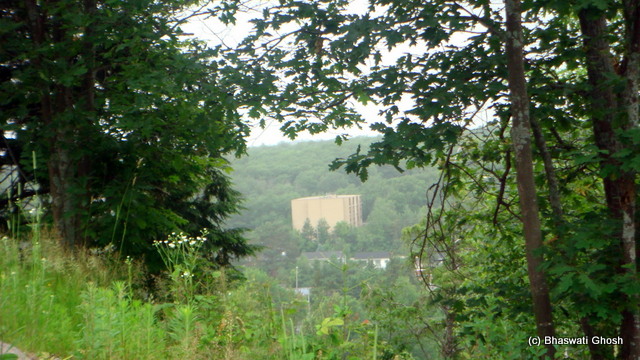
Kolkata is far from our village. You have to first walk nearly four kilometers through the fields. Despite many efforts, no roads have come to the village. Newly-wed brides have to enter the village on foot; the sick have to be carried to the hospital on cots like the dead to a crematorium. Even though our village is in the Hooghly district, it’s on its northern edge, bordering Bardhaman. As I was saying—see, this losing track of what I was talking about is a sign of my getting old—after walking the four kilometers, you’d better sit down at a teashop to catch your breath.

Next, you need to get onto a bus that’s usually so packed that even the roof is crammed with people and luggage. If you can somehow stay inside the bus by hanging onto an overhead rod for an hour and a half, you’ll reach Gudup station, and from there to Kolkata in another two hours.
DSC02644

But tell me, where do I find the time to visit Kolkata? A farmer’s life is a busy one. My day starts early. People like you who only eat chilies probably have no idea what it takes to cultivate them. Imagine harvesting all the peppers from the plants. This is a young man’s job. But if you hire someone like that, you need to pay him well. The price one gets for the chilies doesn’t cover the cost of labour. So we have to get young boys for the job. These days one hears a lot of noise against child labour; apparently, it amounts to exploiting children. But if I didn’t hire them, the boys would starve that day. On top of the wage, I also give them a basket of muri and lunch. Is that worse than them going a day without work and food? Can one get education on an empty stomach? I don’t know. The politicians in our village say a lot of big words like “literacy” and such.

I didn’t study much — didn’t get the opportunity. You see, I had to accompany my father to the fields since I was five years old. I know my soil well. By placing a mere fleck of soil on my tongue I can tell you what would grow on it. I’m familiar with hundreds of weeds and can tell at least 70 types of insects. Back in the day, when it would start raining at the end of Magh, I would go to the field in the middle of the night to get drenched. I can’t do that any longer — the womenfolk don’t allow me to. But I’m a farmer’s son. My father used to say that if the farmer doesn’t bathe in the season’s first rain, the field doesn’t absorb enough moisture to hold the plow. One doesn’t use the plow that much these days; power tillers rented by the hour do the job. Still it makes me sad to miss bathing in the season’s first showers.

My father didn’t know how to read or write. I was his eldest son and he enrolled me in a school. There was no school in the village at the time; I had to make my way to a school in Bishnubati eight kilometers away and couldn’t study beyond Class Four. I have only one son and three daughters. Against all odds, I made sure my son passed the matriculation examination. He didn’t leave me and go to the city to work, though. He lives with me and looks after the farm. I’m 78 and can’t work as hard anymore. I named him Sudeb. He too has made sure his eldest son got an education. My grandson studies in the college.

Our village doesn’t have any graduate yet; the neighbouring village of Sarelkhola has three. My grandson’s name is Ranajit Mandal; we call him Runu. I love him a lot. We won’t drag him into farming, I’ve decided. Let him go to the city and dab a new scent on his skin; let a new breeze blow in our house. School teachers earn well these days, maybe he can get a job like that? He’s into politics too, a smart youngster. I think he’ll do well.

Runu studies Bengali honours. Doesn’t just study, he also writes. Recently he gave me a magazine to read that he and his friends bring out. I’m not into reading that much, but I can manage to read a bit by joining the letters. My eyes aren’t as good as they used to be, either. Runu sometimes brings home friends from his group. Since he started college, I got a room built for him to the north of mine. That’s where the boys get together — I can hear them from my room.

The buzz of their discussions and heated debates delight me. We didn’t get to experience any of this, you see. They even held a meeting in our house once. One of their professors came with them, and after lunch, they all gathered in the area around our banyan tree, which I had got cemented. A lot of people from our village came to listen to them. Folks attending a literature meet in a farmer’s house — now isn’t that special? More power to my grandson, I say. I had gotten the area around the tree cemented after Sudeb’s birth. At the time, I also secretly gave his mother a pair of silver bangles; a good yield of pawtol (pointed gourd) helped that year.

At the end of their club’s meeting, Runu’s teacher — a young man, new to his job — gestured a namaskar to me and said my grandson writes well. Maybe he does, how can I tell?

Winter is taking its time to show up this year. Usually at this time of the year we need to wrap the blanket tighter in the mornings and cover our necks and heads with comforters. Labourers from the west light fires to keep warm. This year, there’s no sign of any of that and no frost so far. I didn’t sow a late autumnal crop of paddy but wonder what it must be like for those who did. It’ll be a low yield for sure and the grain won’t be of good quality.

Every morning, I sit by the pond until the sun comes up. There aren’t any houses on the other side of the pond, only vast stretches of green fields; it’s a lovely sight. Runu comes to the pond around this time to take a dip. After his bath, as he wipes his body, he often recites poems. The other day I heard him say out loud for the first time, “অবনী বাড়ি আছো? / Abani, are you home?” I felt intoxicated; when he was finished, I asked him to repeat it. Runu smiled and recited it again. And again. Then he left.

He left, but not before getting me hooked onto something. As the sun broke out that morning, I saw farmers making their way to the fields from my seat by the pond. The poem clasped me. I kept hearing in my ear the knock on the door, the rain that falls here all year long, the clouds that graze the skies like cows, the grass that hugs the door — there, by our kitchen, overgrown young grass has indeed closed up on the doors — nobody even noticed. A pain pierces my heart; the day my bawro boudi (elder brother’s wife) died — she loved me so much…

Someone, something calls me — I wake up in the dead of the night and sit on the bed — someone calls me and says, “Are you home, Abani?” “Brajen, are you home?” “Keep awake, Mandal, the night is forbidding; be ready, you’ll have to come with me, Brajen…”

Following is the poem, translated by Bhaswati Ghosh:
অবনী বাড়ি আছো
দুয়ার এঁটে ঘুমিয়ে আছে পাড়া
কেবল শুনি রাতের কড়ানাড়া
‘অবনী, বাড়ি আছো?’

বৃষ্টি পড়ে এখানে বারোমাস
এখানে মেঘ গাভীর মতো চরে
পরান্মুখ সবুজ নালিঘাস
দুয়ার চেপে ধরে—
‘অবনী, বাড়ি আছো?’

আধেকলীন—হৃদয়ে দূরগামী
ব্যথার মাঝে ঘুমিয়ে পড়ি আমি
সহসা শুনি রাতের কড়ানাড়া
‘অবনী, বাড়ি আছো?’

Are you home, Abani
The neighbourhood is asleep behind closed doors,
I hear the night’s knock on my door
“Abani, are you home?”

It rains all year round here
Clouds graze the skies like cows
Young green grass, keen,
Clasps the door —
“Abani, are you home?”

Half-dissolved, I slide into sleep
Amid the heart’s distant pain.
Suddenly, the night rattles my door,
“Abani, are you home?”

The original article titled “Ke Abani, kaar baaRi, kenoi baa achhe” (কে অবনী, কার বাড়ি, কেনই বা আছে) was first published in the magazine Poetry Review, Shakti Chattopadhyay Special Issue, November 25 2000. It has been later collected in Amar Bondhu Shakti (আমার বন্ধু শক্তি) by Samir Sengupta; published by Parampara, Kolkata in 2011.
Dead Man Talking — Hassan Blasim’s short stories

The Corpse Exhibition and Other Stories of Iraq
Hassan Blasim
Penguin
Translated from the Arabic by Jonathan Wright


What is left when a place dies a thousand violent deaths?

A million stories sprout over the graveyard. Each narrator is a Scheherazade (of One Thousand and One Nights), except none of them is compelled to tell a tale for fear of being killed. Some of them have already crossed over to the other shore and even the 18114111-_uy475_ss475_ones living know death to be staring them in the face. Yet the emotive force — mind-bending and magnetic — of the voices echoing through Hassan Blasim’s short stories forces the listener/reader to be pulled into their universes — macabre and enigmatic as they are.

I felt the sharp stab of Blasim’s storytelling knife in The Corpse Exhibition — the very first story in the collection. Written in the backdrop of the Iraq War, the story puts a chilling spin on the practice of displaying executed bodies in public. The narrator, evidently the boss of an organization curating the corpse exhibitions speaks in a clinical tone to a prospective new hire. The emphasis on the aesthetics of displays — one of the top pieces the boss cites is that of the corpses of a breastfeeding mother and her child both naked placed under a dead palm tree with not a trace of wound — layers the story with a degree of perversion that’s so disturbing it is riveting.

Read the rest of the review here.