Review of ‘Nostalgic for A Place Never Seen’ in East India Story

Gargi Kalita reviewed my debut poetry collection, NOSTALGIC FOR A PLACE NEVER SEEN in East India Story. Read the review:

Bhaswati Ghosh’s Nostalgic for a Place Never Seen is a debut poetry collection that maps the evocative terrain of belonging. It explores how home is a terrain of the mind, a pulse of longing bridging the intimate and the global. A review by Gargi Kalita.

Nostalgia is never merely a return to the past—it is a tender reimagining, a delicate reconstruction of moments and emotions that memory alone can no longer fully contain. Home, in this sense, is not merely a geographical fixity but a terrain of the mind, a pulse of longing that beats through time, language, and loss. It is within this evocative terrain that Bhaswati Ghosh situated her debut  poetry collection Nostalgic for a Place Never Seen ,a volume that reads like a cartography of belonging drawn from within the self and across shifting geographies. Ghosh, a bilingual writer and translator based in Canada,with roots in New Delhi, belongs to the  lineage of Indian diasporic poets whose work bridges the intimate with the historical, the local with the global.

Some places are etched not in geography, but in remembrance—borne across generations like heirlooms wrapped in stories, scents, and silence. Bhaswati Ghosh’s Nostalgic for a Place Never Seen traces an emotional landscape, where her grandmother’s lost Barisal finds a home in verse.This poetry collection, imbued with reflections on migration, memory, and identity, is organized into eight thematically rich sections— “Dwellings: Temporary and Permanent”, “Places, Faces, Traces”, “Scents, Tastes, Textures”, “Seasons of the Heart”, “Water, Earth, Air, Fire”, “The Humming Octave”, “The Wordsmiths”, and “Movements in and Out of Time”. Across 72 poems of the collection, Ghosh explores personal and historical landscapes of belonging shaped by displacement, capturing the tension between the fleeting and the lasting, and inviting readers to find home in language and memory.

At the heart of Nostalgic for a Place Never Seen is a poignant reflection on memory, identity, displacement, cultural inheritance, and longing that extends beyond personal history. Bhaswati Ghosh’s poetry weaves internal and external landscapes, capturing the emotional geography of diasporic consciousness—a yearning not just for a place, but for the sense of rootedness it once held.

The title poem, “Nostalgic for a Place Never Seen,” which lends its name to the collection, forms the emotional nucleus of the book. Drawing on Ghosh’s inherited memory of her grandmother’s forced migration from Barisal in East Bengal (now Bangladesh)  to post-Partition Delhi, it reflects the vivid presence of places never personally visited but deeply felt through intergenerational storytelling. This aligns with Marianne Hirsch’s concept of “postmemory”—the transmission of trauma and displacement across generations. Ghosh captures this poignantly in both “Nostalgic for a Place Never Seen” and “Native Dialect.”

In a video about Sugandha, I see a mother

combing her daughter’s hair. Before I know it,

the daughter turns into my grandma

and breaks into a song.

‘Why don’t you come anymore?’ she asks.

— Nostalgic for a Place Never Seen

When her little sister visited

and Grandma broke into their

Barisailya patois, I heard songs

of home in the words. Of boat

races and river markets. Of a

home I’d dreamt of in past

lives amid simulated

nostalgia.

— Native Dialect

In the opening section, Dwellings: Temporary and Permanent, poems like “Sleeping at My Mother’s House” and “Displaced Persons’ Colony” do not merely reconstruct domestic spaces; they evoke the invisible sediment of emotion—love, loss, security, fragility, displacement —that inhabits these spaces. These dwellings become mnemonic devices, where physical architecture merges with psychological and ancestral landscapes.

Likewise, in Places, Faces, Traces, the poet functions as a flaneuse of memory, fluidly moving through places like Lajpat Nagar, Buenos Aires, and Mukteshwar—each becoming a site of introspection and remembrance.These locations act less as physical sites and more as emotional landscapes, forming a metaphorical map. Ghosh suggests that memory is borderless, bound more to emotion than to nation, language, or place. The poems wrestle with the impermanence of space and the persistent search for anchorage amidst flux.

Perhaps the most evocative section of the book is Scents, Tastes, Textures, which serves as a visceral archive of cultural identity. In poems like “Cooking Hilsa” and “Cumin,” food becomes a tactile memory, carrying heritage on the tongue and in the body. These sensorial evocations act as gateways to lost homes and forgotten rituals, echoing Roland Barthes’s idea of the “grain” in language—where meaning is felt rather than just stated. For Ghosh, food is not merely sustenance; it is survival, nostalgia, and resistance. As she writes in “Cumin”:

Taste is the original rebel. It resists being caged in

 closed jars or steaming woks.

In the later sections—Seasons of the Heart and Movements In and Out of Time—Ghosh turns inward, tracing the subtle shifts of self and emotion. Poems like “Learning, Unlearning” and “Debts to Pay” reflect on growth and changing roles, offering a sense of becoming rather than just loss or nostalgia. Ghosh shows that belonging is fluid, woven through memory and choice, and this quiet evolution is captured in “Learning, Unlearning”, where she writes:

She learns to pause more on the

page. I unlearn the stiffness of knowing it all.

A central thread in the collection is Ghosh’s nuanced exploration of “home”—Is home a physical dwelling, a landscape of memory, a sound, a scent or even a fleeting feeling? Ghosh’s poems move through Delhi, ancestral villages, and diasporic spaces, revealing home as both grounding and elusive. Echoing Edward Said’s “imagined geographies,”as  she shows that places are shaped more by memory and feeling than by maps. The collection also explores identity and belonging from a female perspective, as Ghosh reclaims her grandmother’s story—giving voice and agency to women often sidelined in Partition narratives.

Stylistically, Ghosh’s poetry is defined by a quiet musicality that emerges not from ornamentation but from emotional authenticity. Yet, within this understated lyricism lies a deft command of literary craft—her metaphors, imagery, and structure deepen each poem’s emotional resonance. In “Fading Colour,” letters losing their hue become haunting emblems of histories dimmed by time and silence. In “Pickling Language,” the simple act of preserving becomes a vessel for memory and identity, where ancestral syntax ferments quietly in jars.

Ghosh’s lyrical minimalism resists excess, favouring the resonance of ordinary moments—stillness, observation, memory—each imbued with metaphorical richness. Subtle threads of Bengali and Hindustani lend her lines a textured intimacy, anchoring the diasporic experience in language. Eschewing nostalgia, she crafts verses of precision and clarity, conjuring cities like Delhi, Mexico City, and Buenos Aires not through maps, but through mood, rhythm, and metaphor. The result is poetry both introspective and worldly—rooted in the particular, yet open to the universal.

In an age where identity is continually redefined by movement and loss, Nostalgic for a Place Never Seen reminds us of the power of poetry to anchor us—to a language, a scent, a home, even if that home exists only in memory. Traversing continents and generations through everyday rituals and stories, Ghosh explores cultural heritage, displacement, and   belonging, evoking empathy and prompting reflection on our own ties to memory and place.

There are certain spaces the soul longs for—not merely to dwell in, but to truly belong. Amid the scattered rhythms of postmodernity, this yearning becomes a search for rootedness not in geography, but in presence—a place deeply felt, where one is the place, and the place is the self. And that is what Bhaswati Ghosh’s Nostalgic for a Place Never Seen ultimately embodies—making it a vital literary contribution to Indian English poetry, diasporic literature, and memory studies.

Book Details:

The Idol by Tarasankar Bandyopadhyay

Translated by Bhaswati Ghosh

First published in Dhaka Tribune

It was the middle of the month of Bhadra. With the onset of autumn, the dark nimbus of the monsoon had left the sky. Clouds came in brighter tones as did sunshine. After the previous year’s drought and poor crop, this year’s rainfall had been abundant. The paddy on the fields had a dark green hue and looked thick and healthy. A serene mood prevailed all around. Families of householders were busy with Durga puja preparations that began with the most laborious and important of them all — plastering the walls with mud. This was to be followed by painting alpona designs at the threshold using white and red chalk, roasting rice into puffed and popped rice, and preparing sweets like naadu and mudki. There was no end to the chores related to puja. 

“That woman has ten hands, along with those of her children and retinue; how could we two-handed ones match her strength?” Ginni, the matron of the Chatterjee family thought aloud. 

Today their house was going to receive the first coat of mud. The artisans had arrived at the chandimandap to start working on the idol. 

Red clay had been dissolved in a bucket of water. The daughters-in-law and maids were ready — with their saris tied to their waist and their gold bangles covered with rags — to witness the plastering of the idol’s frame with mud. 

“Dear, can one of you go and check how long it’s going to take?” Chatterjee Ginni asked the women. “Where are all the boys?”

“They are all at the puja site,” one of the girls said. 

That — the chandimandap — was exactly where the boys had gathered. Kumareesh, the elderly idol maker was busy arguing with the watchman, “Will you donate your prize money to me? Why should I do your work?”

https://b80f26441a8fe13ad3ee6b75f5b2b810.safeframe.googlesyndication.com/safeframe/1-0-40/html/container.html

Kalachand, the watchman said, “Hey, why are you getting worked up? Do they let you grab that soil so easily? Have you seen how they curse you and chase you away?”

“Why, couldn’t you get some on the sly during your night patrolling? Or did you skip your routine last night?”

“How can I skip my duty? I have to go for at least one round. How would I know that you’ll be here today? Forgive me, please.”

Approaching the door, Chatterjee Ginni asked, “O, Kumareesh, are you done yet? The girls are waiting with the mud batter. How long will you keep brabbling here?”

Kumareesh was a short, frail man. His limbs, narrow like the hands and legs of puppets, moved as swiftly. His walk was equally agile. Even before Chatterjee Ginni could finish speaking, he began shouting at the top of his voice, “What do I even tell you, Ma; I can’t work with this Kalachand anymore. He makes no effort, has no brains, no hands, no legs, nothing — what can I do, you tell me?”

Even as he yelled out those words, he drew closer to the matron and bowing before her said in a calmer voice, “Are you doing well, Ma? And your children? All the Babus? And the dear sisters and Bou-Mas, is everyone fine?”

Ginni-Ma smiled and said, “Yes, everyone is fine. How about your children…”

Snatching words off others’ mouths was Kumareesh’s old habit. He began ruefully, “Where do I begin Ma, measles, stomach upset, fever are all playing hopscotch. Doctors and boddis have turned me into a pauper.”

Then, in a quieter tone, he said, “I heard that Chhoto Babu is back, I’m so happy to hear that. Why don’t you bring Bou-Ma, our dear daughter-in-law now? That will fix everything. His blood is young after all, he made one mistake…everything will be all right.”

Putting a lid to the subject, Ginni-Ma said, “What’s taking you so long to get started? The girls are all waiting with the wet mud; when will they take a bath?”

Kumareesh said, “Everything is ready, we just need the soil from the prostitutes’ quarters…”

Read the rest in Dhaka Tribune

Identity by Rabindranath Tagore

Translated by Bhaswati Ghosh

Once my boat had docked on this very bank
The fresh breeze of spring had caressed its flank.
You all called out to ask
If I had a particular mark
If there was somewhere I planned to go
I only said, what do I know.
My boat rocked, my strings were torn
Alone I sat and sang of youth lovelorn.
Hearing my song
Young men and women came along
Giving me flowers they had plucked
“He’s one of us,” they proclaimed.
Only this, nothing more,
That was the first name I wore.

Then came the tide
The play of waves did subside;
With the nightingale’s tired song
Memories of forgotten days suddenly pulled along
Clusters of frangipani bowed
And moved
Scraps of spring’s invitation letter they were
Meaningless, like a lost feather.

The deep pull of the ebb-tide
Now wrenches my boat to the seaside.
Boys and girls of a new age
Call from a distance, engage,
“Who goes there rowing his boat
Towards the evening star, afloat?”
I tune my sitar’s string
Once more I sing —
Let my name be thus known
I’m one of your own
Nothing more
Remember that as the final name I wore.

~
পরিচয় (porichoy)

একদিন তরীখানা থেমেছিল এই ঘাটে লেগে,
বসন্তের নূতন হাওয়ার বেগে।
তোমরা শুধায়েছিলে মোরে ডাকি
পরিচয় কোনো আছে নাকি,
যাবে কোন্‌খানে।
আমি শুধু বলেছি, কে জানে।
নদীতে লাগিল দোলা, বাঁধনে পড়িল টান,
একা বসে গাহিলাম যৌবনের বেদনার গান।
সেই গান শুনি
কুসুমিত তরুতলে তরুণতরুণী
তুলিল অশোক,
মোর হাতে দিয়ে তারা কহিল, “এ আমাদেরই লোক।’
আর কিছু নয়,
সে মোর প্রথম পরিচয়।


তার পরে জোয়ারের বেলা
সাঙ্গ হল, সাঙ্গ হল তরঙ্গের খেলা;
কোকিলের ক্লান্ত গানে
বিস্মৃত দিনের কথা অকস্মাৎ যেন মনে আনে;
কনকচাঁপার দল পড়ে ঝুরে,
ভেসে যায় দূরে–
ফাল্গুনের উৎসবরাতির
নিমন্ত্রণলিখন-পাঁতির
ছিন্ন অংশ তারা
অর্থহারা।

ভাঁটার গভীর টানে
তরীখানা ভেসে যায় সমুদ্রের পানে।
নূতন কালের নব যাত্রী ছেলেমেয়ে
শুধাইছে দূর হতে চেয়ে,
“সন্ধ্যার তারার দিকে
বহিয়া চলেছে তরণী কে।’
সেতারেতে বাঁধিলাম তার,
গাহিলাম আরবার–
মোর নাম এই বলে খ্যাত হোক,
আমি তোমাদেরই লোক
আর কিছু নয়,
এই হোক শেষ পরিচয়।

Talking Trees and Literary Paths

First published in Usawa Literary Review

How rapturous, this dance of light on leaves
The wild storm in the shal forest makes my heart quiver.
Following the trail of the red road, folks dart to the haat
A little girl sits by the dusty path and spreads out her toys
These scenes that I bear witness to strike the cords of my heart’s veena.

(Rabindranath Tagore)

I listened to that song. As a child. As an adult. Somewhere along the line, I started singing it. To be inside a shalbon or Shorea Rubusta forest for real remained a distant dream for me. The opportunity to witness these forests finally materialized in 2007, when I began freelance work in Delhi and could pick my own holidays. Along with my mother, an alumni of the Visva-bharati University at Santiniketan, I headed to Bolpur, the city in West Bengal where the university — Rabindranath Tagore’s gift to learners of all stripes — is located. Vishwabharati Fast Passenger, the train we took from Kolkata’s Howrah station, sped past unending tracts of green towards Bolpur.

Read the rest in Usawa Literary Review

As we stepped down the station at Noon, a heavy downpour received us. “It’s been raining non-stop for the past two days, Didibhai,” Anwar, our rickshaw-wallah told me. I sighed. We had only three days to spend amidst this verdant, semi-rural landscape. Anwar promised to return to our lodge at 4 p.m. to take us on a rickshaw jaunt.

Shortly after we finished lunch—a filling platter of rice, lentils, jhuri aloo bhaja (finely julienned potato fries) and fish curry—the clock struck four. The rain had stopped. Anwar waited outside. “Come, Didibhai, I will show you a few things around here today. You have come such a long way, from Delhi. How can you miss gramchhara oi ranga matir poth, Khoai, or a Santhal village?”

Discomfort Food

My essay Discomfort Food in Dhaka Tribune looks at food from caste and class angles through the lens of literature.

The first time the appearance of food in a book shook me was when I read Om Prakash Valmiki’s Joothan more than a decade ago. I read the book in English translation, which retained Valmiki’s original Hindi title. This wasn’t, in all probability, merely a stylistic decision; it seems to have been a necessary one. For, the word joothan, like its Bengali equivalent eNthho, does not have a satisfactory English translation. The closest word that describes it — leftovers — is way too short of what joothan actually means — scraps of food left on one’s plate after a meal meant to be thrown in trash. In the autobiographical book, Valmiki describes how members of the Chuhra community — the caste he belonged to — would be served joothan by their upper caste masters as wages for manual labour. Valmiki describes, in excruciating detail, how the Chuhras would collect the remains of the meals left behind from an upper caste wedding, dry the bits of pooris they collected in the sun, and how he had to guard those pieces from crows, hens, and dogs. These dried bits, half-eaten by other people, would be saved for the rainy season, when they would be soaked in water and boiled, to be had with chili powder and salt or jaggery. 

Read the rest in Dhaka Tribune

‘Jago Hua Savera’: A Classic Pakistani Film Based on an Indian Novel Set in East Bengal

My review-essay of the Pakistani film Jago Hua Savera (The Day Shall Dawn) in American Kahani.

Night falls on a river. The village around it thickens with darkness. Not the river. On its breast, distant lights flicker like inextinguishable fireflies. The glow comes from the boats of the fishermen sailing on its waves. A majhi (boatman) sings a drawn-out tune and the river’s water folds into its haunting essence with every splash of the oar. This is how the Pakistani film, “Jago Hua Savera” (The Day Shall Dawn) unfolds as does “Padma Nadir Majhi” (The Boatman of Padma), the novel it’s adapted from. 

An enthralling flute amplifies the aural impact of the film’s opening scene, holding the viewer in a delicate trance. A synthesis of the work of stalwarts like Faiz Ahmed Faiz who wrote the songs, dialogues and story; music director, Timir Baran and Academy award-winning cinematographer, Walter Lassally – this first scene establishes the tenor of the film’s sensitive and neo-realist aesthetic.

Read the rest in American Kahani

In remembrance: Somendranath Bandopadhyay

Somendranath Bandyopadhyay (1926-2022)
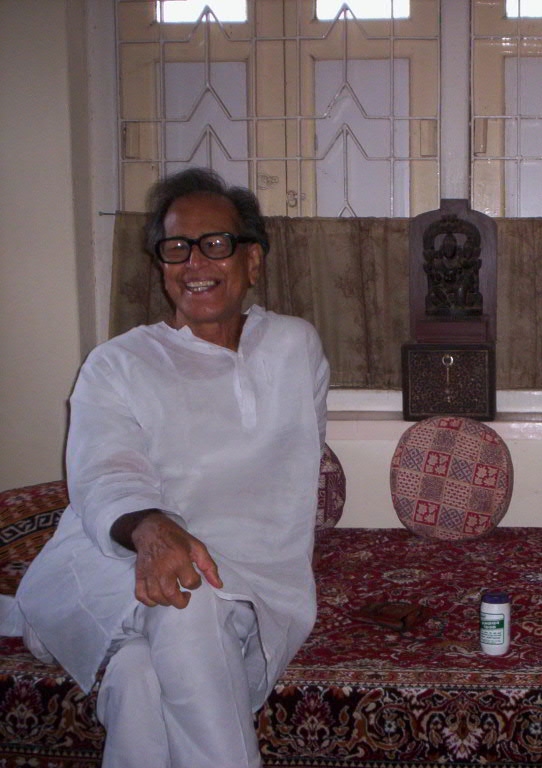
Prof. Somendranath Bandyopadhyay taught Bengali Language and Literature in Visva-Bharati, Santiniketan during 1957–1991. His subject was mainly Rabindranath Tagore. He wrote several books on Bengali poetry, art, philosophy and literature. In 2011, the Rabindra Bharati University, Kolkata awarded him the D. Litt. The following is my personal tribute to him. 

1986 — A teacher’s visit

I am in Class 7 and we have moved to Chittarajan Park, South Delhi’s very own Bengali pocket, only a year ago. It’s 7 or perhaps 7:30 in the evening, a busy time for our family of six. I and Dada, my brother, are hunched over our schoolwork — homework, preparing for a class test and such. Dadubhai, my grandfather, is coaching me as usual. In the kitchen, my grandmother and mother, both tired from a day’s work at their respective offices, are hustling to get dinner ready. Suddenly, there’s a knock on the door. We have no telephone (cell phones haven’t been born yet) and aren’t expecting any visitors in particular. When the door is opened, two tall gentlemen, one of them in pristine white dhuti and panjabi, are found standing. The gentleman in white, the older of the two, asks for my mother, and when she comes to the door, she, and the rest of us, are startled beyond words. Professor Somendranath Bandopadhyay, her teacher from Visva-Bharati, Santiniketan, where Ma went to study for her MA in Bengali, has come to visit her. The last time the two of them had seen each other was more than a couple of decades ago, while my mother was his student.  Back in her student days, he had shown extraordinary compassion to help her get through a difficult academic patch.

They had kept in touch through letters, and that year, as a student of class 7, when I witnessed this incredible moment, I realized why my mother held this teacher in such high regard. Professor Bandopadhyay was visiting relatives in Chittaranjan Park and mentioned that he wanted to meet his former student, who also lived in the neighbourhood. The conversation that followed through the evening is a blur to me, but I remember helping my mother sift whole wheat flour through a soft cotton cloth in the kitchen to ‘make’ refined flour as Ma and Grandma got busy making luchi, a delicacy that had to be served to a special guest. I remember my grandfather, a man of few words, expressing amazed delight that a teacher had taken the trouble of tracing his student’s house and visiting her. I remember that we were all amazed. I remember how a teacher’s visit had changed the complexion of a weary city evening. Over the next many decades, we would receive letters from him on postcards with beautiful line drawings depicting flowers, leaves, and nature on them.

2007 — Visiting a teacher

The author in Santiniketan; Photo © Bhaswati Ghosh

After working for many different bosses for more than a decade, I finally decide to work for myself and become a freelance writer-editor. Working my own hours gives me the reward of finding more time to do the things that bring me joy — write, cook, travel. I plan a long vacation to West Bengal with my mother. We spend the bulk of our time in Kolkata, but also have Santiniketan and Bishnupur on our itinerary. At Santiniketan, when we seek accommodation at the in-campus guest house, we’re turned away, with no vacancy offered to us by way of explanation. We put up at a lodge close to the campus. That evening, when Ma and I visit Professor Bandopadhyay, now Somen Mama to me, she tells him about our lodging woes, and he chides her saying she should have called him right from the guest house. He asks us how long we plan to stay for, and when he learns it would be the next three days, he calls up the guest house to get us a room there. We move back into the campus, a pilgrimage for me, where she would wake up to, as she did in her days as a student, to the calls of doel, the oriental magpie and bou-kotha-kao, the Indian cuckoo. I would discover mornings that sounded sweeter than anything I’d ever experienced in my existence as a city-bred. 

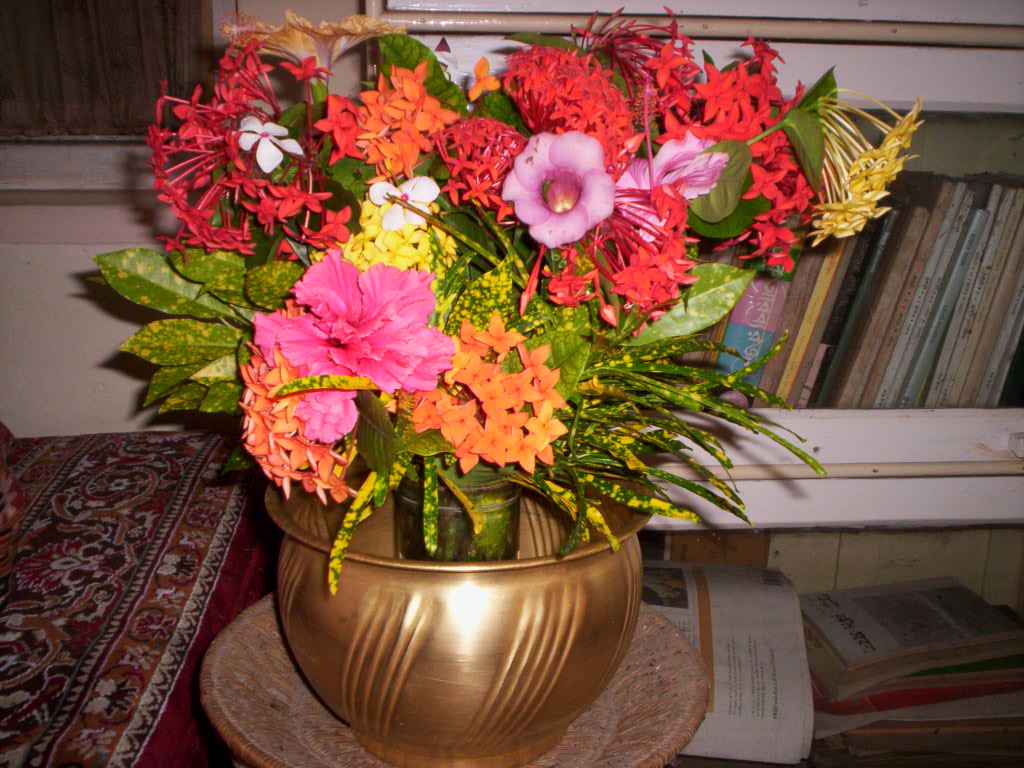
At Somen Mama’s house for breakfast one morning, his affectionate wife, Boudi to all students, and Maami to me, treats us to a deliciously elaborate spread, complete with luchi, torkaari, chop (croquettes), mishti and her signature vanilla pound cake that I’ve come to relish. We sit at the low jol-chowkis in the dining area of this aesthetically pleasing and inviting house as Mama talks to us about Tagore’s worldview and the radical relevance of the Buddha’s teachings. Now and again, a humorous vein emerges, and he breaks into a laughter — resonant, uninhibited, completely disarming. We drift back to the living room for tea and more stimulating conversation. He then brings a copy of his latest book — Shilpi Ramkinkar Alaapchari — that he signs for my mother as a gift. He gives me a beautiful pair of polished burgundy wooden chopsticks that he’d gotten from his visit to Japan. I spend some quiet moments in their beautiful garden outside, soaking in the prettiness of flowers — clusters of Ashok and hibiscus in several colours.

Flower arrangement at Somen Mama’s house; Photo © Bhaswati Ghosh

Back in Delhi, my mother reads the book and keeps nudging me to do the same. I politely keep telling her I will, until I can’t put it off any longer. I’m barely into the first paragraph when I realize I wouldn’t be able to put it down before devouring every last sentence, every last word of it. The book’s format is deceptively everyday — it’s a series of conversations between two neighbours. Only, in this case, both the interviewee — the artist-sculptor Ramkinkar Baij and his interviewer — Somendranath Bandopadhyay are so much in synchronicity that the reader couldn’t ask for two better conversationalists. 

Shilpi Ramkinkar Alaapchari

By simply describing the living quarters of the renowned artist who he found as his neighbour, Somen Mama, draws me in. I am transported to the Santiniketan of Baij’s student and work life, to his world of mud and plaster, of studying from other artists, both at home and globally, of his interactions with Rabindranath Tagore who encourages him to chart his own course without looking back, of deeply empathizing with and drawing inspiration for his work from the Santhal Adivasis living in the area, and most of all, of living a passionate, feisty, and fiercely creative life on his own terms. The book is not merely a gift to my mother, to us, I realize; it’s a gift to all who can read the Bengali language. I am so taken by it that I want to tell the world about it and excitedly write a blog post and translate a few favourite parts. Later that year, I send my proposal for translating this remarkable book to an international translation fellowship. It gets accepted. 

2008-2012 — A teacher for life

I am back in Santiniketan with Ma to meet with Somen Mama, to give him the good news, to seek his permission to translate the book. He talks about having heard of a certain blogger from Delhi who had translated parts of the book; then he realizes that person is me. So far he’s only known me by my pet name, so it has taken him a while to make the connection. While we’re here this time, I ask Somen Mama, now my author, lots of questions regarding the book’s technical aspects. He takes out big tomes from his study and patiently answers each one of my queries. I also spend my time looking more closely at Ramkinkar Baij’s sculptures spread across the open campus — Sujata, Santhal Family, Mill Call. My seeing is now informed by the history and context of these iconic works, captured with vivid sincerity by Somen Mama. 

I travel to Norwich, UK, the site of my fellowship and complete translating the book. Over the next year, I look for publishers for the book and fortunately, the book finds a home. A journey that began with my mother’s master’s education in Santiniketan comes full circle as my name appears below his on a book cover. Shilpi Ramkinkar Alaapchari becomes My Days With Ramkinkar Baij in English. 

2022 — The final adieu

On a March day, we receive the sad news of Somen Mama’s final departure. It’s still difficult to think of him in the past tense. As I reflect on this wonderful human being and the fullness of his life that enriched so many of us, I know what I will remember of and receive as blessings from him the most — humility and grace, a childlike zeal for exploring new realms, and above all, a deep, empathetic compassion for those around us. 

Letter Writing by Rabindranath Tagore

Translated by Bhaswati Ghosh

You gave me a gold-plated fountain pen
And a cornucopia of writing equipment.
A small walnut-wood desk.
Letterheads in different designs.
Silver paper with an enamel finish.
Scissors, knife, sealing wax, ribbon.
A glass paperweight.
Red, blue, green pencils.
A letter must be written every
Other day,
You ordained for me.

I finished bathing in the morning
So I could sit down to write a letter.

But I can’t decide on what to write.
There’s only one news —
That you have left.
This, you already know.
Yet, it seems like
You aren’t really aware of this.
So I think of letting you know —
You have left.
Every time I begin to write
Something tells me this isn’t easy news to share.
I’m no poet —
One who can give voice to a language;
Or vision to words.
The more letters I write, the more I shred them.

It’s ten o’ clock already.
Your nephew, Boku, is ready for school,
I need to feed him first.
This is my last attempt —
Let me write to inform you
That you have left.
The rest is only a jungle of
Doodles crowding the blotted ink.

GITANJALI - The original manuscript By Rabindranath Tagore Published by  Sahitya Samsad This is the original versio… | Handwriting analysis, Rare  books, Book layout
পত্রলেখা

দিলে তুমি সোনা-মোড়া ফাউণ্টেন পেন,
           কতমতো লেখার আসবাব।
               ছোটো ডেস্‌কোখানি।
                   আখরোট কাঠ দিয়ে গড়া।
        ছাপ-মারা চিঠির কাগজ
           নানা বহরের।
রুপোর কাগজ-কাটা এনামেল-করা।
        কাঁচি ছুরি গালা লাল-ফিতে।
           কাঁচের কাগজ-চাপা,
        লাল নীল সবুজ পেন্সিল।
    বলে গিয়েছিলে তুমি চিঠি লেখা চাই
           একদিন পরে পরে।

         লিখতে বসেছি চিঠি,
           সকালেই স্নান হয়ে গেছে।
লিখি যে কী কথা নিয়ে কিছুতেই ভেবে পাই নে তো।
           একটি খবর আছে শুধু--
               তুমি চলে গেছ।
        সে খবর তোমারো তো জানা।
               তবু মনে হয়,
        ভালো করে তুমি সে জান না।
               তাই ভাবি এ কথাটি জানাই তোমাকে--
                   তুমি চলে গেছ।
               যতবার লেখা শুরু করি
        ততবার ধরা পড়ে এ খবর সহজ তো নয়।
               আমি নই কবি--
ভাষার ভিতরে আমি কণ্ঠস্বর পারি নে তো দিতে;
        না থাকে চোখের চাওয়া।
           যত লিখি তত ছিঁড়ে ফেলি।

দশটা তো বেজে গেল।
    তোমার ভাইপো বকু যাবে ইস্‌কুলে,
           যাই তারে খাইয়ে আসিগে।
               শেষবার এই লিখে যাই--
                   তুমি চলে গেছ।
               বাকি আর যতকিছু
           হিজিবিজি আঁকাজোকা ব্লটিঙের 'পরে।

Of Endings, Happy and Sad

First published in Saaranga

In ‘Bateshwar’s Contribution’, a short film by Sandip Ray I recently watched, Bateshwar Sikdar, a veteran writer, suddenly finds himself in the company of visitors and advice – both unsolicited. Over the course of three days, as many individuals, supposedly Sikdar’s fans come to him with the same strange request. They all want him to make the ending of a novel he’s writing, a happy one. Based on a story by Rajshekhar Basu, often hailed as the greatest humourist of the last century, the film, or rather that peculiar request, struck a personal chord with me in what has been my nascent journey into published authorship so far. I am coming to that in a bit.

In Sikdar’s case, when the first reader, a young man, approaches him on one of his morning walks, there isn’t much to suspect – he’s seen gushing with praise for the senior writer and shows great interest in his current serialized work ‘Ke Thaakey, Ke Jaaye?’ (Who Stays, Who Goes?). In fact, he seems so involved with the story that he’s eager to find out the fate of a female character. He asks Sikdar about the same, referring to the character as the novel’s heroine. Sikdar reminds him that there are two heroines in the novel, and when the young reader specifies he’s referring to Aloka who is fighting a serious illness, Sikdar tells him that she’s going to die. Our young reader seems heartbroken and pleads with the author to let her live. Exasperated, Sikdar tells him off and continues on his walk. The next morning, the entreaty turns into a mild threat when another man, a renowned surgeon, drops by at Bateshwar’s house with the same proposition – to let Aloka live. As with the first petitioner, Sikdar turns down the physician’s request and remains firm on his stand to eliminate Aloka to have Sharbari, the novel’s other heroine, take her place. He would have a third and final requester – a woman who introduces herself as a film actor – who comes to him with the offer of buying the film rights for ‘Who Stays, Who Goes?’. She’s eager to play Aloka in the film she informs Sikdar, but he has to ensure she’s cured of her illness and continues to live. Sikdar, though excited at the offer, still remains reluctant to change his story’s ending. It’s only when the lady threatens to jump ship and make a similar offer to a rival author that he reverses his long-held decision to let Aloka die.

Read the rest in Saaranga

Thirty-eight years with Shakti

Samir Sengupta

Translated from the Bangla by
Bhaswati Ghosh

First published in Parabaas

From Shakti Chattopadhyay’s handwritten
facsimili edition of
Kuri Bochhorer Kuriti
(‘Twenty Years, Twenty Poems’)

I first met Shakti in 1957, at the College Street Coffee House. I still carried on me the smell of Ramakrishna Mission’s Vidyamandir from where I had just graduated. The modernity of Coffee House startled me almost every day. I would find myself a corner to sit at the Krittibas table, with the poets barely tolerating me. Scores of foreign names—of poets, novelists, films, filmmakers—rained down my head. Every single day, I would hear new names—how in the world could I get to read so many books, watch so many films? I hadn’t even seen the magazine Kabita (*Poetry, কবিতা ) yet. I have faint memories of Shakti wearing a red tie and commuting to his workplace, Hind Motors as a daily passenger.

Somehow, with time we became friends. I didn’t write any poetry, only dealt with prose, that too very little. I had enrolled into Jadavpur University’s master’s program in Comparative Literature, which brought me an entry into the haloed and unique adda of ‘Kabita Bhavan’ (*lit. house of poetry, residence of Buddhadeva Bose, founder-editor of Kabita). Shakti’s name was still on the student roll, but one hardly saw him on the campus. He would (suddenly) show up once every six or nine months and that would be it. He was part of the batch following ours, a classmate of Rumi’s (Damayanti Basu Singh, Buddhadeva Bose’s youngest daughter) in the BA course. Buddhadeva had forced him to enroll with hopes of making him return to the mainstream. By then, however, a witch had already seized Shakti’s heart.

Read the rest in Parabaas