Map Making

The cubicle slumbers with a whirr of weekday monotony.
Defying screen slavedom, we three meet for lunch. She
from China, I from India and she from Canada. School
harks back to the lunch table as I cajole her to share
my chicken pot-pie. We discuss roots. “South-western China,”
she says, hastening to add the immigrant’s near excusatory,
“but education in Beijing and Shanghai.” She nods
when I speak of women and their place in Asia. My
“decent-enough-to-earn-me-a-writing-job-English”
surprises her. We branch out into languages thus.
Mandarin is hers. She makes sure her child mutters
it too, even though he claims to be a Canadian. I
talk about my mother tongue and how it created a new
country. Their eyes brighten, ears perk up. And she, the lanky,
blue-eyed one is taking a shot at Italian, her husband’s
root tongue. “Oh Italian!” our Asian friend squeals,
“Do they all carry guns there?”

And so we begin making
maps with fleeting-floating stock images, hackneyed
threads–losing sight and redeeming it with a native’s
estimation. I tell them about India, its many topographies–
“each state a country unto itself,” the need for
its women to develop lateral vision and thick
skins. What’s her origin, I ask the blue-eyed one.
“Danish-Swede hybrid,” she says lamenting the inhuming of
both languages beneath the inter-generational sedimentation
over the arctic snow.

We part with sweet somethings, convoluted
cartography and a promise to “do this again.”

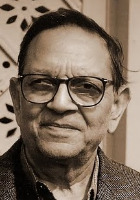
Leading Ordinary Lives / Kunwar Narayan

Kunwar Narayan
(Translation mine)

I know
I can’t change the world,
Or win a fight against it.

It’s possible that I
Become a martyr fighting
And beyond that earn a martyr’s
Tomb or an artist’s fame…

But being a martyr
Is a different game altogether

There are people who despite
Leading entirely ordinary lives
Have been known to become
Martyrs, quietly.

मामूली ज़िन्दगी जीते हुए / कुंवर नारायण

जानता हूँ कि मैं
दुनिया को बदल नहीं सकता,
न लड़ कर
उससे जीत ही सकता हूँ

हाँ लड़ते-लड़ते शहीद हो सकता हूँ
और उससे आगे
एक शहीद का मकबरा
या एक अदाकार की तरह मशहूर…

लेकिन शहीद होना
एक बिलकुल फ़र्क तरह का मामला है

बिलकुल मामूली ज़िन्दगी जीते हुए भी
लोग चुपचाप शहीद होते देखे गए हैं

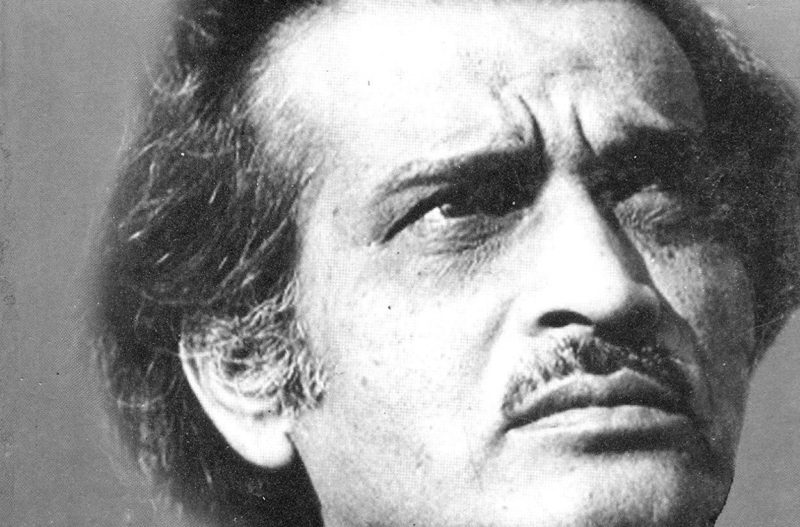
The Wolf’s Eyes are Red/Sarveshwar Dayal Saxena

(Translation: Bhaswati Ghosh)

The wolf’s eyes are bloodshot.
Glare at him
Until your eyes
Turn red, too.
What other choice do you have
When the wolf is in front of you?

भेड़िए की आंखें सुर्ख हैं / सर्वेश्वरदयाल सक्सेना

भेड़िए की आंखें सुर्ख हैं।
उसे तबतक घूरो
जब तक तुम्हारी आंखें
सुर्ख न हो जाएं।
और तुम कर भी क्या सकते हो
जब वह तुम्हारे सामने हो?

Deshgaan' – Janata Weekly

Sarveshwar Dayal Saxena (1927-1983)

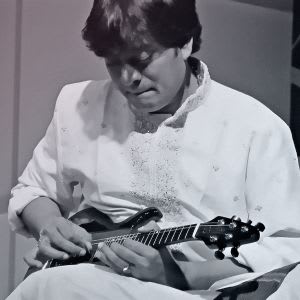
LISTENING TO U. SRINIVAS

Mandolin’s secrets have no use for cover.
They burst open into splintered reveries
And flood your waking dreams.

Mandolin lures moody southern
Winds; blows them lustily in your
Courtyard. The breeze ruffles
Your hair, your sourness.

At temples, Mandolin gathers the
Holy fire of the morning sun to bathe
Your face.

When Mandolin plays, you turn
Into a snake and slither without a hiss
To a corner where the string
Charmer leads you.

Mandolin indoctrinates without
A mantra. Magicians rarely
Need one. You become a bird and
fly away with Mandolin.

More on U. Srinivas here.

U. Srinivas songs, U. Srinivas song MP3 download

Book Review: Love and the Turning Seasons – India’s Poetry of Spiritual & Erotic Longing

I recently had the opportunity tot read “Love and the Turning Seasons,” an exquisite collection of bhakti poetry in translation from Aleph. I wrote about it in Kitaab.

Love and the Turning Seasons

Title: Love and the Turning Seasons – India’s Poetry of Spiritual & Erotic Longing
Edited by Andrew Schelling
Publisher: Aleph
Pages: 294
Price: ₹399

I left shame behind,

took as an ornament
the mockery of local folk.
Unswerving, I lost my cleverness
in the bewilderment of ecstasy.

— Manikkavacakar (9thcentury), Tr. A.K. Ramanujan

In a lover’s enraptured world, love is the breeze that strips one, quite simply, of the garment of shame. In reading Love and the Turning Seasons, the newest offering from Aleph Classics, a series that aims to bring new translations of India’s literary heritage, the reader is swept in that denuding breeze. Edited by Andrew Schelling, the collection of poems bears the slightly beguiling subtitle, India’s Poetry of Spiritual & Erotic Longing. I say beguiling because it would seem like the poems could fall in either category – spiritual or erotic. In reality, as Manikkavacakar, the ninth-century Shiva devotee tells us, the line between the two states is as diaphanous as air itself. For, in the “bewilderment of ecstasy”, who is left to distinguish between the flesh and the spirit? This seamless merging of the body and the soul is at the heart of this anthology of bhakti poetry, translated by various poets and literary translators.

Love and the Turning Seasons alights upon the reader as a songbird to take her across time and space – from the sixth century (barring the Isa Upanishad) right up to the twentieth, on an anticlockwise path beginning in the south of India and ending in the east. Despite the multiplicity of expressions of the bhaktas or poet-minstrels, informed as they were by specific cultural and regional parlance, what unifies them is their rejection of societal norms in their unwavering quest for the divine. These were among the first true radicals in the Indian context, repudiating, with delightful contempt, tradition and convention. Gender-bending, caste-subverting, these individuals lived and (even) died on their own terms and sang of the divine with ariose abandonment. As Lal Ded, another Shiva devotee from Kashmir said,

Who instructed you, O Brahmin,
to cut this sheep’s throat—
to placate a lifeless stone?

— Lal Ded (early 1300s), Tr. Andrew Schelling


The Sanskrit word bhakti means devotion and has come to connote intense, even blind idolatry, and in these troublingly skewed times, bhakta (devotee) has become a bad word, an uncomplimentary term for blind followers of certain ideologies, political or otherwise. As the anthology affirms through its diverse voices, the bhakti poets were anything but blind in their devotion.

Read the rest in Kitaab.


Day’s End

The evening adjusts the hem
of her smooth rose wine
stole. You and I move
to the back porch. The sky
flushes to allure us with its
pink. But work and all that
went wrong with it take their
toll.

Bird wings hustle. Soon it will
be dark. We’ll pick up our
half-sipped glasses of
wine. When the day’s fatigue,
its taunts, its grime start
sinking us, the evening’s
blush will still leave its
mark.

The Crop by Sarveshwar Dayal Saxena

Translation: Bhaswati Ghosh

Even if I were to
hold the pen
like a plow,
a spade
or a trowel,
I wouldn’t be able to
harvest the crop.

I can only prepare the soil.
A few rare ones will sow the seeds of revolution
and nourish my toil,
carrying my journey forward.

Tomorrow, when I’m no longer there,
the crop will grow and flourish,
ripple in the breeze.
My spirit, a flush of golden sunshine
Will touch the feet
of those who planted the seeds
Those who harvest it will sow more seeds
I shall only sleep buried in the earth underneath.

Image result for crop

फसल / सर्वेश्वरदयाल सक्सेना

हल की तरह
कुदाल की तरह
या खुरपी की तरह
पकड़ भी लूँ कलम तो
फिर भी फसल काटने
मिलेगी नहीं हम को ।

हम तो ज़मीन ही तैयार कर पायेंगे
क्रांतिबीज बोने कुछ बिरले ही आयेंगे
हरा-भरा वही करेंगें मेरे श्रम को
सिलसिला मिलेगा आगे मेरे क्रम को ।

कल जो भी फसल उगेगी, लहलहाएगी
मेरे ना रहने पर भी
हवा से इठलाएगी
तब मेरी आत्मा सुनहरी धूप बन बरसेगी
जिन्होने बीज बोए थे
उन्हीं के चरण परसेगी
काटेंगे उसे जो फिर वो ही उसे बोएंगे
हम तो कहीं धरती के नीचे दबे सोयेंगे ।

After the Party

First published in The Ham Free Press

20171126_174947

The lips of the bald man, as he speaks of the “Indians and Pakistanis” he sees at the tennis court, curves into a sly smile. My racism detector picks up the snigger that sneaks through his lament on the status of those work-visa immigrants whose kids get Canadian citizenship by virtue of their birth. After the party, I recall how he tried to herd folks from the subcontinent into “all those IT workers.”

As he keeps probing my husband on his career track, the soft September evening makes me gravitate towards the late-arriving “immigrant.” The Muslim lady from Delhi. We relay hometown bonhomie with hugs and she tells me about her Bengali family — the one from Noakhali she married into. Her geologist husband had shifted base to teach at Aligarh Muslim University. She followed his trail from Delhi to Dubai, where he worked. Later she would migrate to Ontario as a widow with her two children. After the party, I think how, like her husband, she, too learned to measure the worth of soil as she brought up her son and the daughter–now an engineer and a doctor–by cleaning and decorating the finger and toe nails of customers at a salon.

The evening lulls us with its whispers, broken only by the whistle of the kettle the hostess is boiling tea in. Most of the guests have left after ingesting the aromatic lamb curry and saffron rice. We are left, along with the mildly immigrant-allergic man and his wife–beekeepers outside their corporate lives. The over-milked, boiled-to-death tea arrives. The host talks about how the British left behind a legacy of high-tea in the Indian subcontinent. The beekeeper woman shares her knowledge of the same, gleaned off a British historical novel. Her husband asks me and my husband about the type of English we were taught in schools in India. I talk about how it was much different from the American English the internet would later expose me to. After the party, the incredulous, near horrified look on the woman’s face as I told her about a generation of Pakistani writers using the English language with a subcontinental flourish, flashes before me.

Rain

When wetness changes form,
it becomes Bhairavi; its
fragility relative.

Rain is a distraction,
sly but welcome. It hoards
sadnesses and spits out promises.

Distance reduces vision.
Water is its
own biggest burden.

Bhairavi keeps us
afloat — its illusion
slicker than crystal rain.

Photo by Vlad Cheu021ban on Pexels.com

Flickering embers in verse: Of venereal sores and poems that kill: The fiery legacy of Namdeo Dhasal and Amiri Baraka

First published in DNA


By delving into the poetic oeuvres of Namdeo Dhasal and Amiri Baraka, two towering voices representing the marginal, one comes closer, in a somewhat unsettling way to the lives of the oppressed and the outrage such an existence can cause. With both poets, the blaze of words often leaps off the printed page to singe the reader — with guilt, violence and even catharsis. The similarity doesn’t end there.

Dhasal, the Marathi “underground” poet and Baraka, the Black Arts revolutionary poet, playwright, music historian, find much of their literary ammunition in the life and surroundings in which they are rooted. Poetry for them isn’t about romanticising in tranquillity. Nor is it separate from activism.

“…we want ‘poems that kill’./ Assassin poems, Poems that shoot/ Guns.” — Black Art, Amiri Baraka

Dhasal echoes this idea of poetry being a weapon of protest, without caring much for labels such as political or social poetry. . “…As long as there remain contradictions and conflicts between individual and collective life that affect my feelings, my poetry will be about them,” he says. This rootedness, a sense of where they come from is the constant even as the two men evolve in or deviate from their affiliation to different ideologies over the course of their lives.

In Pur-Kanersar, the village where Dhasal was born and spent part of his childhood, even water — elementally unrestricted — had been divided. The up-river portion of a small river that ran through the village was the exclusive reserve of the privileged castes while the village’s oppressed untouchables were allowed to draw water from only the down-river part.

“Upstream, the water is all for you to take/ Downstream, the water is for us to get/ Bravo! Bravo! How even water is taught the caste system.” — Water, Namdeo Dhasal.

Though separated in age by more than a decade and born in different countries, both Dhasal and Baraka represent larger traditions within their own milieus — traditions of oppressed and dehumanized peoples. Their dissent is not theirs alone — it is a pastiche, if a dissonant one — of the anguished cries, pent up for centuries, within millions belonging to their tribes.

This irrepressible need to break the silence and galvanize the voices of the silenced led these two iconic men to establish socio-political platforms. Disillusioned with the existing framework of racial discourse in America, Baraka became a founding member of the Black Arts Movement, which would lead to many an African-American artist gaining traction in that country’s literary thoroughfare.

“We are beautiful people/ With African imaginations/ full of masks and dances and swelling chants/ with African eyes, and noses, and arms/ tho we sprawl in gray chains in a place/ full of winters, when what we want is sun.” — Ka’Ba, Amiri Baraka

Dhasal’s watershed moment would arrive in 1972. That year Golpitha, his first collection of poems, broke new ground in Marathi poetry, by smashing linguistic and idiomatic barriers, written in, what Dilip Chitre, Dhasal’s long-time translator and friend calls, “an idiolect fashioned in the streets of the red light district of central Mumbai, and from the Mahar dialect…his (Dhasal’s) native tongue.” In the same year, Dhasal also founded Dalit Panther, an organization on the lines of America’s Black Panther, to politically unite Dalits.

The poems in Golpitha sear with rage against suppression on the one hand and the helplessness of those on the receiving end of such systemic oppression on the other. In a tone mnemonic of Baraka’s outburst in Black Art, Dhasal unleashes his furore on the page in Man, You Should Explode.

“F**k the mothers of moneylenders and the stinking rich/ Cut the throat of your own kith and kin by conning them; poison them, jinx them”

Using ostensibly brazen and often crude language, the long poem lambasts symbols of effete aesthetics cherished by the privileged castes and calls for a complete breakdown of existing civil and social norms and structures. All this upheaval isn’t without hope though — in the form of the resulting implosion.

“After this all those who survive should stop robbing anyone or making others their slaves/ After this they should stop calling one another names — white or black, brahmin, kshatriya, vaishya or shudra;… One should regard the sky as one’s grandpa, the earth as one’s grandma/ And coddled by them everybody should bask in mutual love.” — Man, You Should Explode, Namdeo Dhasal

Both Dhasal and Baraka are credited with developing new lexicons geared towards and representing their particular audiences. They both played a seminal role in redrafting the manifesto of their respective agendas — equality for Dalits and that for Blacks.

“If you ever find/ yourself, some where/ lost and surrounded/ by enemies/ who won’t let you/ speak in your own language/ who destroy your statues/ & instruments, who ban/ your omm bomm ba boom/ then you are in trouble/ deep trouble/ they ban your/ own boom ba boom/ you in deep deep/ trouble/ humph!” — Wise I, Amiri Baraka.

Indeed Baraka and Dhasal have both been pioneers in carving out a space for literature from the margins. However, they too had other influential figures to guide them in their quest. If for Baraka it was Malcolm X, whose assassination triggered the Black Arts Movement, for Dhasal, the overarching impact of Dr BR. Ambedkar, himself a Dalit and a champion of equality, is a constant. Time and again, Dhasal invokes Ambedkar in his poems, lamenting how much of what the visionary statesman dreamed still remains unfulfilled.

“You are that Sun, our only charioteer,/ Who descends into us from a vision of sovereign victory, / And accompanies us in fields, in crowds, in processions, and in struggles;/ And saves us from being exploited.” — Ode to Dr Ambedkar, Namdeo Dhasal

Rooted yet restless, armed with deep convictions yet manifesting puzzling contradictions, these two poets of protest have come under criticism for their debatable ideological stances from time to time. Baraka’s pronounced homophobic and anti-Zionist utterances have unsettled readers and critics as much as Dhasal’s support for Indira Gandhi, the Shiv Sena and even the RSS shocked his friends and admirers.

For all the controversy both these poets courted, the depth of their words — smouldering embers in verse — makes them not only significant but indispensable chroniclers of the history, trauma and defiance of the repressed. Even if that entails disturbing refined sensibilities.

“I am a venereal sore in the private parts of language.” — Cruelty, Namdeo Dhasal

“My color/ is not theirs. Lighter, white man/ talk. They shy away. My own/ dead souls, my, so called/ people. Africa/ is a foreign place. You are/ as any other sad man here/ american.” — Notes For a Speech, Amiri Baraka