Abiding Characters – I

Characters who live. Whose breath conjoins ours from the printed pages on which they appear. Who stay with us long after the book is closed, the story is forgotten. Abiding Characters. A new series.

Raicharan

From Khokababu’s Return by Rabindranath Tagore

First Signs: Hardly anything strikes about Raicharan at first. He enters the household of his masters as a servant boy of twelve. His job is to look after a one-year-old baby. When this baby boy, Anukul, grows up into a man, Raicharan still remains his servant. Although his rights over his master wane once the latter gets married, the space for his unreserved affection is filled in by Anukul’s little son.

What Endures: Even though he is the quintessential servant, ever devoted to his master’s family, Raicharan’s unwavering love for Anukul’s toddler, marked by rustic simplicity and endearing awe tugs at the reader’s heart again and again. There is no end to Raicharan’s marvel when the little boy learns to cross the threshold of his room even as he crawls. The servant is even more amazed when the baby utters his first words calling his ma “Ma”, his pishi “Pichi” and Raicharan, “Channa”. He had in fact declared within months of the little boy’s birth that upon growing up, he will be a judge for sure.

The decisive turn in Raicharan’s life and indeed in the short story comes when the servant accompanies his little master astride his stroller for a late-afternoon promenade. A clear day turns murky as the little child is lost to lure of the Padma River even as Raicharan is busy picking up flowers as demanded by his young boss.

When the child’s mother sends people to look for the child-servant duo the same evening, they find a hapless Raicharan’s yowl—calling out for his junior commandant—tearing through the monsoon winds. However, the judge-to-be isn’t found, his mother accuses Raicharan of stealing her son, and the old servant leaves the household, unable to bear the burden of his guilt of leaving the child alone while plucking flowers.

Soon after his return to his village home, Raicharan is blessed (or cursed as the perspective may be) with a son. Even though his wife dies during childbirth, Raicharan pays no attention to the newborn baby. As a reader, I was at once incredulous and shocked to read this part of the story. For who could think the affectionate man, who went out of his way to fulfill the tantrums of Anukul’s son, could be so dispassionate toward his own child? However, that’s exactly the cause of Raicharan’s indifference; to him the child epitomizes deception, trying to claim the love that was the birthright of his previous master.

Only when his son, named Phelna (meaning “rejected”) by his sister, starts crawling across the room’s threshold and demonstrates other signs of intelligence, does Raicharan take note of him. From this point, he begins seeing striking parallels between Phelna and Anukul’s dead son. Convinced that his son is a reincarnation of the dead child, he starts bringing up his son in grand style—buying him expensive clothes and toys and preventing him from befriending other village boys. As the boy grows up, Raicharan takes him to the city and enrolls him into a good school, while taking up a measly job himself. All this while, he raises his son like a prince. The boy takes a liking to Raicharan as well, but not quite in a son-like way. For, as Tagore writes in the story, “In his affection Raicharan was a father and in his service, a servant.”

Years later, when Phelna reaches the age of twelve, Raicharan takes him to Anukul’s home. There, to everyone’s astonishment, he admits to having stolen Anukul’s son and presents Phelna as that stolen child. This dramatic revelation, while delighting the parents of the dead child, turns Anukul hostile toward Raicharan. The most ironic point in the story comes when Anukul orders his old servant to get out of their household and young Phelna, standing proudly along side his ‘parents’, asks his ‘father’ to forgive Raicharan. The boy’s suggestion to keep sending a modest stipend to the former servant is upheld by Anukul. Only, the money comes back from Raicharan’s village address. Nobody is found to live there any longer.

I like Raicharan despite: his obsessive commitment to his master’s family, his near exasperating spirit of sacrifice, and his invitation to emptiness in his own life in order to fill the vacuum in his master’s household. I like him for the humanity he represents. Even if it remains unsung in the end.

Khokababu = Term of endearment for little boy.
Pishi = Aunt (Father’s sister).

Image:

WoodNWings

Salil Chowdhury: Awakening Strains

November 19 is Salil Chowdhury’s birth anniversary. Although this multi-layered artist passed away in 1995, his stamp of exclusivity continues to sustain his livingness. A majority of Indians know Chowdhury (popular among his admirers as Salilda) as a virtuoso music composer. So did I, for a good many years, leading into my college life. His s music was hard to ignore for any lover of vintage-era Hindi film music. The earthy notes in Do Beegha Zameen (based on a short story by Chowdhury) or the Indianised version of a Hungarian folk tune in Madhumati; the poignancy of a day wearing down in Anand’s Kahin dur jab din dhal jaye or the strains of Middle Eastern music in Kabuliwallah—music, which didn’t slot Salil Chowdhury into any musician’s club, but established him in a league of his own. His versatility, the ability to make music that was internationally-influenced yet India-rooted, and his knack for getting the very best out of his singers easily made him stand out among his peers.
One day, during my college years, Salil Chowdhury stunned me again. This time, with a side of his that had remained unknown to me all this while—as a poet-composer of songs of protest and mass awakening.

Bicharpoti tomar bichar korbe jara
Aaj jegechhe shei jonota…

The people who will judge you
Have woken up, Your Honour.
Your guns and hangings, your prison tortures
Will be crushed by their weight.

Salil wrote this song in 1945, two years before India’s independence. It was a diatribe against the farce that was often carried out in the name of judicial hearing of Indian freedom fighters. The 1940s was also the decade when Salil Chowdhury joined the Indian Peoples Theatre Association or IPTA, an organisation of artistes and writers, born to address the conscientious role of the artistic community. As part of IPTA, Salil wrote many songs, beseeching his fellow countrymen to take power into their hands and rebel against exploitation by those in power. He wrote in simple Bengali, using words village folk spoke and voicing issues that concerned them.

O aayre, o aayere
Bhai bondhu, chal jaire…

Come, o’ brother,
Let’s cut the paddy and
Stock the harvest in our granaries.

Thus went his anthem for poor peasants who were perennially robbed off the rewards of their toil by shrewd, profiteering landlords. The poet-composer didn’t stop at his creation, though. He took these songs to villages, and soon these became people’s songs in the truest sense.

It’s easy to see what inspired Chowdhury to feel for the disadvantaged members of his community. As a young boy, he grew up in the tea gardens of Assam, where his father was a doctor. Chowdhury senior would routinely have the poorly paid coolies of the tea gardens to organise and stage plays against British exploitation. He also took part in many anti-British rallies, quite an audacious feat when the British were still ruling India.

Although in the mid 1950s this brilliant song-writer-musician matured into an exceptional self-taught composer with the onset of his professional career in film music, he never lost touch with the man within who dreamt of a classless society and envisioned an India that wasn’t touched by religious differences. He wrote his last mass song in the early 1990s, shortly after the demolition of the Babri Mosque by Hindu fundamentalist forces.

O aalor potho jatri, E je ratri
Ekhane themo na
E balur chore ashar
Toroni tomar jeno bendho na

O’ traveller of light
Don’t stop in this dark of night
Don’t anchor your boat of hope
On this slippery shore.

For more information and recordings of Salil Chowdhury’s brilliant compositions, visit The World of Salil Chowdhury.

Images:

The World of Salil Chowdhury
People’s Democracy

Good Reads…


Dotara, the instrument Bauls play while singing

…I stumbled upon online over the past few days.

Writing Palestine at Words Without Borders, my window to contemporary world literature (‘wish I would visit the site more often). The WWB feature showcases the writings of nine Palestinian writers, reflecting the many hues of the conflict-ridden desertscape. Some great writing, brought to us through sensitive translation. My favourite is The Shoes by Nassar Ibrahim:

Time passes slowly, hot and dusty: Barriers, guns, soldiers, identity card checks, long waits, curses and humiliations. Everything mixes with everything else; the advance and the retreat both have the same measure of suffering. In the back, the barriers and the humiliations; ahead, the same thing. So, forward he went. Isn’t arrival, isn’t the surmounting of suffering, the defiance of being broken down a simple, clear parity? An entire nation finds byroads, steps over logic and reason to maintain for itself the logic which says, Persistence first, or death.

Bhupinder Singh’s most inspired tribute to India’s firebrand socialist poet, Kaifi Azmi. The quality of the post is made better by Bhupinder’s wonderful translation of Kaifi’s poetry. A great read.

To look for Kaifi, is to keep on searching the for new, better, more egalitarian worlds. And heavens that are more just. To remove this search from his poetry would be to take away its soul.


William Dalrymple’s feature article on Bauls or Bengali minstrels. The essay is engagingly heartfelt, yet at the same time marked by a traveller’s objective recounting and a historian’s passion for research. Besides being a treat in itself, the article brought back great reminiscences. The mention of Bhaskar Bhattacharya, a former colleague, and of his association with the Bauls of West Bengal, revived some wonderful memories. My brother happened to be a part of Bhaskar’s team working on a film on the lives of these minstrels, and some of them even came to our house during their Delhi visits. I don’t know how I missed this superb article for so long.

Throughout their 500-year history, the Bauls have refused to conform to the social or religious conventions of conservative and caste-conscious Bengali society…The goal is to discover the “Man of the Heart” – Moner Manush – the ideal that lives within every man…

Happy weekend reading to all. 🙂

, , , ,

Writing as Resistance: The indomitable Art of Mahasweta Devi

This post was written as a guest entry for a reader’s words, the blog of the perceptive and literary-inclined Bhupinder Singh.

Writers are often cited as perceptive observers of the prevailing human condition. Some of the greatest writers have used the power of their written word to bring across the struggles and sufferings of the exploited before a wider audience. There exists a small section of writers, however, which feels compelled to act as more than mere spectators and reporters of the human condition. They throw themselves into the fight, as it were, of deprived people.

This trailblazer of a writer is arguably the finest example of activist writers in India. For more than a quarter of a century now, she has been actively working with tribals in certain Indian states. She fights for their basic rights, helps them unite and become self-reliant, and writes about their life, often reduced to a sub-human level by the rich and powerful. A prolific writer, most of her recent work draws from her association with these marginalized communities.

The Person:

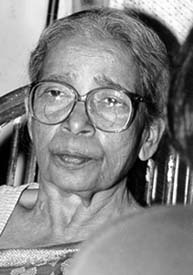
Mahasweta was born in undivided India in 1926, about two decades before India’s independence. The daughter of Manish Ghatak, a poet and novelist, and Dharitri Devi, a writer and social worker, Mahasweta probably had literary activism in her genes. It was community service that emerged on the scene before writing, though. As a college student, Mahasweta joined her friends for providing relief to the victims of the infamous man-made Bengal famine (1942-44). They would distribute food, check through dead bodies lying in street to reach out to those still alive, feed them and take them to relief centres. This direct, raw brush with suffering became the seed of Mahasweta’s empathizing disposition.

Marriage came early, at the age of 20, when she tied the knot with Bijon Bhattacharya, a renowned Bengali playwright. Her husband was also a member of the Communist Party of India (CPI), and at the time the couple was establishing its marital life, communists often became the targets of persecution. As a result, it became tough for Bhattacharya to support his family, extended with the birth of their son, Nabarun, two years after their marriage. Mahasweta did several odd jobs to keep the hearth burning—selling dye powder, supplying monkeys for research to the U.S., teaching at a school, private tuitions—before she finally got a government job at the Post and Telegraph department. But this job was not to last for too long either. Someone dropped a few books of Marx, Lenin, and Engels in her office drawer, and Mahasweta was terminated on the charge of being a communist.

The Writer:

This is when she took to the pen—mainly to supplement family income. She started with light fiction for literary magazines. Her first book-length work appeared in 1956. Jhansir Rani or The Queen of Jhansi was a fictional account of the life of Lakshmi Bai, an Indian woman ruler who valiantly led her forces to fight the British, before being killed by them at age 22. Even as a first-time author, Mahasweta showed the impractical sincerity that distinguishes true writers of historical fiction. She borrowed money from family and friends to travel to the Bundelkhand region in north India, where Lakshmi Bai ruled, and walked her way through remote villages and deserts, collecting oral history, folklores, and ballads. Interestingly, this same seriousness of approach in collecting data for her stories would be seen years later, during the activist phase of her life.

The debut book brought Mahasweta recognition as a writer, and thus started her ascent in the world of Bengali literature. She authored several books, adding the pennies toward sustaining her family, while at the same time mirroring the prevailing social atmosphere. This promising writer went through a period of personal turmoil, during which time her marriage broke apart, and she suffered from acute depression. Bouncing back soon, she completed her master’s degree in English and served as a lecturer of English literature for two decades. This was also the period when she came up with her seminal novel, Hajar Churashir Ma (The Mother of 1084), which deals with the Naxalite movement in West Bengal that saw many young lives ending before their prime. The book captures the sad realities of the movement through the eyes of the mother of one such young boy. In her attempt to understand the violent movement, this mother comes face to face with her sense of estrangement from the double standard-ridden bourgeois society to which she belongs. Poignant, yet shorn of overt sentimental elements, the novel made a big impact on readers across India and was recently taken to the silver screen by director Govind Nihlani.

The Activist:

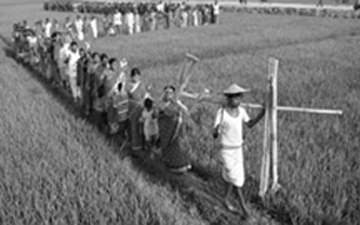
Over the next few years, Mahasweta’s pen took a decisive turn. She started integrating history into her storytelling. This wasn’t the conventionally disseminated history though; this was forgotten history, a part of the past that had been conveniently kept under the wraps. She wielded the power of narrative to document as well as spread stories of tribal resistances against the British and other social exploitations in books such as Aranyer Adhikar (Right to the Forest), and Chotti Munda O Tar Teer (Chotti Munda and his Arrow), among others. Here was a writer who truly wrote what she knew. Her vocation wasn’t divorced from her writing. She is amongst the foremost activists working for a better life for India’s tribals. Not content to stay cosy within her writing room, she ventured deep into the forests to live and work with tribal people.

She founded India’s first bonded-labour organization in 1980, bringing together thousands of bonded labourers to give them an organised platform for raising their voice against forced labour. A year before this, she turned Bortika, a literary periodical edited by her, into an open forum in which tribal people, peasants, factory workers, and rickshaw pullers wrote about their day-to-day experiences and problems.

This effort of hers is groundbreaking, since it records the issues of the underprivileged in their own words, unadulterated and unadorned. She went on to create a tribal welfare society for the Kheria and Shabar tribes, which are among the poorest in India. In 1986, this untiring champion of the voiceless founded the Adim Jaati Aikya Parishad or Ancient Tribes Union, a forum of 38 West Bengal tribal groups.

Nine years ago, at 71, Mahasweta received the Ramon Magsaysay Award for “her compassionate crusade through art and activism to claim for tribal peoples a just and honorable place in India’s national life.” While accepting the award, she said, “I will have a sense of fulfillment if more and more young writers took to unbeaten tracks. My India still lives behind a curtain of darkness. A curtain that separates the mainstream society from the poor and the deprived. But then why my India alone? Cannot one say the same for so many countries and societies today? As the century comes to an end, it is important that we all make an attempt to tear the curtain of darkness, see the reality that lies beyond and see our own true faces in the process.”

Images:
Delirium
The Hindu
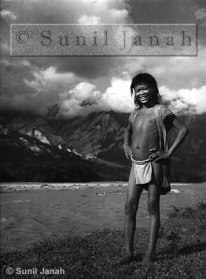
Sunil Janah’s Site


, , ,

Guest Blog – Cesar Puch

Cesar Puch dons numerous hats and does so with élan. Horror writer, programmer, webmaster, art director, and very recently, editor. Shadow Regions, an anthology of twilight zone-ish horror tales, edited by Puch, is now available. In this post, Cesar takes us on…

A Stroll Down the Dark Path of Horror Writing

A short while ago my good friend Bhaswati mentioned she wanted to invite a few of her acquaintances to write some guest posts in her blog and that she wanted me to do one of those. I told her I was definitely interested and I asked her if there were any “guidelines” before I went ahead with my post. “Actually, there is something,” she said then, and mentioned her interest in a theme that’s very close to me, a theme that brought some questions to her mind.

I write horror. As many of you might know, our Sury’s (Bhaswati’s) writing goes in a totally different direction, yet she always wonders… We’re the best of friends, even when she is in India and I’m in Peru, we share a lot together and one thing she commented once was how someone she considers to be “so nice” (her judgement, lol) could come up with stuff that can be pretty dark.

I don’t know if I’m nice or not, and I do believe everyone has a shade of darkness within, huge or tiny that varies. It is what makes us humans after all. I do like to think of myself as “a good person”, I stick to myself, I try to be respectful to others, and I try to play devil’s advocate whenever there’s a discussion just to try to grab all the dimensions in a problem… But yes, darkness is familiar to me. So why choose that? Why write horror? How can an apparently happy, nice, good person by society’s standards come up with stuff that makes us cringe? Does it take a toll? Let’s try to answer these questions.

Many years ago horror novelist Stephen King wrote a book called “The Dark Half”. In it, Thad Beaumont, a literary writer makes money and fans on the side by writing gore with the byline of George Stark. Stark is not only a name on a page, but has been even given a “past” as a violent ex-con now living in a self-imposed exile. When Thad makes the decision of “killing off Stark,” the fictitious Stark materializes and comes “back from the death” to claim vengeance on the editor, the publisher, and ultimately on Thad—the people responsible for his death. In doing so, Stark appears as murderous as the characters in his gory novels.

Are all horror writers like George Stark? OK, forget the murders (or not … :-s) but are all horror writers dark people who dwell on violence and blood, who have a twisted view of the world, who surround themselves with the goriest props and who have a shrine at home for Friday the 13ths Jason Voorhies? The answer is… ok, maybe some, in greater or lesser degree. But for the most part, we are talking about family people, very respectful, very friendly. I’ve had the chance to meet a few horror authors who turn out to be really nice people to deal with. I recently started reading a novel called The Rising, a very gory, very acclaimed book about zombies by author Brian Keene. The first thing I read was the dedication: “For David, Daddy loves you more than infinity”. Not quite the axe-wielding lunatic, huh?

Personally I’m not a big fan of gore (for those who don’t know gore implies stuff like running blood, spilling bowels, decapitations, and other gruesome stuff, the more gruesome the better, at least for fans). I am a true fan of The Twilight Zone and stories that, as I said in the introduction to my anthology Shadow Regions, scare you in the mind, not in the gut. I like the psychological aspect of horror, the supernatural part of it. However, during my experience as a writer, I inevitably dealt with pretty hard stuff: rape, violence, child abuse, pedophilia, death of loved ones, teenage sex and drug use, murder, etc. You see, before writing about sadistic killings, I prefer writing about (sadly) very real stuff. Is that hard to do? Yes, sometimes it is. But when you write horror you just do it.

I’m sure writing tough subjects are a part of every genre in fiction. Does it keep us away from going back to the keyboard? Not really. Why? Hard to tell. One thing is clear though. Our writing, at least mine, is in no way a celebration of these terrible things, but they are inevitable for the plot moving forward.

And what about the not so real but oh so terrible other stuff? The supernatural bit? Why that? I can’t answer for other authors and their choice of the amount of gore and supernatural elements they put in their work. For me, the supernatural has a charm of its own. It pokes at my sense of wonder. It takes me away from a world where things are bound to happen into another where even more things are bound to happen, in ways I never thought possible.

I used to be a scaredy-cat when I was little. I don’t know when that changed, when I took a step inside that darkness. But I believe I didn’t go in without a few lifelines. I do like to think I keep a solid line traced between what’s fiction and what’s real, even if one mirrors the other. I do like to think that the horror I write is not a direct reflection of me, but a sort of catharsis. Once I talked to a friend of mine—who happens to be a psychologist—about eros and thanatos (good and evil), how we all have some of both within ourselves. She said, in my case I was sort of recycling thanatos and turning it into eros, creation.

So why do I write these hard things? Here’s a simple-minded answer: I’d rather see them on page than in the real world.

I write creepy stuff, I generate scares for people who want to be scared, excited, chilled for a bit before returning to their everyday lives. Readers come in all shades and colors. Some want that jolt, be it just a little shock or a massive discharge. And for those readers there will always be the authors who provide those jolts. Those people are not the potential serial killers some would think. They just approach fiction in a different way.

Kabir: Timeless Tapestry

http://studio.margotlovinger.com/quilts_pillows/bedquilts/

Alakh Elahi ek hai, nam darya do
Ram Rahim ek hai, naam darya do
Krishna Karim ek hai, naam darya do
Kashi Kaba ek hai, ek Ram Rahim

Alakh (the Invisible) and Elahi (the Lord) are one, with two names
Ram and Rahim are one, with two names
Krishna and Karim are one, with two names
Kashi and Kaaba are but one, with two names.

That’s how inconspicuously Kabir entered my life — as this song my mother often sang. In the years since, the 15th-century poet-seer has remained a constant, always in the background but permeating the spirit like the air around me. Kabir weaved himself in quite easily into the open, boundary-less fabric of our house, forged by two humanist grandparents.

At a time when the traditional Indian society was largely conservative when it came to mainstream Hindu and Muslim faiths, Kabir, an unlettered weaver, declared that Kashi and Kaaba, the two holiest pilgrimages for the Hindus and Muslims respectively, were actually one, only called by different names. So were Ram and Rahim, Krishna and Karim—Hindu and Islamic deities.

The refrain continued through school, only the words changed, like in the case of Ram and Rahim.

Tum Ram kaho, woh Rahim kahen
Dono ki garaz Allah se hai

You say Ram, they say Rahim
Both are concerned with Allah

The reason Kabir, despite erasing the man-made lines between religions and sects (he denounces most of them in his songs and couplets or dohas), continues to make his presence felt is precisely because of that. Deep within we all realize we are one, free, unbound. We realize there’s no sense to all the carnage that goes on in the name of religion. 

http://www.chennaimuseum.org/

Is ghat antar baag bagiche
Isi mein sirjanhara

WITHIN this earthen vessel are bowers and groves, and within it is the Creator.
(Translation: Rabindranath Tagore)

This beautiful song about everything being encompassed within this physical shell of our bodies came to me in my college years. I heard it in a cassette produced by Sahmet, an organization working against communal forces through creative expressions such as song, visual arts, theater, and dance. The rest of the song translates to:

Within this vessel are the seven oceans and the unnumbered stars.
The touchstone and the jewel-appraiser are within;
And within this vessel the Eternal soundeth, and the spring wells up.
Kabîr says: “Listen tome, my Friend! My beloved Lord is within.”

Kabir is not just about breaking the shackles of religious fanaticism; Kabir is a whole way of life. When Kabir breaks free, he does so totally:


Haman hai ishq mastana
Haman ko hoshiyari kya
Rahen azad ya jag mein
Haman duniya se yaari kya

I am bursting with love,
Why do I need to be careful?
Being free in the world,
What of the world’s friendship do I need?

This song became an anthem from the moment I listened to it. What an expression of being whole and free without needing any of the “stuff” we keep clinging to! Liberation in its truest sense.

Ud Jayega Huns Akela,
Jug Darshan Ka Mela
Jaise Paat Gire Taruvar Se,
Milna Bahut Duhela
Naa Jane Kidhar Girega,
Lageya Pawan Ka Rela
Jub Howe Umur Puri,
Jab Chute Ga Hukum Huzuri
Jum Ke Doot Bade Mazboot,
Jum Se Pada Jhamela
Das Kabir Har Ke Gun Gawe,
Wah Har Ko Paran Pawe
Guru Ki Karni Guru Jayega,
Chele Ki Karni Chela

The Swan will fly away all alone,
Spectacle of the world will be a mere fair
As the leaf that falls from the tree
Is difficult to find
Who knows where it will fall
Once it is struck with a gust of wind
When life span is complete
Then listening to orders, following others will be over
The messengers of Yama are very strong
It’s an entanglement with Yama
Servant Kabir Praises the attributes of the Lord
He finds the Lord soon
Guru will go according to his doings
The disciple according to his.

Yama = The God of death in Hindu mythology.

(Courtesy: http://groups.google.com/group/rec.music.indian.classical)

,

At Home, Working


The pending post-it list never lets up.

Words get written, exploding on the screen in gazillions; not one of them is for my Work In Progress (WIP).

The cell phone rings intermittently–morning, noon, night. Regular work briefings. Emergency calls to “please accommodate” new work within tight deadlines.

The calendar polar bear gives me quiet, understanding company.

Work doesn’t suck. It brings in money, much needed for survival. But…

In trying to resuscitate my bank account, I seldom find time for the joys that filled my inside. I miss visiting my blog pals. The mind yearns for those daily doses of laconic, exquisite, epigrammatic cyber inscriptions. The heart longs to go and say a hello to the authors of those inscriptions, dear friends, all.

The WIP unassumingly positions itself at the bottom of the “work” heap, not pestering to be paid attention to. “I will wait,” it says “for the moment you are ready to pick me up with love, not because you have to, but because it will bring joy to the spirit. I know you will, no worries. Do tend to the ailing coffers first.”

Here is someone trying to find her feet in the land of freelancers. That’s all that keeps me away from here lately. Trust me, I am still…

At Home, Writing.


Holiday Preparations by Rabindranath Tagore

Translated by: Bhaswati Ghosh

Puja holidays draw near.
Sunshine is draped in the colour of Champa.
The air ripples with dew,
the Shiuli’s fragrance lingers
like the delicate caress of someone’s cool hands.
White clouds make the sky lazy—
seeing which, the mind relaxes.

Mastermoshai continues to teach
the primitive story of coal
A student sits on a bench and paddles his feet,
his mind awash with images—
The cracked ghat of Kamal pond,
And the fruit-laden custard apple tree of the Bhanjas.
And he sees in his mind’s eyes, the zigzag path
that leads from the milkmen’s neighbourhood

by the side of the haat,
into the tishi fields, next to the river.

At the economics class in college
the bespectacled, medal-winning student
jots down a list–
which recent novel to buy,
which shop will give on credit—
the sari with the “Do Remember” border,
shakha washed in gold,
a pair of red velvet chappals, handcrafted in Dilli
and a silk cloth-bound poetry book,
printed on antique paper—
the title of which eludes him.

In the three-storied Bhawanipore hosue
Thin and heavy voices converge in confabs —
Will it be Mount Abu or Madurai this time
Or perhaps Dalhousie or Puri
Or shall it be the tried and tested Darjeeling.

And I see on the auburn road
leading to the station
kid goats on lease from the city
five or six of them — tied with ropes.
Their futile cries rend the
kaash tasselled silent autumn sky.
As if they have somehow sensed
their puja holidays are near.

                        ~

Mastermoshai = Respectful term for teacher (Bengali)
Champa, Shiuli = Flowers
Ghat = Bank
Haat = Weekly village market
Tishi = Linseed
Shakha = White bangle made of a particular stone. Is worn by married Bengali women.
Chappal = Footwear

 ~~~~~~~~~~~~~~~~~~~~~~~~~~~~~~~~~~~~~~~~~~~~~~~~~~~~~~~~~~~~~~~~~~~~~~~~~~~~~~~~~~~~~~~~~~~~~~~~~~~~~~~~~

ছুটির আয়োজন

কাছে এল পূজার ছুটি।
রোদ্‌দুরে লেগেছে চাঁপাফুলের রঙ।
হাওয়া উঠছে শিশিরে শির্‌শিরিয়ে,
শিউলির গন্ধ এসে লাগে
যেন কার ঠাণ্ডা হাতের কোমল সেবা।
আকাশের কোণে কোণে
সাদা মেঘের আলস্য,
দেখে মন লাগে না কাজে।

মাস্টারমশায় পড়িয়ে চলেন
পাথুরে কয়লার আদিম কথা,
ছেলেটা বেঞ্চিতে পা দোলায়,
ছবি দেখে আপন মনে–
কমলদিঘির ফাটল-ধরা ঘাট
আর ভঞ্জদের পাঁচিল-ঘেঁষা
আতাগাছের ফলে-ভরা ডাল।
আর দেখে সে মনে মনে তিসির খেতে
গোয়ালপাড়ার ভিতর দিয়ে
রাস্তা গেছে এঁকেবেঁকে হাটের পাশে
নদীর ধারে।

কলেজের ইকনমিক্‌স্‌-ক্লাসে
খাতায় ফর্দ নিচ্ছে টুকে
চশমা-চোখে মেডেল-পাওয়া ছাত্র–
হালের লেখা কোন্‌ উপন্যাস কিনতে হবে,
ধারে মিলবে কোন্‌ দোকানে
“মনে-রেখো’ পাড়ের শাড়ি,
সোনায় জড়ানো শাঁখা,
দিল্লির-কাজ-করা লাল মখমলের চটি।
আর চাই রেশমে-বাঁধাই-করা
অ্যাণ্টিক কাগজে ছাপা কবিতার বই,
এখনো তার নাম মনে পড়ছে না।

ভবানীপুরের তেতালা বাড়িতে
আলাপ চলছে সরু মোটা গলায়–
এবার আবুপাহাড় না মাদুরা
না ড্যাল্‌হৌসি কিম্বা পুরী
না সেই চিরকেলে চেনা লোকের দার্জিলিঙ।
আর দেখছি সামনে দিয়ে
স্টেশনে যাবার রাঙা রাস্তায়
শহরের-দাদন-দেওয়া দড়িবাঁধা ছাগল-ছানা
পাঁচটা ছটা ক’রে।
তাদের নিষ্ফল কান্নার স্বর ছড়িয়ে পড়ে
কাশের-ঝালর-দোলা শরতের শান্ত আকাশে।
কেমন ক’রে বুঝেছে তারা
এল তাদের পূজার ছুটির দিন।

, ,

Pujo Manei…

That Bengali phrase translates to “the very meaning of pujo.” Pujo here refers to Durga Puja, the biggest festival for Bengalis. It marks goddess Durga’s descent to earth for ten days every year. This year, Durga Puja officially begins on September 23. It’s a special time of the year. A time when religion and worship become the venerated background. The foreground is the Bengalis’ love for culture, cuisine, and most of all, celebration.


Shiuli Flower

For me,

the very meaning of Pujo is:

the unmistakable slight chill in the air that indicates the enervating summer days are history. The sky looks bright, the air feels fresh, the heart sings with the first autumn notes.

the scent of shiuli flower floating in from the tree outside the house every evening, signaling the coming of Durga.

waking up at 4 am on Mahalaya, the invocation that seeks Durga’s descent on earth. Even before dawn cracks through the sky on this day, All India Radio broadcasts a special audio programme, featuring scriptural chants, classical songs, and the story of how Durga annihilated Mahisasura, the demon king.

the memories of taking part in pre-pujo competitions all over the neighbourhood. Recitation, music, art, sports, fancy dress…the competitions that introduced me to Rabindranath, Nazrul, Sukumar Ray, Sukanto. The competitions that brought me books in the form of prizes.

gorging on the most delectable food at various pandals. From spicy jhalmuri to egg-rolls dripping with oil to biryani and kababs. And of course the traditional, delicious bhog.

the inimitable sound of Dhak overtaking the entire atmosphere, silencing the crass automobile horns with its nostalgic beats.

the staying up late in the night at pandals, watching cultural shows. The shows that brought folk theatre like Jatra, folk music like baul and bhatiyali as well as “modern” songs to urban Bengalis. The nights that wrapped you in the cozy aura of black and white Bengali films featuring the never-fading, ever-endeared Uttam Kumar.

coming across friends and acquaintances you haven’t met in ages. Like your social studies teacher from middle school whom all the students loved. Or the physics teacher you would have done anything to avoid back when you were her student.

that inexplicable happiness and widespread camaraderie that mingles with the crisp autumn air.


The Book Meme

I have been tagged by the erudite and universally-linked [;)] John Baker for a meme. Thanks, John. It was fun doing this. 🙂

1. One book that changed your life?
As a high school teenager it was Charles Chaplin’s My Autobiography. To me, his story was a testimony of the triumph of human spirit, and the book served as an inspiration for many years.

A few years back, I read A Fine Balance and was jolted out of my complacency. The book made me think for days and made me more conscious about the lives outside my insulated sphere of existence.

2. One book you have read more than once?

Rabindranath Tagore’s Sanchaita (collected poems). It’s been a constant friend.

3. One book you would want on a desert island?

Gitabitan, Rabindranath Tagore’s book of songs. It has some of the finest of this sage poet’s poetry, sweeping the entire spectrum of the universe. Since I also sing Rabindrasangeet (Tagore songs), this book will be a perfect companion at a deserted island.

4. One book that made you cry?

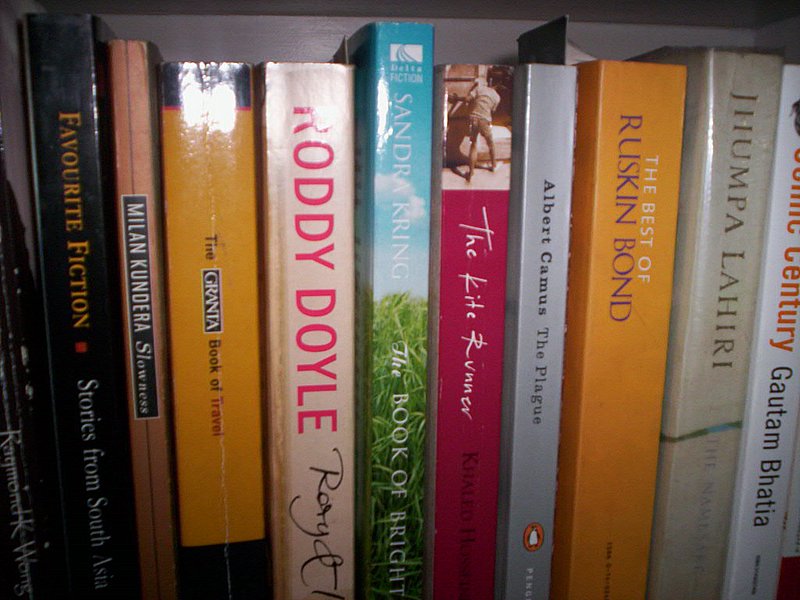
Most recently it was The Kite Runner by Khaled Hosseini.

5. One book that made you laugh?

Carry Me Home by Sandra Kring. The book also made me cry in places. Terrific read.

6. One book you wish you had been written?

The Kite Runner. I wish I could like as lyrically, create a setting as enchanting and atmospheric, and evoke emotions as strong as Hosseini did.

7. One book you wish had never been written?

Am yet to come across a book like that.

8. One book you are currently reading?

The Plague by Albert Camus.

9. One book you have been meaning to read?

SO many. My immediate priority is The Namesake by Jhumpa Lahiri.

Now for my victims, er, friends to tag. Here they are: Shadow Writer, Lotus Reads, Bernita, Susan, Amin, and Simran. Can’t wait to see your answers!

PS: I just noticed I read one of the questions incorrectly. Q 6 asks about “one book I wish had been written,” and my response is for a book I wish I had written. LOL. You can expect that from this daft reader/writer. So instead of answering the original question, I am tweaking it here so my answer fits. Yes, I am lazy too.

,