The End of Cold War (Short Story) — Part II

Read Part I

The college hasn’t closed; nor have the train times changed. The five-past-ten still arrives and leaves every day. Mr. Ticket Checker checks passengers’ tickets near the gate in the same fashion. A month has passed; yet the colored sari’s border isn’t seen waving along the gate.

Nevertheless, Bhagyalakshmi and Ashirbad still face each other with the same ferocity, standing in opposite rows. Nitai inhales his tobacco slowly; Ramcharan chews on his roasted grams without a blink. Neither passes even a slight smile at the other. There is still no exchange of words between the two.

Passengers come in so many types. Bhagyalakshmi and Ashirbad, too, ferry tons of travelers. From station to market, market to town. However, this labor is nothing more than mere labor. Bhagyalakshmi and Ashirbad’s horns boom out of sheer habit. The blare doesn’t rouse with the joy of a victory song.

As usual, the five-past-ten train arrives at the station. It’s late by ten minutes. The swarming crowd of passengers rushes in through the gate. And…Nitai’s eyes light up. Ramcharan’s face quavers. Both rickshaws—Bhagyalakshmi and Ashirbad suddenly shiver. A colored figure is seen to excitedly bypass Mr. Checker and heading this way.

The tinted face can be identified even through the gaps in the thick crowd. That girl. Nitai gets a firm grip on his cycle’s handle. Ramcharan strikes his seat to shake off the dust and lifts a restless foot on the paddle. The horns of Bhagyalakshmi and Ashirbad blow desperately.

Within moments, a puzzling blow starts to dampen this rush of resentment between the two rickshaws . Bhagyalakshmi’s horn sobs; Ashirbad’s quivers like a cracked throat.

The girl’s appearance has changed. A vermillion strip colors her hair’s parting; there is a veil on her head. She isn’t wearing those small earrings any longer. A huge pair of kanpashas adorns her ears. The girl isn’t alone. There’s someone with her. A young man. He is donning a silk shirt and a Farasganga dhoti. New shoes on his feet. Three rings on the fingers.

The man holds the girl’s hand. He smiles and so does she. Both come this way. Suddenly, they stop. It is as if they cannot see the two rows of rickshaws on the stand. They don’t even cast a glance on them—not the girl, not her male escort.

They pause in front of a taxi. Before even a minute passes, Sanatan’s shiny new taxi races away on the road, cutting between the two rows of rickshaws, scattering a cloud of smoke all over the place. The girl has left, along with her male companion.

The smoke and burnt petrol smell coming off Sanatan’s new taxi don’t hang heavy in the air for too long either. A gust of wind comes and sways the curtains of Bhagyalakshmi and Ashirbad.

All rickshaws leave with passengers. Pakshiraj, Mon re Aamar, Urboshi, Koto Moja, Joy Ma Kali, Pranaram, Shukh-Shanti, and Chol re Chol. Only Bhagyalakshmi and Ashirbad stand quietly, facing each other.

Fatigue and lethargy seem to suddenly grip both the rickshaws. No resentment, none of that colliding resolve. None of them fidgets.

Ramcharan says, “Hey, Nitai, mind giving me a bidi?”

“Here,” Nitai says.

THE END

The End of Cold War (Short Story) — Part I

By Subodh Ghosh

Translated by Bhaswati Ghosh

A mention of the station’s name would make it clear to just about anyone which place is being referred to and how far it is from Calcutta.

Rayer Haat station. One needs to travel about a mile from here to reach the city crowds. There’s a market. A look at the market reveals there must be a mid-sized town nearby, a town that has everything. Court, hospital, theater, college. If one stands close to the market, the names of the roads become visible along with their appearances. College Road, Hospital Road and so on. Even from this distance, the advertisement jingle blaring out of the theater loudspeaker can be heard.

Only when a passenger train arrives, does the station come to life with an uproar; it’s always quiet otherwise. Forever silent. At most times of the day and night, the station’s life droops with a lazy drowsiness. Two big Nagkeshar trees stand on the platform. A peanut seller sleeps under them. When the sharp whistle of a train’s arrival blows, he wakes up with a start.

On crossing the station gate where tickets are checked, one comes across a staircase, which leads to a pebble-strewn area—packed with a few taxis and around ten cycle rickshaws. The clamor reaches its peak when the passengers jostle their way across the narrow gate to land at this open space. The horns of all taxis and rickshaws start blowing together, accompanied with shouts and calls. “Come here, sir…here, Ma…this way, Babu. Three annas for market, four annas for town.”

Taxis call, “Come, come. One rupee to go to the town.”

All the taxis and rickshaws get passengers. There are always a few travelers who prefer to ride the taxi and don’t hesitate to pay a rupee for a mile.

The rickshaws stand in two rows facing each other. This row includes Bhagyalakshmi, Koto Moja, Joy Ma Kali, Pakshiraj, and Mon re Aamar. That row has Chol re Chol, Shukh Shanti, Urboshi, Ashirbad, and Pranaram. Besides, this row’s Bhagyalakshmi and that row’s Ashirbad are always face to face, as if seething with wrath against each other. Bhagyalakshmi’s Nitai slowly smokes his bidi in, his eyes glaring at Ashirbad’s Ramcharan. And Ramcharan chews on roasted grams while glancing at Nitai from the corner of his eye. The other eight rickshaws display no such tussle. Karali, Bhanu, Siddiq, Girdhari and others wonder why such malice exists between Bhagyalakshmi and Ashirbad. No one understands why Nitai throws such nasty glares at Ramcharan. And why does Ramcharan answer back with his lip-biting mean stare either? It’s a mystery.

In terms of income, neither of them lags behind the other. If one of them earns less in a particular week, he makes up for it in the next. On days when passengers come for a dip in the Ganga, Nitai makes a little more money. But the very next week, Ramcharan’s rickshaw draws countless passengers to the fair.

Nitai and Ramcharan are both stout men. It’s difficult to say who would win if both actually engaged in a duel. Nitai wears a short shirt and a dhoti. Ramcharan dons a vest and a half pant. They appear to be of the same age as well. Between twenty and twenty-one.

For as long as these two rickshaws stay in their respective rows at the stand, facing each other, both suffer a silent anxiety. Nitai constantly looks towards the station gate. Ramcharan does, too. Passengers swarm in from the gates and scatter near the stand. They approach the rickshaws. But neither Nitai’s nor Ramcharan’s eyes betray any eagerness to grab passengers. Both of them look with great hope at the gate, expecting the arrival of someone special. Perhaps the person would come; yesterday’s arrival was by the five past ten train. Will it be a no show today?

When the ticket checker’s figure moves away and the last passenger is seen crossing the gate, both Nitai and Ramcharan sigh with relief. The person hasn’t come. The anxiety contest lulls a bit, and both of them focus on other passengers.


Bhanu, Siddiq, and Girdhari try to figure it out. Nitai and Ramcharan are no strangers to each other. In fact, there used to a time when they were thick pals, until only six months ago. Neither even wants to exchange a simple word with the other. Six months ago Bhagyalakshmi and Ashirbad would stand together in the same row. There have been occasions when on seeing Urboshi standing beside Bhagyalakshmi, Ramcharan created a ruckus, pushing Ashirbad next to Bhagyalakshmi. Bhanu would remark, “Ah, these tw are just like Ram and Lakshman. Can’t stay without one another.”

Not every day, but at least thrice a week, a girl alights at this station from one of the passenger trains. One look at her reveals her background, the reason she comes to the Rayer Haat station on those three days, and the place she intends to reach.

She goes to the town. Carries books. All the rickshaw-wallahs know she studies in the town college.

But where does she come from? Many know that as well. Bhanu says “She comes from Jaigarh. There’s a new township at Jaigarh, near Tribeni.”

The girl comes and goes back alone. In the evening, she would board any rickshaw in the town to catch the five-fifty train. Urboshi, Pakshiraj, or Mon re Aamar would bring her from the town.

The responsibility to take her from the station to the town, however, rests only on two rickshaws—Bhagyalakshmi and Ashirbad. Nitai clutches the cycle’s handles strong; Ramcharan’s feet get fidgety on the cycle’s paddle. Both blow their horns as if gripped by a fervent resolve.

As soon as she approaches the stand, two rickshaws leap out of the assembly of vehicles. The front wheels of the two rickshaws collide. The clash of the rickshaws blocks the road. The girl can’t move.

Not that she needs to. Either Bhagyalakshmi or Ashirbad speeds out of the stand with its horn shaking the quiet air with a victory song and then race through the roads. Empty roads flanked by small bamboo bushes and old shrines. The rickshaw runs past big  mango trees and the mirth of bird calls. Market, College Road, College. The rickshaw’s journey stops; either Bhagyalakshmi or Ashirbad.

Bhanu laughs, “Like Nitai, like Ramcharan; both are shameless”

Siddiq consumes his khaini and says with a smile, “Both have gone crazy.”

Indeed, it is as if they have gone mad. Nitai’s sad eyes suggest that whenever Ramcharan takes the girl on his rickshaw with a pride and crushes Nitai’s soul with the blow of his horn. For a long time, Nitai stands with a still look. As if he has forgotten his ability to toil and his doggedness to earn money.

The same crazed look takes over Ramcharan’s face, too. Whenever the girl climbs up Bhagyalakshmi. A long plait dangles on her back; on some days it is a wide knot, green slippers, and a colored sari. Sometimes it’s striped, sometimes dotted, sometimes, printed. Bhagyalakshmi races with a breeze; the girl’s earrings shake in a whirl.

The moment Bhagyalakshmi disappears into the shadows of the mango trees, Ramcharan blows the dust off Ashirbad’s seat with a thud and talks to the approaching passenger. “Where will you go? How many people? I won’t take more than two passengers, Moshai.”

Who knows what has happened? It has been many days, nearly a month. Winter’s chill has given way to spring’s breeze. The mango trees are laden with florets. But where’s that girl?

Part II


Image courtesy:
http://www.flickr.com/photos/jackol/838178/
Tuntuni and the Cat by Upendrakishore Ray

There’s a brinjal plant in the backyard. Tuntuni has built her nest by stitching the plant’s leaves. Three little fledglings lie in the nest. They are so small they can’t fly or even open their eyes. They just open their mouths and call out “cheen-cheen.”

The family cat is really wicked. She just thinks I shall eat Tuntuni’s fledglings. One day she came near the brinjal plant and said, “What are you doing, dear Tuntuni?”

Tuntuni bowed and leant her head by the branch of the brinjal plant and said, “Salutations, your highness.” The cat went away happily.

She would come every day, Tuntuni would greet her and address her as “Queen” and the cat would go away feeling happy.

Tuntuni’s fledglings have grown up now. They don’t keep their eyes shut anymore. Seeing this, their mother asked them, “My dear ones, can you fly now?”

The little ones said, “Yes, Ma, we can.”

Tuntuni said, “Let’s see if you can hop over to that top branch of that tall Tal tree.”

The fledglings immediately flew over to the top branch. Tuntuni smiled and said, “Let the evil cat come now!”

In a while, the cat walked in and said, “So, what are you up to, Tuntuni?”

Tuntuni gestured a kick at her and said, “Get lost, you wretched cat!” With that, she quickly flew away.

Baring her teeth in rage, the naughty cat jumped upon the brinjal plant, but could neither catch Tuntuni, nor eat her babies. She returned home, wounded with the sharp gashes off the thorns of the brinjal plant.

Images:

http://www.mariquita.com

Translated by Bhaswati Ghosh

First Sorrow by Rabindranath Tagore

The path by the shadow of the forest is now covered with grass.

On that deserted road, someone called me from behind.

“Don’t you recognise me?”

I turned back to look at him.

“I remember you, but do not recall your name.”

He said, “I am the sorrow who came to you when you were twenty-five.”

The corner of his eyes revealed a spark of ray, just like moonlight on a lake.

I stood there, surprised.

“Back then, you appeared like a dark monsoon cloud. Now, you look like a golden idol. Have you lost the tears of that day?” I asked.

He didn’t say anything, just smiled. I realized everything was contained in that smile.


The clouds of the rainy day had learned to smile like bright sunny days of the summer.

I asked him, “Have you preserved my youth of twenty-five?”

“Yes, I made it my necklace. Not even a single petal of the spring’s garland had fallen.”

I said, “See, how I have shriveled with age. But my youth is still adorning your neck, as fresh as ever.”

He slowly put that necklace around my neck and said, “Do you remember, that day you had said, you don’t need consolation, you only want sorrow?”

I shrugged a little. “Yes, I did. But it has been so long; I had forgotten about it.”

“But the one within you hadn’t forgotten. Now, you must accept me,” he said.

I held his hand and said, “How wonderful you look!”

He smiled and said, “That which was once sorrow, is now peace.”

Translated by Bhaswati Ghosh

Holiday Preparations by Rabindranath Tagore

Translated by: Bhaswati Ghosh

Puja holidays draw near.
Sunshine is draped in the colour of Champa.
The air ripples with dew,
the Shiuli’s fragrance lingers
like the delicate caress of someone’s cool hands.
White clouds make the sky lazy—
seeing which, the mind relaxes.

Mastermoshai continues to teach
the primitive story of coal
A student sits on a bench and paddles his feet,
his mind awash with images—
The cracked ghat of Kamal pond,
And the fruit-laden custard apple tree of the Bhanjas.
And he sees in his mind’s eyes, the zigzag path
that leads from the milkmen’s neighbourhood

by the side of the haat,
into the tishi fields, next to the river.

At the economics class in college
the bespectacled, medal-winning student
jots down a list–
which recent novel to buy,
which shop will give on credit—
the sari with the “Do Remember” border,
shakha washed in gold,
a pair of red velvet chappals, handcrafted in Dilli
and a silk cloth-bound poetry book,
printed on antique paper—
the title of which eludes him.

In the three-storied Bhawanipore hosue
Thin and heavy voices converge in confabs —
Will it be Mount Abu or Madurai this time
Or perhaps Dalhousie or Puri
Or shall it be the tried and tested Darjeeling.

And I see on the auburn road
leading to the station
kid goats on lease from the city
five or six of them — tied with ropes.
Their futile cries rend the
kaash tasselled silent autumn sky.
As if they have somehow sensed
their puja holidays are near.

                        ~

Mastermoshai = Respectful term for teacher (Bengali)
Champa, Shiuli = Flowers
Ghat = Bank
Haat = Weekly village market
Tishi = Linseed
Shakha = White bangle made of a particular stone. Is worn by married Bengali women.
Chappal = Footwear

 ~~~~~~~~~~~~~~~~~~~~~~~~~~~~~~~~~~~~~~~~~~~~~~~~~~~~~~~~~~~~~~~~~~~~~~~~~~~~~~~~~~~~~~~~~~~~~~~~~~~~~~~~~

ছুটির আয়োজন

কাছে এল পূজার ছুটি।
রোদ্‌দুরে লেগেছে চাঁপাফুলের রঙ।
হাওয়া উঠছে শিশিরে শির্‌শিরিয়ে,
শিউলির গন্ধ এসে লাগে
যেন কার ঠাণ্ডা হাতের কোমল সেবা।
আকাশের কোণে কোণে
সাদা মেঘের আলস্য,
দেখে মন লাগে না কাজে।

মাস্টারমশায় পড়িয়ে চলেন
পাথুরে কয়লার আদিম কথা,
ছেলেটা বেঞ্চিতে পা দোলায়,
ছবি দেখে আপন মনে–
কমলদিঘির ফাটল-ধরা ঘাট
আর ভঞ্জদের পাঁচিল-ঘেঁষা
আতাগাছের ফলে-ভরা ডাল।
আর দেখে সে মনে মনে তিসির খেতে
গোয়ালপাড়ার ভিতর দিয়ে
রাস্তা গেছে এঁকেবেঁকে হাটের পাশে
নদীর ধারে।

কলেজের ইকনমিক্‌স্‌-ক্লাসে
খাতায় ফর্দ নিচ্ছে টুকে
চশমা-চোখে মেডেল-পাওয়া ছাত্র–
হালের লেখা কোন্‌ উপন্যাস কিনতে হবে,
ধারে মিলবে কোন্‌ দোকানে
“মনে-রেখো’ পাড়ের শাড়ি,
সোনায় জড়ানো শাঁখা,
দিল্লির-কাজ-করা লাল মখমলের চটি।
আর চাই রেশমে-বাঁধাই-করা
অ্যাণ্টিক কাগজে ছাপা কবিতার বই,
এখনো তার নাম মনে পড়ছে না।

ভবানীপুরের তেতালা বাড়িতে
আলাপ চলছে সরু মোটা গলায়–
এবার আবুপাহাড় না মাদুরা
না ড্যাল্‌হৌসি কিম্বা পুরী
না সেই চিরকেলে চেনা লোকের দার্জিলিঙ।
আর দেখছি সামনে দিয়ে
স্টেশনে যাবার রাঙা রাস্তায়
শহরের-দাদন-দেওয়া দড়িবাঁধা ছাগল-ছানা
পাঁচটা ছটা ক’রে।
তাদের নিষ্ফল কান্নার স্বর ছড়িয়ে পড়ে
কাশের-ঝালর-দোলা শরতের শান্ত আকাশে।
কেমন ক’রে বুঝেছে তারা
এল তাদের পূজার ছুটির দিন।

, ,

PAGLA DASHU (Crazy Dashu) — II, By Sukumar Ray

Missed Part I? Read it here.

The Deeds of Dashu (continued)

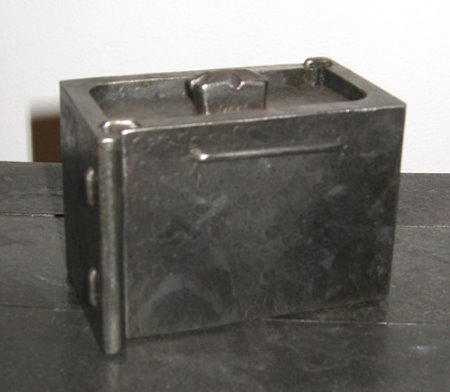
On one occasion, just after the vacations, Dashu came to the school with an intriguing box. Master Mashai asked him, “What’s in that box, Dashu?” He replied, “My things, sir.” A little debate ensued among us regarding the nature of his “things.” We noticed Dashu had all the essential school items with him–books, notebooks, pencil, blade. Then what “things” was he talking about? When we asked him, he didn’t give a direct reply. Instead, he clutched the box to his chest and said, “I am warning you all. Don’t ever mess with my box.” Then, he opened the lid slightly with a key and peeked inside while mumbling some calculations. The moment I tried to lean over to catch a glimpse, Dashu locked it up.


Soon, this became a hot topic of discussion for the rest of us. Someone said, “It’s his lunch box. He must be hiding food inside it.” But I never saw him opening the box during lunch time to eat anything. Some suggested, “It could be his money bag. It must contain a lot of cash. That is why he never parts with it.” To this, another boy said, “Why such a big box to keep money? Is he planning to open a money-lending business in the school?”

During lunch one day, Dashu hastily gave me the key to the box and said, “Keep this with yourself, make sure you don’t lose it. If I get a little late in returning, please hand over the key to the watchman before you all go to the classroom.” With that he went away, leaving the box with the watchman.

We were thrilled! After so long, we had an opportunity; now only the watchman needed to move away for a while. Shortly, the watchman lit his stove to make rotis* and went to the water tap with a few utensils. This was just the moment we were waiting for. Five-seven of us boys bent over the box. I opened it and saw a fat bundle of papers rolled tightly with tattered cloth strings. Quickly opening the knot, we found another paper box inside, which in turn carried yet another small paper bundle. On opening that, a card popped out. One side of the card said, “Eat a green banana,”^ while the other side had the words “Excessive curiosity is not good.” We started exchanging stupefied glances with each other. At last someone said, “The lad sure took us for a ride.” Another boy said, “Let’s tie it up exactly the way it was, so he doesn’t have any inkling that we’d opened it. That would teach him a lesson, all right.” I said, “Fine. When he returns, you all politely request him to open the box and show what it contains.” We quickly wrapped up all the papers with strings and dropped the bundle inside the box.

I was just about to lock the box when we heard a thunderous guffaw. That’s when we saw Dashu, seated atop the boundary wall, laughing insanely. The buffoon was actually watching the whole show from a vantage point. We realised the entire chain of events–giving me the key, keeping the box with the watchman, making an excuse of going out at lunch–all these were part of Dashu’s prank scheme. He had been carrying that box for all these days just to make us appear like idiots.

Is it without any reason that we call him Crazy Dashu?

* Roti = Indian flat bread
^ Eat a green banana = In Bengal, this phrase is used to mildly snide effect, after fooling someone or to indiacate that a person’s wish isn’t going to be granted.

[The End]

Translated by: Bhaswati Ghosh

, , ,

PAGLA DASHU (Crazy Dashu) — I, By Sukumar Ray

The Deeds of Dashu

In our school, there was hardly anyone who didn’t know Crazy Dashu. Even those who knew nobody was familiar withDashu. One time, a new watchman came to our school; he was totally rustic. No sooner than he heard about Crazy Dashu, had he identified him. That’s because from his looks, speech, and movement you could tell Dashu was a bit off in the head. He had big round eyes, unnecessarily long ears, and a scrub of scruffy hair. Whenever he walked fast or spoke in a busy manner, it reminded one of lobsters for some reason.

Not that he was foolish. When it came to arithmetic, especially complex multiplication and division problems, his brain worked rather well. Again, there were occasions when he reveled in duping us with such well-forged plans, that we were left embarrassed and stunned.

At the time Dashu or Dasharathi joined our school, Jagabandhu was famous as the “best boy” of our class. He was good in studies no doubt, but we hadn’t seen a jealous wet cat like him. One day, Dashu approached Jagabandhu to ask him the meaning of an English word. Jagabandhu snapped at him without any reason, saying, “Do I have nothing better to do? Today I will teach him English, tomorrow I’ll have to help someone else with maths, the next day another one would come to me with a new request. And I’d just go on wasting time on this!” A livid Dashu replied, “Hey, you are such a petty little rascal.” Jagabandhu complained to Pandit Mashai, “That new boy is calling me names.” Pandit Mashai* gave Dashu such a yelling that the poor fellow just went quiet.

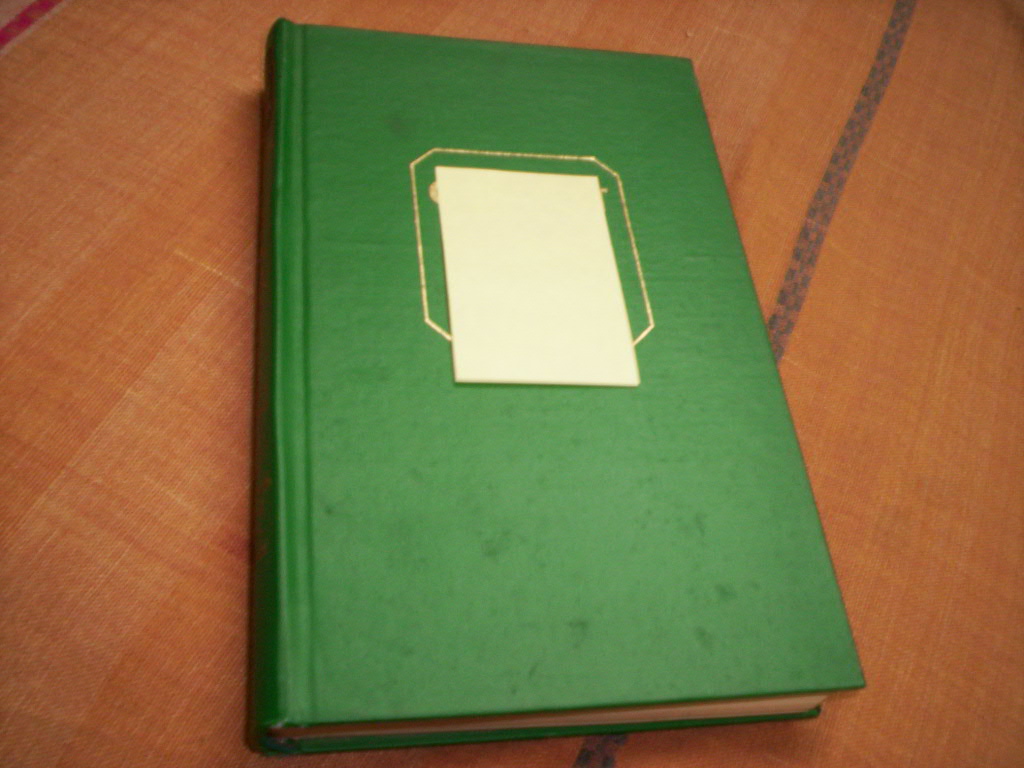
Bishtubabu taught us English. Jagabandhu was his favourite student. While lecturing, whenever he needed to refer to the textbook, Bishtubabu would get it from Jagabandhu. One day, while teaching us grammar, he asked Jagabandhu for the book. Our friend immediately handed him the green-cover-wrapped grammar tome. As he opened the book, Master Mashai^ asked grimly, “Whose book is this?” Broadening his chest in pride Jagabandhu said, “Mine.” Master Mashai said, “Hmm, is this a new edition? The entire book has changed, I see.” With that, he started reading, “Hair-raising detective tales of Inspector Jashobant.”

Unable to understand whatever was happening, Jagabandhu just froze, flabbergasted. Master Mashai rolled his eyes devilishly and said, “So you are learning such higher things, haan?” Jagabandhu tried to mutter something, but Master Mashai cut him short and said, “Just shut up now. No need to act nice and good. Enough of that!” Jagabandhu’s ears went red with shame and insult, and we sure were delighted to see that. Later of course, we learned that this was the handiwork of brother Dashu, who had replaced another green-cover book with Jagabandhu’s grammar book.

We always poked fun at Dashu, often ridiculing his intelligence and looks, right in front of him. I don’t recall him getting upset about it even once. A lot of times, he would colour our comments and make up funny stories about himself. One day he said, “In our neighbourhood, whenever someone makes dry mango candy, I am in big demand. Can you guess why?” “Why?” We asked, “Do you relish mango candy?” He said, “Oh no, that’s not the reason. You see, when they spread the candy for drying on the terraces, I go there and show my face a couple of times. That’s enough to drive all the crows away from the area. So no one needs to guard the mango candy while it dries.”

* Pandit Mashai = Respectable term for teacher.
^ Master Mashai = Respectable term for teacher.

Enjoyed? Read Part II here.

Translated by: Bhaswati Ghosh

, , ,

The Path to Walk on, by Rabindranath Tagore

This, indeed, is the path to walk on.

It has wound its way through the woods to the fields, through the fields to the riverbank, next to the banyan tree; then it courses its way through the villages. As it moves further, beside the lush fields, amid the shadows of the mango orchards, by the bank of the Padma River, I cannot tell in which village it would wind up.

So many have passed by me on this path, some joining my company, others seen from afar; some with a veil over their heads, others without any; some walking to fetch water, others returning with water.

II

The day has retreated and darkness descends.

Once this path had seemed personal, intimately mine; now I see I carried a summon to walk on it only once, no more.

Past the lime trees, the pond, the riverbank, the cowsheds, the paddy mounds, the familiar glances, the known words, the acquainted circles, there won’t be any returning to say “Hey, there!”

This is the path to walk on, not one to return from.

This hazy evening, I turned back once and found the path to be an ode to many a forgotten footstep, all entwined in the notes of Bhairavi.

This path has summarized the stories of all its travelers in a single dirt trail; the one track that traverses between sunrise and sunset, from one golden gate to another.

III

“Dear walking path, don’t keep all the stories you have accumulated through the ages tied quietly into your dust strand. I am pressing my ears against your dust, whisper them to me.”

The path remains silent, pointing its index finger toward the dark curtain of night.

“Dear walking path, where have the worries and desires of all the travelers gone?”

The mute path doesn’t talk. It just lays down signals between sunrise and sunset.

“Dear walking path, the feet that embraced your bosom like a shower of wildflowers, are they nowhere today?”

Does the path know its end—where forgotten flowers and silent songs reach, where starlight illumines a Diwali of resplendent pain.

Translated by: Bhaswati Ghosh

,

The Alleyway, by Rabindranath Tagore

One day, this concrete-laden alleyway of ours set out—twisting her way right and left again and again—to find something. But she would get stuck at every move–a house on the right, a house on the left, a house right across.

From what little she could see by glancing above, a streak of the sky revealed itself—as narrow and as skewed as herself.

She asked that filtered slice of sky, “Tell me sister, of which city are you the blue alley?”

In the afternoon, she would catch a glimpse of the sun for just a moment and think, “I couldn’t understand any of that.”

Thick monsoon clouds cast shadows over the two rows of houses, as if someone had scratched out the rays of light from the alleyway’s notebook with a pencil. Rain slid through the concrete, swooshing the snaky stream away with a snake charmer’s drum beats. The road became slippery, the umbrellas of pedestrians hit each other, and the water from an open drain suddenly splashed up to an umbrella, stunning its carrier.

Overwhelmed, the alleyway uttered, “There wasn’t any problem when it was parched dry. Why this sudden pouring trouble?”

                                                                                                   ***

At the end of spring the southern wind looks delinquent, raising swirls of dust and sweeping torn pieces of paper. The alleyway says, bewildered, “Which god’s drunken dance is this?”

She knows that all the garbage that gathers around her every day—fish scales, stove ash, vegetable peels, dead rats—are reality. With those around, she never thinks, “Why all this?”

Yet when the autumn sun slants itself on the balcony of a house, when the notes of Bhairavi float from the puja nahabat*, she thinks for a second, “Perhaps something big really lies beyond this concrete track.”

The day yawns; sunlight drops from the shoulders of the houses to rest in a corner of the alleyway, just like the slipping away of the end of a housewife’s sari. The clock strikes nine; the maidservant walks by, tucking to her waist a basket of vegetables she bought from the market; the smell and smoke of cooking envelopes the alleyway; office goers get busy.

And the alleyway thinks again, “All of reality is contained within this concrete road. What I had thought of as something big must be just a dream.”

* Music room or a tower from which live music is played/performed during festive occasions.

Translated by: Bhaswati Ghosh
Image courtesy: Flickr