When speaking, may I utter the bare minimum When speaking, may I never say the maximum May it be so little that on a particular day I keep repeating one thing over and over again like a koel whistling in a loop before suddenly hushing.
May everyone know my maximum silence as the silence of that which wasn’t uttered, of all that was said. My eternal, tiny silence, small, flickering, against mighty mountains, the sky, the sun, the moon.
In the stunning stillness when unrighteousness is attacked My lone silence The lull of a gun before it’s fired.
And the silence of my unceasing hope of the peace from a gun that never went off.
The silence of a lamp kept carefully aglow under the vast quietude of a banyan.
Protected from being trampled by the cacophony of a crowd this silence of mine, the silence of me saving my words when speaking amid a procession of my own people.
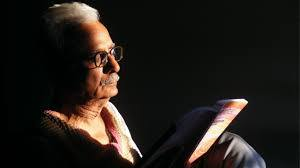
बोलने में कम से कम बोलूँ / विनोद कुमार शुक्ल (१९३७ – २०२५) बोलने में कम से कम बोलूँ कभी बोलूँ, अधिकतम न बोलूँ इतना कम कि किसी दिन एक बात बार-बार बोलूँ जैसे कोयल की बार-बार की कूक फिर चुप ।
ग़लत पर घात लगाकर हमला करने के सन्नाटे में मेरा एक चुप- चलने के पहले एक बंदूक का चुप ।
और बंदूक जो कभी नहीं चली इतनी शांति का हमेशा-की मेरी उम्मीद का चुप ।
बरगद के विशाल एकांत के नीचे सम्हाल कर रखा हुआ जलते दिये का चुप ।
भीड़ के हल्ले में कुचलने से बचा यह मेरा चुप, अपनों के जुलूस में बोलूँ कि बोलने को सम्हालकर रखूँ का चुप । [Translation, mine]
Gargi Kalita reviewed my debut poetry collection, NOSTALGIC FOR A PLACE NEVER SEEN in East India Story. Read the review:
Bhaswati Ghosh’s Nostalgic for a Place Never Seen is a debut poetry collection that maps the evocative terrain of belonging. It explores how home is a terrain of the mind, a pulse of longing bridging the intimate and the global. A review by Gargi Kalita.
Nostalgia is never merely a return to the past—it is a tender reimagining, a delicate reconstruction of moments and emotions that memory alone can no longer fully contain. Home, in this sense, is not merely a geographical fixity but a terrain of the mind, a pulse of longing that beats through time, language, and loss. It is within this evocative terrain that Bhaswati Ghosh situated her debut poetry collection Nostalgic for a Place Never Seen ,a volume that reads like a cartography of belonging drawn from within the self and across shifting geographies. Ghosh, a bilingual writer and translator based in Canada,with roots in New Delhi, belongs to the lineage of Indian diasporic poets whose work bridges the intimate with the historical, the local with the global.
Some places are etched not in geography, but in remembrance—borne across generations like heirlooms wrapped in stories, scents, and silence. Bhaswati Ghosh’s Nostalgic for a Place Never Seen traces an emotional landscape, where her grandmother’s lost Barisal finds a home in verse.This poetry collection, imbued with reflections on migration, memory, and identity, is organized into eight thematically rich sections— “Dwellings: Temporary and Permanent”, “Places, Faces, Traces”, “Scents, Tastes, Textures”, “Seasons of the Heart”, “Water, Earth, Air, Fire”, “The Humming Octave”, “The Wordsmiths”, and “Movements in and Out of Time”. Across 72 poems of the collection, Ghosh explores personal and historical landscapes of belonging shaped by displacement, capturing the tension between the fleeting and the lasting, and inviting readers to find home in language and memory.
At the heart of Nostalgic for a Place Never Seen is a poignant reflection on memory, identity, displacement, cultural inheritance, and longing that extends beyond personal history. Bhaswati Ghosh’s poetry weaves internal and external landscapes, capturing the emotional geography of diasporic consciousness—a yearning not just for a place, but for the sense of rootedness it once held.
The title poem, “Nostalgic for a Place Never Seen,” which lends its name to the collection, forms the emotional nucleus of the book. Drawing on Ghosh’s inherited memory of her grandmother’s forced migration from Barisal in East Bengal (now Bangladesh) to post-Partition Delhi, it reflects the vivid presence of places never personally visited but deeply felt through intergenerational storytelling. This aligns with Marianne Hirsch’s concept of “postmemory”—the transmission of trauma and displacement across generations. Ghosh captures this poignantly in both “Nostalgic for a Place Never Seen” and “Native Dialect.”
In a video about Sugandha, I see a mother
combing her daughter’s hair. Before I know it,
the daughter turns into my grandma
and breaks into a song.
‘Why don’t you come anymore?’ she asks.
— Nostalgic for a Place Never Seen
When her little sister visited
and Grandma broke into their
Barisailya patois, I heard songs
of home in the words. Of boat
races and river markets. Of a
home I’d dreamt of in past
lives amid simulated
nostalgia.
— Native Dialect
In the opening section, Dwellings: Temporary and Permanent, poems like “Sleeping at My Mother’s House” and “Displaced Persons’ Colony” do not merely reconstruct domestic spaces; they evoke the invisible sediment of emotion—love, loss, security, fragility, displacement —that inhabits these spaces. These dwellings become mnemonic devices, where physical architecture merges with psychological and ancestral landscapes.
Likewise, in Places, Faces, Traces, the poet functions as a flaneuse of memory, fluidly moving through places like Lajpat Nagar, Buenos Aires, and Mukteshwar—each becoming a site of introspection and remembrance.These locations act less as physical sites and more as emotional landscapes, forming a metaphorical map. Ghosh suggests that memory is borderless, bound more to emotion than to nation, language, or place. The poems wrestle with the impermanence of space and the persistent search for anchorage amidst flux.
Perhaps the most evocative section of the book is Scents, Tastes, Textures, which serves as a visceral archive of cultural identity. In poems like “Cooking Hilsa” and “Cumin,” food becomes a tactile memory, carrying heritage on the tongue and in the body. These sensorial evocations act as gateways to lost homes and forgotten rituals, echoing Roland Barthes’s idea of the “grain” in language—where meaning is felt rather than just stated. For Ghosh, food is not merely sustenance; it is survival, nostalgia, and resistance. As she writes in “Cumin”:
Taste is the original rebel. It resists being caged in
closed jars or steaming woks.
In the later sections—Seasons of the Heart and Movements In and Out of Time—Ghosh turns inward, tracing the subtle shifts of self and emotion. Poems like “Learning, Unlearning” and “Debts to Pay” reflect on growth and changing roles, offering a sense of becoming rather than just loss or nostalgia. Ghosh shows that belonging is fluid, woven through memory and choice, and this quiet evolution is captured in “Learning, Unlearning”, where she writes:
She learns to pause more on the
page. I unlearn the stiffness of knowing it all.
A central thread in the collection is Ghosh’s nuanced exploration of “home”—Is home a physical dwelling, a landscape of memory, a sound, a scent or even a fleeting feeling? Ghosh’s poems move through Delhi, ancestral villages, and diasporic spaces, revealing home as both grounding and elusive. Echoing Edward Said’s “imagined geographies,”as she shows that places are shaped more by memory and feeling than by maps. The collection also explores identity and belonging from a female perspective, as Ghosh reclaims her grandmother’s story—giving voice and agency to women often sidelined in Partition narratives.
Stylistically, Ghosh’s poetry is defined by a quiet musicality that emerges not from ornamentation but from emotional authenticity. Yet, within this understated lyricism lies a deft command of literary craft—her metaphors, imagery, and structure deepen each poem’s emotional resonance. In “Fading Colour,” letters losing their hue become haunting emblems of histories dimmed by time and silence. In “Pickling Language,” the simple act of preserving becomes a vessel for memory and identity, where ancestral syntax ferments quietly in jars.
Ghosh’s lyrical minimalism resists excess, favouring the resonance of ordinary moments—stillness, observation, memory—each imbued with metaphorical richness. Subtle threads of Bengali and Hindustani lend her lines a textured intimacy, anchoring the diasporic experience in language. Eschewing nostalgia, she crafts verses of precision and clarity, conjuring cities like Delhi, Mexico City, and Buenos Aires not through maps, but through mood, rhythm, and metaphor. The result is poetry both introspective and worldly—rooted in the particular, yet open to the universal.
In an age where identity is continually redefined by movement and loss, Nostalgic for a Place Never Seen reminds us of the power of poetry to anchor us—to a language, a scent, a home, even if that home exists only in memory. Traversing continents and generations through everyday rituals and stories, Ghosh explores cultural heritage, displacement, and belonging, evoking empathy and prompting reflection on our own ties to memory and place.
There are certain spaces the soul longs for—not merely to dwell in, but to truly belong. Amid the scattered rhythms of postmodernity, this yearning becomes a search for rootedness not in geography, but in presence—a place deeply felt, where one is the place, and the place is the self. And that is what Bhaswati Ghosh’s Nostalgic for a Place Never Seen ultimately embodies—making it a vital literary contribution to Indian English poetry, diasporic literature, and memory studies.
Read this review of NOSTALGIC FOR A PLACE NEVER SEEN by Sayan Aich in Cha: An Asian Journal
Nostalgia is humanity’s Janus-faced companion—simultaneously looking back and forward, with someone or something perpetually tugging at us from behind. Yielding to it is not a mere indulgence but, at times, a necessity—offering the wisdom to understand who we are, shaped by the “roots” and “routes” that define our journeys. In a world increasingly fraught with conflict and displacement, it is only natural that narratives exploring these two R’s—roots and routes—should continue to emerge. For the people of the Indian subcontinent, whose shared and traumatic histories of Partition and the Bangladesh Liberation War remain deeply embedded in cultural memory, nostalgia serves as both a fertile and essential motif in the collective psyche and fiction. Stories born from survival and resettlement must be preserved and passed down to new generations of readers and listeners, lest they be erased by the official historiography of the nation. Since time immemorial, the world has progressed and endured through storytelling—the foundational thread of every community, woven through acts of telling and retelling across generations.
Bhaswati Ghosh’s debut poetry collection, Nostalgic for a Place Never Seen, encapsulates all of this—and more. Having grown up in New Delhi and now residing in Canada, Ghosh traverses and inhabits multiple worlds—the cities of her childhood and adulthood, the towns she has visited in her travels, and the villages she has never set foot in but knows intimately through the vivid recollections of her grandmother’s storytelling. In her poetry, time and space coalesce, overlap, and blur, mirroring the way memory itself operates—fluid, unpredictable, and untethered to rules or chronology. The past and the imagined intertwine, shaping a landscape where nostalgia is not merely a longing for what was, but for what could have been.
It’s October, but still uncomfortably muggy in Delhi. We’re crammed in a small car, five of us, including the driver, and frantically looking for a school in Civil Lines, one of the oldest areas in India’s capital city. The search gets long-winded as we have no GPS and directions from passersby keep leading us into lonely alleys. The school we’re looking for is the venue of a Durga Puja, the autumnal festival I’ve returned home for, from Canada, where I’ve been living for a decade now. By the time we finally find the school, it is way past lunch time, and my seven-year-old niece, who is with us, is hangry, a neologism I’ve heard friends in Canada use to describe someone whose anger is induced by hunger.
We take a customary look at the idol of Durga, then dash for the food court area the Kashmiri Gate – as this venue is called – Durga Puja is famous for. A, my niece, is led to the spot where steaming mutton biryani made with succulent, spiced goat meat, is being served on shiny aluminium foil plates. There are kebabs on offer as well, but the little girl isn’t interested in any of those items. She surveys the stalls and settles on samosas as a fresh batch of these deep-fried triangles arrives before her. I reach for my purse, but A stops me. She has her own money bag with some real money her parents gave her as festival allowance. For a plate of samosa that costs 20 rupees, A pulls out not two, but five ten-rupee bills – the entire amount she’s carrying – from her purse. She places all the five notes – 50 rupees on the table for the cashier. Everyone around her breaks into laughter. At seven, A knows her counting, but clearly, she doesn’t have enough experience in dealing with currency notes to know their value. The cashier kindly picks up two of the bills and asks her to keep the rest. After finishing her samosas, a less hangry A decides to cool off with an ice cream. She gives the vendor 20 rupees and he gives her a 5-rupee coin back after deducting the price of the chocolate cone she grabs.
Later as I try to guide A through counting currency, she tells me she’s got it all. “Look, you give someone money, they give you money back,” she insists, her knowledge fresh from the transaction with the ice cream seller. The child’s innocence humours and stuns me at the same time. To her, currency notes are the same as any other — only less interesting — thing you share with people to get something (including more of it) back. It’s of no greater value than the pencils or hair clips she exchanges with a friend. I refrain from giving her financial management lessons. This is her teaching moment, and for a change, I am the student. ***
April 1999
It has been nearly three weeks since I’ve stopped going to work. A supervisor has been putting me on difficult shifts for weeks in a row. At first it seems innocuous, but when the pattern keeps repeating itself alongside favours being granted to other colleagues for no discernible reason, I stop going to work. I don’t have it in me to confront people and have internalized the idea of resigning as I spend time doing mostly nothing at home. I say mostly because almost every morning, I walk down our street, a fat book in hand, to the house of Mastermoshai, as I call Sudhir Chanda, the elderly gentleman who teaches me the songs of Rabindranath Tagore.
Mastermoshai is a professional Rabindrasangeet teacher. Professional only in the notional sense, considering his indifference, bordering on abhorrence, to money in exchange for his lessons. Through close to half a century that would see New Delhi, the city of Mastermoshai’s work and teaching, transform from a quasi-socialist to a neoliberal economy, plush with high-paying private sector jobs, redoubled spending power for the middle class and steady inflation, the teacher’s tuition fee – a laughable 30 rupees – remains unchanged. Even that amount he hardly cares for. One is free to drop into his class, named Robigeetika, and learn without paying a single rupee.
During one of his occasional visits to our house he learns about my absence from work and asks me to make better use of my time – by going to his house for music lessons. No money is mentioned. All he asks for is that I call him once before leaving the house to make sure he doesn’t have any other appointment that day. Mastermoshai specifies no time either – any time before noon is good for him. I lap up the offer. I need something that can fill up my heart like soil does a freshly-dug grave. Music seems like a safe and sanative layer at the time.
I am in Delhi, where without an air conditioner, the house feels like an oven set to a constant, trapping heat and the outside feels like a sweeping field of fire. I came here, in my home city in April 2022, after a gap of three years and three months. It’s an April that feels like June, the peak of Delhi summers. After recovering from jet lag, a trip to the Himalayas and meals with relatives, I step out — braving the 46C furnace, to sit down with a few folks and listen. These interview-conversations are for gathering information for my current work-in-progress — a book on Delhi. But they are a lot more than that.
As I sat down in the drawing rooms of my interviewees’ houses, I noticed something other than their generosity of time. I discovered the comfort, now fast disappearing, of long conversations. Back in my childhood, this was a real thing. The very mention of a relative coming to visit and stay with us from cities like Jamshedpur or Kolkata, put us into dizzy anticipation — of dhaala bichhanas, makeshift floor beds and goppo, a colloquialism for golpo or stories that rolled into the night and continued until the wee hours of morning. This — the unplanned chat hours — were the most delicious part of a relative’s visit. While few of these addas — informal chat sessions — pertained to issues of global significance, they were always about reliving, and sometimes even re-imagining, lost times. We were fortunate to have the gift of unadulterated time back then — time that hadn’t been polluted by the eye’s addiction to screens, time that didn’t require us to update the world with our social or gastronomic status, time that didn’t make us feel guilty about spending hours simply lying on the floor and chatting.
A royal courtesan scorned by her lover A warrior princess who makes her life over Brothers cursed to turn into beasts A farmer’s wife who cooks up a feast The first songs I heard throbbed with dreams and rivers That’s what music is, a lifelong lover.
A bottle of fortified milk with its sipper inside my mouth, I would lie on the bed or the sofa as the story of Buddhu and Bhutum, two royal newborns cursed to the lives of a monkey and an owl, entered my toddler ears. Long before I knew what music meant, my ears were getting trained to catch a variety of notes. Saving money from their modest salaries, my mother and her younger brother would buy LP records to play for us on a turntable in my grandparents’ house where I was growing up. They were bringing home a variety of musical influences — Rabindrasangeet — songs written and composed by Rabindranath Tagore, the Bengali Nobel laureate, shyamasangeet — written and sung in the praise of Goddess Kali, Atulprasadi — devotional and love songs written and composed by Atul Prasad Sen, a Bengali composer, lyricist and singer who was also a lawyer, social worker, educationist and writer. Of everything that was played, though, what I and my brother, nearly three years older than me, loved were dramatized musicals (also known as dance dramas) by Tagore and musical folktales of the kind narrating Buddhu and Bhutum’s story in Bengali. The heightened effect of drama, rendered through songs and musical dialogues was the perfect blend of music and storytelling that had our attention, hungry for the goofy.
At the Monday/Thursday class eight of us circle our guru, his cotton wool beard just about eclipsing that concessional smile. Bageshree holds the room and our octaves together.
(From my poem, Bageshree)
While singing and listening to music remained a constant in both home and school, it was only in middle school that I came to identify the octave’s notes. My mother enrolled me into private classes in Hindustani classical vocal music, one of the two branches of Indian classical music (the other being Carnatic). She saved money again, this time to buy a harmonium to help me practice my lessons at home. In school, we got to learn a fair share of Hindi patriotic songs and Rabindrasangeet.
And then there was the radio at home. In between preparing for school work and practicing my classical music lessons, the radio — our primary source of listening to music — had replaced the turntable by this time. To me, the radio was a magic box. You turned on a knob and it brought you Hindi film music from the golden era of the 1950s and 60s, you moved the knob to your right and it played English pop songs and Western classical music. Somewhere in the middle, if you persisted, you could catch BBC World News, albeit with the hissing impatience of a faltering signal. Twice a week at dinner time, my mother religiously tuned into two Western music shows — Forces Request on Mondays and A Date with You on Thursdays. While the former featured songs requested by members of the Indian armed forces, the latter was a request show for regular listeners. This was my first window into The Beatles, The Carpenters, ABBA, The Beach Boys, Glen Campbell and many other singers and bands. That they coexisted in my musical universe with luminaries of Hindi film music like Sahir Ludhiyanvi, Sachin Dev Burman, Shailendra, Salil Chowdhury and many others as well as Rabindrasangeet in the melodic voices of Kanika Bandopadhyay, Suchitra Mitra and Debabrata Biswas was simply as natural as the multilingual world I inhabited that required me to switch form Bengali to Hindi to English based on the environment I found myself in.
In grade eight, my musical world became even richer as our first cassette tape player entered the house. It was a small machine, custom made for us by an acquaintance. In the machine’s early days, our cassette collection totaled to two tapes. Yet, the musical wealth these two cassette tapes brought was truly infinite. You’ll see why.
The first tape was a predictable choice — a Rabindrasangeet album my mother bought. The other one, procured by my brother, would alter my musical universe forever. It was a jugalbandi (duet) of sitarist, Ravi Shankar and sarod player, Ali Akbar Khan, accompanied on the tabla by Alla Rakha , legendary musicians all three of them. It was a concert, Ravi and Ali, guru brothers — a relationship tag disciples trained by the same guru would go by — recorded at the Philharmonic Hall in New York City in October 1972, a month after the death of their guru, Allauddin Khan, who happened to be Ali Akbar’s father and Ravi Shankar’s father-in-law. At the beginning of the tribute concert, Ravi Shankar introduced him as one of “the greatest musicians.” I find it curious that the year and the month of that particular concert coincided with my brother’s birth.
The virtuoso musicians played three rāgas (“a melodic framework for improvisation in Indian classical music akin to a melodic mode. The rāga is a unique and central feature of the classical Indian music tradition, and has no direct translation to concepts in classical European music. Each rāga is an array of melodic structures with musical motifs, considered in the Indian tradition to have the ability to “colour the mind” and affect the emotions of the audience.”), opening with Hem Bihag, created by the departed guru, Allauddin Khan himself, followed by Manj Khamaj and Sindhi Bhairavi.
Listening to Ravi Shankar and Ali Akbar Khan strum the strings of two different instruments in such meditative and yet unintrusive harmony took me to a place I’d never been before, and one I didn’t want to leave. To say that they were complementing each other would be woefully inadequate. It was as if they were playing each other’s instruments, not the one they themselves held. I hadn’t had the opportunity to listen to a true jugalbandi before this, and I remain grateful to this day that my initiation to this collaborative form happened with such a stellar performance. The moment I heard the first notes of the sitar and sarod in alaap (the non-rhythmic melody structure revealing the rāga), at once pensive and uplifting, I knew this was the love of a lifetime. Once they moved on to Manj Khamaj, this time their notes finding the company of Alla Rakha’s beats on the tabla, I felt being enveloped in Delhi’s December sunshine, an experience I’ve forever cherished, with a balmy tropical winter sun bringing a kind of warmth which instead of whip-lashing you, cloaked you in a warm embrace.
A soothing sadness, the colour of mellow afternoons, glides in. Tears soak stationary hours and passing cataclysms.
Negotiating years and terrains Manj Khamaj keeps breathing. A footsure confidant. In its folds, wars lose their way.
(From my poem, Manj Khamaj)
To this day, listening to this Manj Khamaj jugalbandi teleports me to such a comforting, snug tropical winter afternoon. As I listen to it for a millionth time, the music embeds itself into my immediate surroundings with such intimacy that I can’t tell where one instrument takes off and the other follows, as if the sitar and sarod were two brothers themselves, with the tabla as their loving guardian that held them together and became playful with them in turns. Through all my musical discoveries and learning, this album has remained a sublime true north that never fails to bring me back home, metaphorically and otherwise. It’s a discovery I made because of my brother, and that memory, entwined with the divine effect of the music itself, makes this widely-acclaimed concert intimately personal for me.
Ever since that brush with music at the deepest level, at the level of the spirit, I’ve found my musical world continue to expand, to include Sufi music, Latin American jazz, African folk music, the work of innovative composers like Gustavo Santaolalla and Ludovico Einaudi. In this world the inner and the outer become one for me and boundaries lose all meaning.
Music had held me by the hand when the world seemed to slip away from under my feet; it has calmed my nerves when medicine or sleep couldn’t; it has brought me joy in the middle of enervating ennui and it has often taken me back to that crispy sunshine of my childhood winters in Delhi.
My essay Discomfort Food in Dhaka Tribune looks at food from caste and class angles through the lens of literature.
The first time the appearance of food in a book shook me was when I read Om Prakash Valmiki’s Joothan more than a decade ago. I read the book in English translation, which retained Valmiki’s original Hindi title. This wasn’t, in all probability, merely a stylistic decision; it seems to have been a necessary one. For, the word joothan, like its Bengali equivalent eNthho, does not have a satisfactory English translation. The closest word that describes it — leftovers — is way too short of what joothan actually means — scraps of food left on one’s plate after a meal meant to be thrown in trash. In the autobiographical book, Valmiki describes how members of the Chuhra community — the caste he belonged to — would be served joothan by their upper caste masters as wages for manual labour. Valmiki describes, in excruciating detail, how the Chuhras would collect the remains of the meals left behind from an upper caste wedding, dry the bits of pooris they collected in the sun, and how he had to guard those pieces from crows, hens, and dogs. These dried bits, half-eaten by other people, would be saved for the rainy season, when they would be soaked in water and boiled, to be had with chili powder and salt or jaggery.
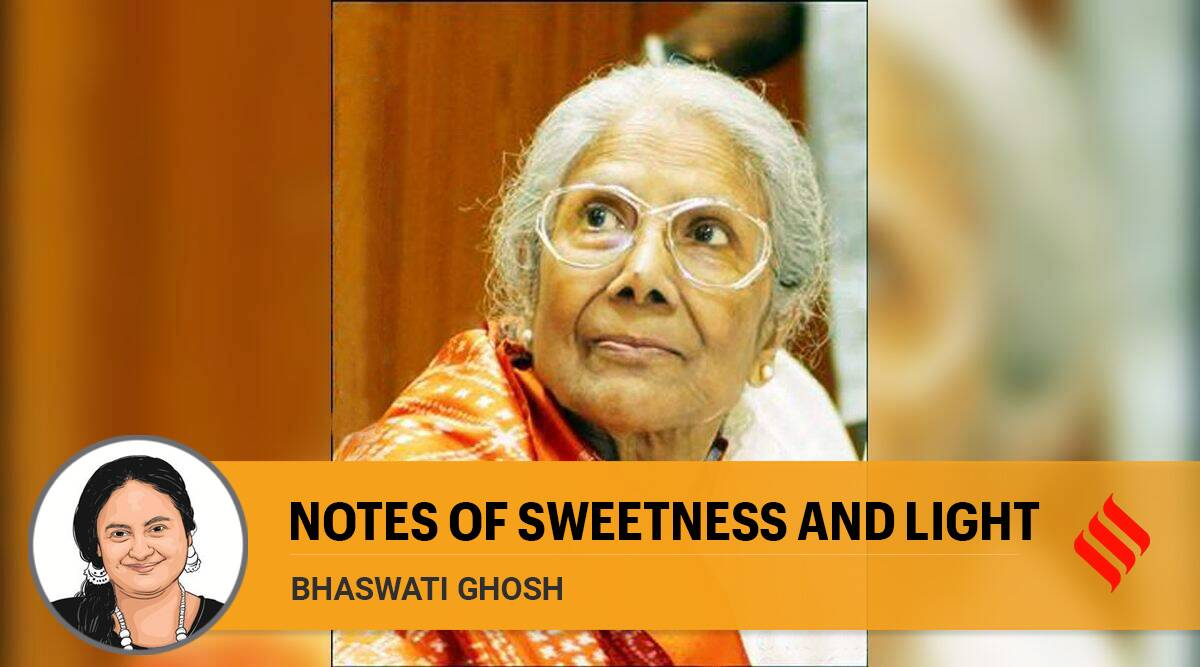
My tribute to singer, Sandhya Mukherjee, published in Indian Express.
Sandhya Mukherjee came to my listening universe inconspicuously. Growing up as a probashi Bengali in Delhi in the pre-digital age, I didn’t have Mukherjee as part of my early listening experience in the way Lata Mangeshkar or Geeta Dutt had been. I was two years away from hitting my teens when Mukherjee’s voice — unmistakable for its lilt and lalitya, Sanskrit/Bengali for sweetness or charm — entered my world as we moved to Chittaranjan Park in south Delhi. No Durga Puja went by without listening to songs by two legendary Mukherjees — Sandhya and Hemanta — being blared on loudspeakers. The pandals of the late 1980s were venues for the screening of black-and-white Bengali films on giant projectors. This was also when I found Sandhya Mukherjee’s voice merging with the screen persona of Suchitra Sen, even as Hemanta Mukherjee’s did with Uttam Kumar’s who often played her romantic interest. As I spent the past few days listening to the breathtakingly wide range of songs Mukherjee sang in her long and illustrious career, I found that the ability to adapt — to artistic idiosyncrasies, situational peculiarities and the basic demands of a piece of composition — was what made her such a versatile and gifted artist.
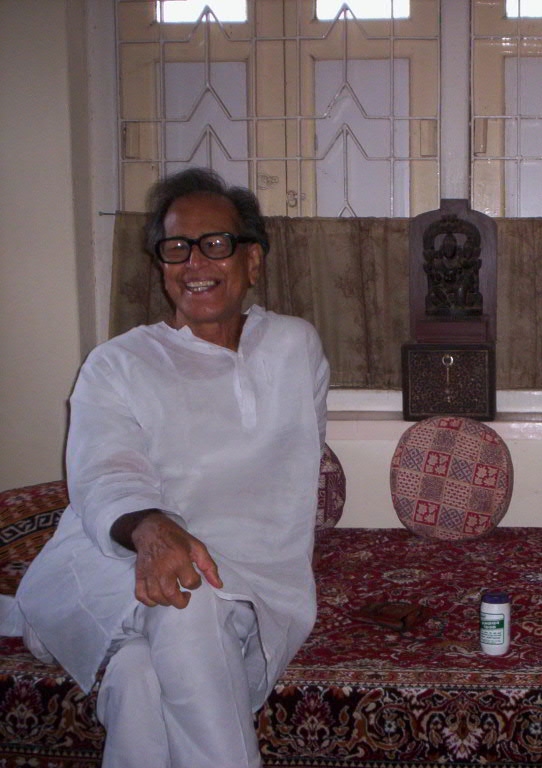
Prof. Somendranath Bandyopadhyay taught Bengali Language and Literature in Visva-Bharati, Santiniketan during 1957–1991. His subject was mainly Rabindranath Tagore. He wrote several books on Bengali poetry, art, philosophy and literature. In 2011, the Rabindra Bharati University, Kolkata awarded him the D. Litt. The following is my personal tribute to him.
1986 — A teacher’s visit
I am in Class 7 and we have moved to Chittarajan Park, South Delhi’s very own Bengali pocket, only a year ago. It’s 7 or perhaps 7:30 in the evening, a busy time for our family of six. I and Dada, my brother, are hunched over our schoolwork — homework, preparing for a class test and such. Dadubhai, my grandfather, is coaching me as usual. In the kitchen, my grandmother and mother, both tired from a day’s work at their respective offices, are hustling to get dinner ready. Suddenly, there’s a knock on the door. We have no telephone (cell phones haven’t been born yet) and aren’t expecting any visitors in particular. When the door is opened, two tall gentlemen, one of them in pristine white dhuti and panjabi, are found standing. The gentleman in white, the older of the two, asks for my mother, and when she comes to the door, she, and the rest of us, are startled beyond words. Professor Somendranath Bandopadhyay, her teacher from Visva-Bharati, Santiniketan, where Ma went to study for her MA in Bengali, has come to visit her. The last time the two of them had seen each other was more than a couple of decades ago, while my mother was his student. Back in her student days, he had shown extraordinary compassion to help her get through a difficult academic patch.
They had kept in touch through letters, and that year, as a student of class 7, when I witnessed this incredible moment, I realized why my mother held this teacher in such high regard. Professor Bandopadhyay was visiting relatives in Chittaranjan Park and mentioned that he wanted to meet his former student, who also lived in the neighbourhood. The conversation that followed through the evening is a blur to me, but I remember helping my mother sift whole wheat flour through a soft cotton cloth in the kitchen to ‘make’ refined flour as Ma and Grandma got busy making luchi, a delicacy that had to be served to a special guest. I remember my grandfather, a man of few words, expressing amazed delight that a teacher had taken the trouble of tracing his student’s house and visiting her. I remember that we were all amazed. I remember how a teacher’s visit had changed the complexion of a weary city evening. Over the next many decades, we would receive letters from him on postcards with beautiful line drawings depicting flowers, leaves, and nature on them.
After working for many different bosses for more than a decade, I finally decide to work for myself and become a freelance writer-editor. Working my own hours gives me the reward of finding more time to do the things that bring me joy — write, cook, travel. I plan a long vacation to West Bengal with my mother. We spend the bulk of our time in Kolkata, but also have Santiniketan and Bishnupur on our itinerary. At Santiniketan, when we seek accommodation at the in-campus guest house, we’re turned away, with no vacancy offered to us by way of explanation. We put up at a lodge close to the campus. That evening, when Ma and I visit Professor Bandopadhyay, now Somen Mama to me, she tells him about our lodging woes, and he chides her saying she should have called him right from the guest house. He asks us how long we plan to stay for, and when he learns it would be the next three days, he calls up the guest house to get us a room there. We move back into the campus, a pilgrimage for me, where she would wake up to, as she did in her days as a student, to the calls of doel, the oriental magpie and bou-kotha-kao, the Indian cuckoo. I would discover mornings that sounded sweeter than anything I’d ever experienced in my existence as a city-bred.
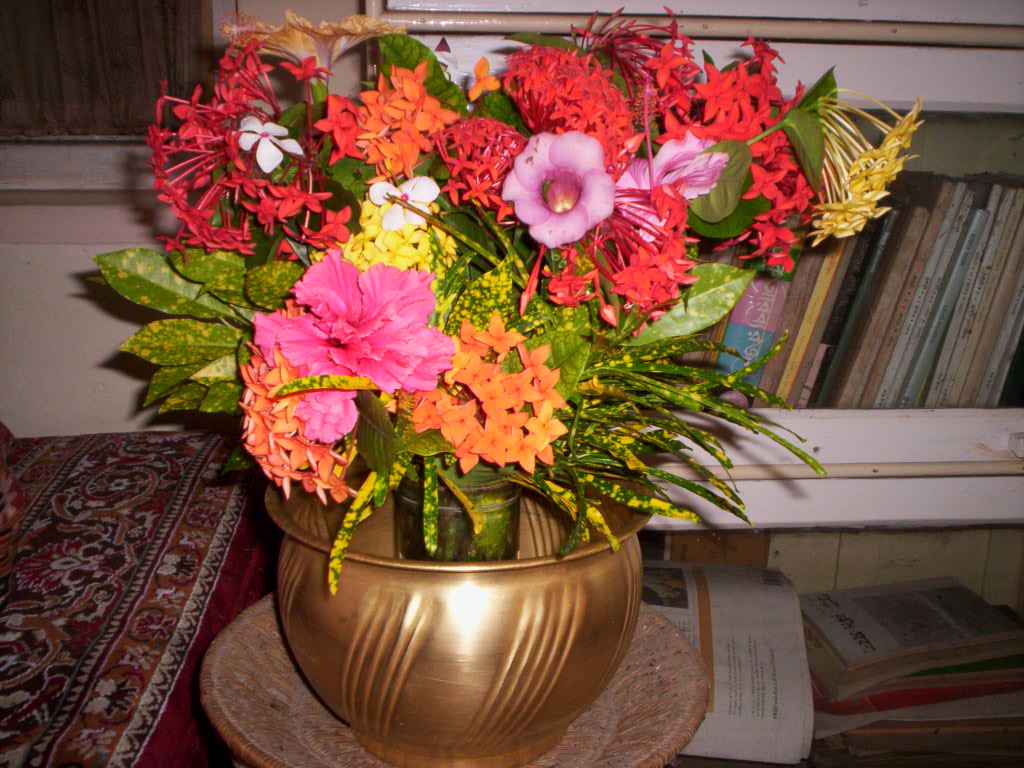
At Somen Mama’s house for breakfast one morning, his affectionate wife, Boudi to all students, and Maami to me, treats us to a deliciously elaborate spread, complete with luchi, torkaari, chop (croquettes), mishti and her signature vanilla pound cake that I’ve come to relish. We sit at the low jol-chowkis in the dining area of this aesthetically pleasing and inviting house as Mama talks to us about Tagore’s worldview and the radical relevance of the Buddha’s teachings. Now and again, a humorous vein emerges, and he breaks into a laughter — resonant, uninhibited, completely disarming. We drift back to the living room for tea and more stimulating conversation. He then brings a copy of his latest book — Shilpi Ramkinkar Alaapchari — that he signs for my mother as a gift. He gives me a beautiful pair of polished burgundy wooden chopsticks that he’d gotten from his visit to Japan. I spend some quiet moments in their beautiful garden outside, soaking in the prettiness of flowers — clusters of Ashok and hibiscus in several colours.
Back in Delhi, my mother reads the book and keeps nudging me to do the same. I politely keep telling her I will, until I can’t put it off any longer. I’m barely into the first paragraph when I realize I wouldn’t be able to put it down before devouring every last sentence, every last word of it. The book’s format is deceptively everyday — it’s a series of conversations between two neighbours. Only, in this case, both the interviewee — the artist-sculptor Ramkinkar Baij and his interviewer — Somendranath Bandopadhyay are so much in synchronicity that the reader couldn’t ask for two better conversationalists.
Shilpi Ramkinkar Alaapchari
By simply describing the living quarters of the renowned artist who he found as his neighbour, Somen Mama, draws me in. I am transported to the Santiniketan of Baij’s student and work life, to his world of mud and plaster, of studying from other artists, both at home and globally, of his interactions with Rabindranath Tagore who encourages him to chart his own course without looking back, of deeply empathizing with and drawing inspiration for his work from the Santhal Adivasis living in the area, and most of all, of living a passionate, feisty, and fiercely creative life on his own terms. The book is not merely a gift to my mother, to us, I realize; it’s a gift to all who can read the Bengali language. I am so taken by it that I want to tell the world about it and excitedly write a blog post and translate a few favourite parts. Later that year, I send my proposal for translating this remarkable book to an international translation fellowship. It gets accepted.
2008-2012 — A teacher for life
I am back in Santiniketan with Ma to meet with Somen Mama, to give him the good news, to seek his permission to translate the book. He talks about having heard of a certain blogger from Delhi who had translated parts of the book; then he realizes that person is me. So far he’s only known me by my pet name, so it has taken him a while to make the connection. While we’re here this time, I ask Somen Mama, now my author, lots of questions regarding the book’s technical aspects. He takes out big tomes from his study and patiently answers each one of my queries. I also spend my time looking more closely at Ramkinkar Baij’s sculptures spread across the open campus — Sujata, Santhal Family, Mill Call. My seeing is now informed by the history and context of these iconic works, captured with vivid sincerity by Somen Mama.
I travel to Norwich, UK, the site of my fellowship and complete translating the book. Over the next year, I look for publishers for the book and fortunately, the book finds a home. A journey that began with my mother’s master’s education in Santiniketan comes full circle as my name appears below his on a book cover. Shilpi Ramkinkar Alaapchari becomes My Days With Ramkinkar Baij in English.
2022 — The final adieu
On a March day, we receive the sad news of Somen Mama’s final departure. It’s still difficult to think of him in the past tense. As I reflect on this wonderful human being and the fullness of his life that enriched so many of us, I know what I will remember of and receive as blessings from him the most — humility and grace, a childlike zeal for exploring new realms, and above all, a deep, empathetic compassion for those around us.






 Bhaswati Ghosh