MY Days with Ramkinkar Baij

Twenty Andrews Palli. Kinkarda lives in this house now.

He sits in the room adjoining a small veranda. He lives in this room; it is his living room as well as bedroom. The door is ajar; it is always like that.

[From My Days With Ramkinkar Baij]
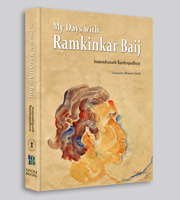
 

I found the way to that door about five years ago. As it was ajar, I entered, though not without some measure of diffidence. The world of a towering genius called Ramkinkar Baij, Kinkarda to his loved ones, had opened up to me, but was I capable enough to navigate it? Gladly, printed words, not the actual, near-mythical persona of Kinkarda, paved my pathway. The hesitance started fading, like the lifting of a soft mist off an enormous mountain. This monumental (I don’t use the word lightly) sculptor-painter had me entranced–with his works, life. And words.

Yes, words, because My Days with Ramkinkar Baij, which I read as Shilpi Ramkinkar Alaapchari in Bengali, is Ramkinkar’s life in his own words. From a timid reader, I turned into a zealous admirer. In the five years that followed, the book took me to Norwich, UK (I received the Charles Wallace India Trust Fellowship to work on the translation of this book); I got married and moved to the U.S. and then to Canada; became a translator; my translation of Shilpi Ramkinkar Alaapchari found a publisher and became My Days with Ramkinkar Baij.

Even as author Somendranath Bandyopadhyay, through his smooth and sensitive narrative–based on his closeness to Ramkinkar–recounted his days with the awe-inspiring artist, the past five years enabled me to experience My (own) Days with Ramkinkar Bai–vibrant, many-hued, at times tumultuous.

For this, I couldn’t be grateful enough.

Immigrant’s Postcard: “Open to Close”

A series on my experiences as an immigrant to Canada

On my way back from a job interview, I wait for my bus to return home. Direction-challenged, I wonder if the stop is the right one for me. In a while, a short, curly-haired black lady arrives. She is wearing black goggles and greets me with a broad smile. I seize the opportunity and ask her if the bus I am waiting for will take me to the desired place. She confirms it will. A little later, she chirps,

“It’s going to rain!”

“It does look like that,” I say, coiling my hands inside the jacket’s pockets.

“But we can’t complain, can we,” she says with a thick accent, adding, “after all, God gave us a brilliant summer this year.”

I nod.

She points her fingers up and says, “That guy up there, he is very smart, you know. If he wanted, there would be blackout this very instant. So we got to respect his judgment.”

I continue nodding with a wan smile. Silence joins us soon.

Not for too long. The lady looks at me chirps again, “You going for work!”

It’s past lunch time. “No, I am going home!” I say with some emphasis.

She laughs and says, “You look so good, I thought you goin’ to work.” I feel a bit uncomfortable and notice, for the first time, her long, yellowed nails.

After learning that I am still looking for work, she has much to tell me.

“This is a bad time for new people to come in. There are no jobs,” she warns. I nod and try to maintain a neutral face.

“I’ll tell you what to do,” she reassures me and continues, “when you get on the bus, I will show you a new store they are constructing. You should apply there.”

This is followed by an insider’s lowdown. How they “don’t pay too well, only the minimum wages,” but how that is better than not having anything.

The bus comes, and my bus-stop friend takes the seat next to mine. True to her word, she points out to me the under-construction Wal-art.

“They have all kinds of shift–early morning, afternoon, all-night. So when you fill in your shift preferences, choose ‘open to close’. That way they will know you are really interested.”

People around us are looking at me; I am beginning to get annoyed, but keep up a smiling face. And the nods.

“And if at all they don’t take you for the counter, you can also opt for stocking. That means putting things on the shelves. Ya gotta take whatever comes your way,” my friend continues. I take in all the suggestions with total silence and utmost seriousness.

A few minutes later, we both get down at the same stop.

The chirping lady just says, “Well, good luck. Bye.”

I thank her quietly and say a little prayer for all of those like her–surviving on minimum wages, but not short of concern and hands-on tips for a new immigrant.

Occupy your city can wait. Occupy Wal-art first. Where it’s “Always Low Prices.” Of the employees even.

READ ALL IMMIGRANT’S POSTCARDS HERE

Immigrant’s Postcard: Bhasha, Basha, Bari

A series on my experiences as a new immigrant in Canada.

The title of this post is in Bengali:

Bhasha = Language, Basha = Temporary residence, Bari = Home (usually long-term, ancestral).

We had been in Canada for just a few weeks when B, my husband, nearly complained of having to speak too much Punjabi. Having lived in the US for a number of years, he found his mother tongue akin to a distant cousin — there in memory, but not in presence. I, on the other hand, would have given anything to find a soul with whom to converse in Bangla, my mother tongue. In our Mississauga neighbourhood, that possibility seemed to elude me, what with the profusion of Punjabis–from both sides of the border (India and Pakistan).

The opportunity came my way in the strangest of ways.

On Canada Day, one of B’s friends offered to take us on a strawberry-picking jaunt. His mother and wife–a second-generation Canadian Punjabi–were part of the group. Their invitation extended to a brunch of stuffed paranthas at their house post filling up our strawberry baskets. R, the wife of B’s friend got busy in the kitchen making the paranthas with the help of her mother-in-law. Once they had all been rolled out, aunty came and sat with us in the living room.

Earlier that morning, PK, B’s friend had mentioned that his mother knew Bengali. As we all chatted away–mainly in English, with splashes of Hindi, PK poked me and his mother alike. “How come you two are not speaking in Bengali? Come on, how can you keep yourself from doing it already?” Aunty smiled and her wink reflected permission for me. I immediately started off; in an instant, “aunty” became “mashima” for me. I learned that though a Punjabi herself, she had picked up Bengali from neighbours in Jamshedpur, where she grew up and later spent her married life. Till date, her Bengali remains spotless and free of any accentual adulteration. I was thoroughly impressed. And delighted to find my first mother language friend in the city.

Some more weeks passed. B found work, and his long commute presented a fresh set of priorities before us–buying a car and finding a house closer to the station from where he caught a train to work. While B continued to speak more Punjabi, my Bengali remained buried somewhere under the mental debris of car models to choose from, jobs to apply for, and potential rental ads to shortlist. While talking on phone with the poster of one ad, I caught a clear Benglish accent. All formality flew off, and I blurted, “Aapni Bangali? You are a Bengali, aren’t you?” And so we went to see his house. Obviously.

As K, the Bengali young man looking to rent his apartment led us in, we met his wife, infant daughter and the spartan interiors. After two years of his stay in Canada, K’s professional project had come to an end, and it was time to return to India.

“Are you from Calcutta?” I asked his chirpy wife.

“Totally from Calcutta,” she beamed.

“Ah, so you must be happy to pack up.”

“Oh yes, you can imagine what it is to go home just before Durga Puja.” She could barely hold her smile now.

That’s when it struck me. The word home. In India, I spent all my unmarried life in Delhi, the city of my birth. And yet, during a post-marriage trip to Kerala , when a man asked me where I was from, I said, “Bengal.” Where in Bengal was the next question, and I just said, “Delhi.” I remember the perplexed look on his face.

So what is home, I wonder. Is it a place? Or is it more likely a language? One from which B has strayed a bit. And one I pine so badly to belong to.

MORE OF IMMIGRANT’S POSTCARD:

Immigrant’s Postcard: At the Guru’s Door

A series on my experiences as a new immigrant in Canada.

“This place feels just like Chandigarh,” my husband remarked, walking around our Mississauga neighbourhood. He had spoken more Punjabi within just two weeks of being here than possibly in twenty years, he would observe. Though exaggerated, that observation wasn’t all that inaccurate. We know people, a lot of them from our parent’s generation, who have managed to live in the Toronto area for decades without knowing any language except Punjabi.

Major banks have signs in Punjabi and even some staff communicating in that language. You will find “Moga Pizza” not in Moga, Punjab, but in a swanky Toronto suburb. Hakka Chinese restaurants here have “Ludhiana Chicken” on their menu.

Logic dictated that we should visit one of the many gurdwaras in our vicinity. Our proddings were many. To begin with, we were unemployed and had as much time as our prospective employers wanted before taking us in. Then there was the genuine concern of friends and well-wishers. “You know, many new immigrants actually rent accommodation near a gurdwara. That way, you at least save on food expenses,” advised a well-meaning friend. Our good-natured and caring landlady too encouraged us in the same direction. In fact, I goaded my husband too. “We should at least go and pray for a job,” I suggested, though neither of us is particularly religious.

It wasn’t his disinclination for prayer, but the bus route to the most recommended gurdwara that discouraged my husband. “It’s a long walk from the bus stop. We’ll go there once we get a car.” Which, I knew, meant, once one of of us found work. So as searing summer days lazed by in what was one of Toronto’s warmest summers, we conveniently pigeon-holed inside our basement apartment.

Until an offer letter dragged us out–almost straight to the car dealer’s office. Providence smiled. Right next to the dealership was a gurdwara. We had reached it by bus after all. It was almost as if a benign “guru” had granted our prayer and gently brought us to his doorstep.

The door that almost inevitably leads to the langar hall–the common dining room in most gurdwaras. “I don’t go to pray there; I go to eat,”  admitted a chuckling friend who couldn’t stop gushing about the delicious feast on offer in gurdwaras.

A tradition started by Guru Nanak, the first of Sikh gurus, and later institutionalized by Guru Amar Das, the third guru, langar feeds people irrespective of their social, economic, religious or any other status. Works well for me.

Late one afternoon, after looking at several cars and chewing over the math for each one of them, we plodded our way to the gurdwara, hungry and exhausted. Once inside, we entered a corridor, the walls of which were lined with paintings related to Sikh history. When my husband had finished telling me the stories behind them, we entered the prayer room, knelt down, prayed and dropped our offerings into the donation box. We were walking back in the corridor, when an elderly Sikh man started following us. He called us and led us back inside the prayer room, where he offered us the delicious karah prasad.

He then said to us, “Take the steps and go down. You will be led into the langar hall; go toward the kitchen and take some dal from one of the saucepans, then take some rotis from a box next to it.” We had been wondering where the langar hall was and if we could still find some lunch at that late hour. It was as if the gentleman had appeared just to lead us to the source of food.

The dal and roti had gone cold as it was way past lunch time.

Ever since spotting that first gurdwara, we have been to three. Each time, we have returned with a satiated heart and stomach, filled in good measure with sizzling pakoras, tea, sweets, freshly-cooked curries, dals, rice puddings and hot chapattis.

But the taste of that cold dal-roti meal lingers in my mouth. And that old, wrinkled face in my heart.

MORE OF IMMIGRANT’S POSTCARD:

Gastronomic Empathy

Manto and A Car

Immigrant’s Postcard: Gastronomic Empathy

A series on my experiences as a new immigrant in Canada.

For the little more than two months we’ve been walking around, past, next to it, this modest-looking West Indian restaurant in our neighbourhood in Mississauga has been teasing us. We would see other immigrants, most of them presumably from the Caribbean, going in. We didn’t follow suit.

“We will have a treat here once one of us has a job,” my husband kept assuring, and the flickering orange ember peeking out from the restaurant’s counter became a silent sentinel of our pledge.

Yesterday evening, on our way back from our customary evening walk, we stepped inside Jerkies. The place wasn’t a cramped hole in the wall–there were five or six tables, enough to seat around 25 people. A crime serial on the lone TV mounted to the wall had two engrossed viewers–a black mother and her young daughter, seated on one of the tables. Right across them was the counter, behind which stood a sanguine black man. When we looked at the menu behind him, written on a blackboard with chalk, there was only one item we were sure of ordering–jerk chicken, and no marks for guessing that. We wondered what the other item should be; I suggested to my husband in Hindi that he ask our sanguine friend. No sooner than he had sought the man’s recommendation, emerged the words, “goat curry.” The confidence on his face and in his baritone sealed his suggestion as our second choice.

As we sat down at a table, waiting for our meal to arrive, Dear Husband (DH) and I whispered to each other about the conviction in Sanguine Friend’s voice while advising us to go for goat curry. “It’s one immigrant’s innate understanding of another,” DH said, referring to a West Indian’s confidence in suggesting mutton curry to an Indian.

A little later, the red-haired lady who had been so absorbed in watching the crime serial brought us a plate full of rice and beans, salad and jerk chicken. “Who’s having this?” She asked. When I told her it’s me, she put the plate before me and handed me a napkin wrapping the fork and knife. I had barely dug in and given top marks to the very well done jerk chicken when DH’s plate of goat curry with rice-beans and salad came. A few bites and we knew Sanguine Friend’s recommendation totally hit the spot. Tender to the point of falling off the bones, the curry had been spiced in a manner that it could have been cooked by an Indian. Along with our respective dishes, the lady also brought us fried plantains, complimentary. Nice!

What looked like too much food when it arrived on the table had been diminished to bare bones within half an hour; such was the fury and enthusiasm of the two eaters.I guess one of them did find a job after two months.

“How was the food?” Sanguine Friend asked when we went to pay the bill. “We’ll be back,” DH said with a smile.

MORE OF IMMIGRANT’S POSTCARD:

Dispatch: Love in Hyderabad

This personal essay first appeared in Global Graffiti magazine’s “Cities” issue.

“…She would always remember Paris as the most beautiful city in the world, not because of what it was or was not in reality, but because it was linked to the memory of her happiest years.”

Gabriel García Márquez, Love in the Time of Cholera.

Cities are where history and contemporaneity, spaciousness and congestion, overwhelming wealth and astonishing poverty collide with each other more recklessly than anywhere else. One can live in City A for a long time and despise it and yet get entranced by City B in just a few months. That probably explains why I always remained a passive resident of Delhi, the city of my birth and my home for more than three decades, yet fell in love with Hyderabad, where I lived for less than four months. And the charm was almost instantaneous.

This was also the city where I found love.

Read the rest at Global Graffiti

Framed Notes from Beyond

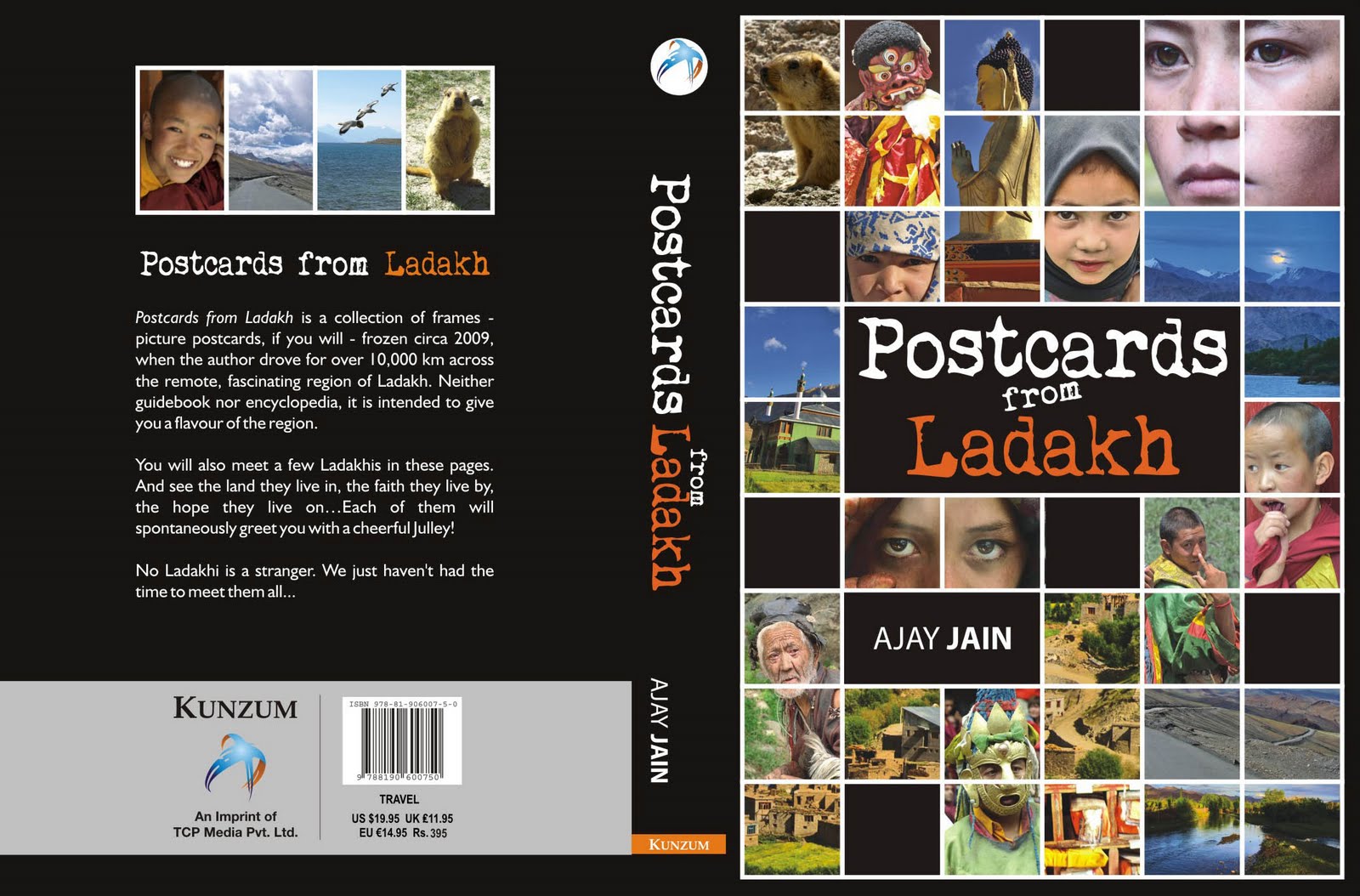
Postcards from Ladakh

By: Ajay Jain
Kunzum
Non-fic (Travel)
Price: INR 395, US $19.95, UK £11.95
Available at: Ajay Jain’s Blog

Among the souvenirs I collect during my travels, picture postcards are recurring visitors. Besides being light in weight–both in terms of mass and price, these cards open mini windows to new worlds. Easy to carry, easy to share, easy to keep or frame–picture postcards have almost everything going for them. Well, almost. My one pet peeve with these cards has been the limited information one usually gets about the picture in question–mostly just a line or two and at the most, about a paragraph. Ajay Jain’s new book, Postcards from Ladakh, redresses this issue with commendable facility.

With this book, Jain takes us inside the astonishingly beautiful yet often difficult terrain of Ladakh–among the remotest and most sparsely populated regions of India. Every page you turn is a new postcard–the picture on the left and Jain’s notes on the right. As he notes in one of the opening chapters titled Ladakh, Circa 2009, “Start reading from any page,” for you won’t miss anything if you didn’t follow the exact order of the postcards.

The pictures grab the reader’s attention right away, and once I had seen/read a few cards, I started imagining my own reading of the images before my eyes floated over to Jain’s text. Since this world was as alien to me as that of tribes living in the Congo basin, my imagination couldn’t stretch too far. That’s where this book succeeded in style. It presented me with just enough information on each accompanying picture without overwhelming me with a flood of it or depriving me by sharing too little. Jain writes the notes in affable first and second person voices, generously interspersing them with wit, practical advice and most of all, his passion for the place.

A big chunk of the postcards reflect Ladakh’s Buddhist tradition, its intricacies, distinguishing features and sovereign influence on the local populace. Others highlight the region’s flora, fauna, economy, history, and geology. The last few chapters are extremely useful for anyone planning a trip to Ladakh. In these, Jain provides an experienced traveller’s tips on how to pack, how to move about and how to keep the environment clean. There’s also an engaging interview with Ladakh’s spiritual supremo, the Twelfth Gyalwang Drukpa. I found this a nice touch to this collection of postcards.

I leave you now with an invitation to read this book and with some of my favourite postcards:

This image, depicting an old apricot collector, arrested my attention for quite a while. Do you also find the wrinkles on his face speaking of an unknown, unknowable pain?

Rock art dating to the 6th century AD. On a single rock in the entire region. Intrigued to know more? Visit Ladakh to find out. Or just read Postcards from Ladakh.


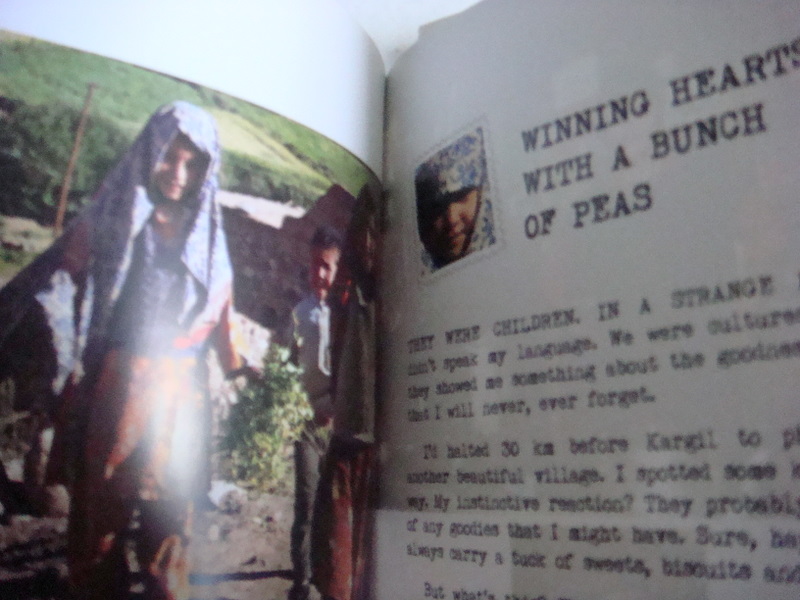
Stories like the one this postcard tells warmed my heart the most. It shows a bunch of happy little children who shared their bounty of sweet peas with the author, expecting nothing in return. Although he did reward them with chocolates, I suspect, he was the bigger winner.


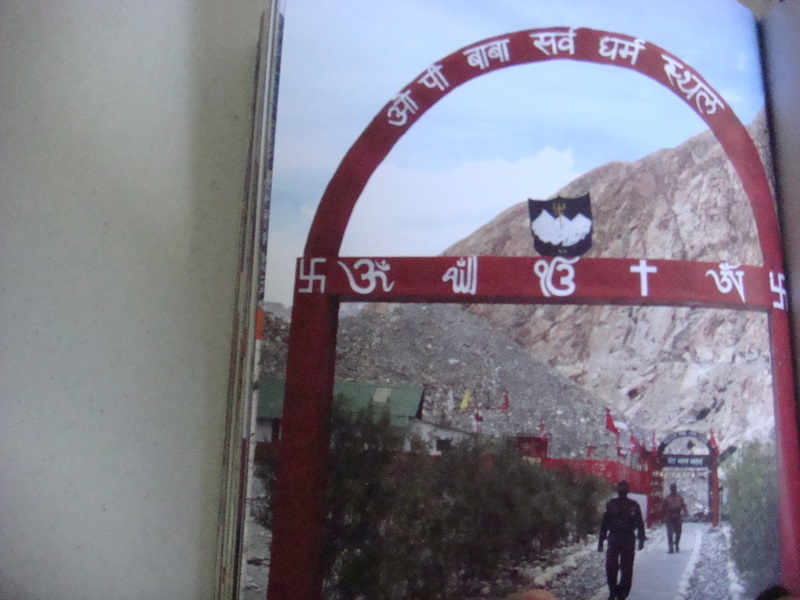
This all-religion shrine, situated in the harsh Siachen glacier is believed to bless its devotees, mostly military soldiers, with special “visions.”


And lastly, this multi-image postcard about Himalayan marmots is just too good to be denied a mention. The author was lucky himself and shares his most entertaining encounter with these “adorable creatures,” who are often a little shy of human presence.


The only additional feature I wished the book included is a glossary of terms. Some of the Ladakhi Buddhist references can get confusing, even with repeated reading. All the same, whether you are in a hurry or at leisure, Postcards from Ladakh is a perfect reading companion. It’s also a smart travel guide without posing as one.

Guest Blog: Supriya Kar

Problems of Translation — II


This post is a continuation of
Ms. Supriya Kar’s previous post. She is doing her PhD in literary translation. Her research focuses on autobiographical writings of women from the Eastern Indian state of Orissa. Here, she discusses various problems of translation, particularly in the context of her work.

Read Part 1 here

Songs in Oriya:
The songs and chants in Oriya are marked by lyricism and onomatopoeic qualities and have therefore been left untranslated. These give a feel of the sound of Oriya. The examples include:
Hare Krushna Hare krushna, krushna krushna krushna hare hare
Hare Rama hare Rama, Rama Rama hare hare.

Chala kodala, chala kodala, patia bandhe, chhande chhande, bharide mati laal…

Kesharkunja sheja re…
Duti kara dhari hari boile kishori…
Are nauri, e ghata re nabandhe taree…
Hari haraye namo, Krishna Jadabaya namo, jadabaya, madhabaya, keshabaya namo.

Forms of Address: Chandrabhaga, Chanda, Ashoka, Abhada, Gangapani, Baula and Chandi: Terms of endearment and affection, which are used in the excerpts, have been left untranslated. These terms signify deep friendship based on love and trust. These are also given social and cultural acceptance through specific rites.

Use of Titles: Panchasakha, Bhaktakabi, Mahatma, Utkalmani: Eminent public figures acquired these titles, and came to be known through these rather than their proper names. Through repeated use these became part of their names. Although they denoted certain qualities, they were actually used as proper names. So these have been kept as such and glossed where required.

Names of Institutions: Kanyashram, Shrama Sansthan Anusthan, Dhanamani Matru Mangala Kendra, Kumari Sansad, Bakula Bana Vidyalay. Although these names denote the nature and function of these institutions they are also used as proper names. So they are kept as such and glossed wherever necessary.

Kinship Terms: Chhota Maa, Menki-nani, Andhari-Maa, Durga apa, Subhabou-bhauja, Mahi’s mother, Sushila-bhauja, Nayan-bou, Rama-bhauja, Pila-mother, Jugala Saante, Nala-da, Bhika-na, Bhula-uncle, Puri-uncle.
While translating kinship terms used in India, one has to tread cautiously between the twin extremes of ‘domestication’ and ‘defamiliarisation’. Sometimes, the English equivalents have been used and, at others, the kinship terms have been retained. As all the excerpts translated here are autobiographical writings, the kinship terms are used more often than in any other fictional genre. Retaining all the terms would have made the text loaded with unfamiliar and opaque expressions. So, at times, the relationships have been explained in the text itself, sometimes, the context makes the meaning of the terms obvious.

Conversational Style:
Attempts have been made to maintain the speech rhythms of Oriya in the translation of all the excerpts. In the translation of the excerpt from Sumani Jhodia’s autobiography, punctuation marks have not been used to retain the immediacy of her words since hers is an oral testimony.

Problems in the Source Text:
There are examples of writings in the excerpts translated here which do not really make any sense, but their meaning can only be guessed from the context. In such cases, these have been tackled in a pragmatic way.
One may mention here, Arthur Lindsay’s observation that the prime duty of translators is communicating information lucidly. He goes on to submit:

As translators, our objective is to enable the reader to understand the subject matter we are translating. Hence simplicity of language is obviously the most important weapon in our armoury. Further, I submit that the more complex the subject, the greater is the need for plain English. Even if the author is incapable of simplicity in the source text, in the target language this duty devolves upon us, since we are those who must moderate between author and reader.

In translating these excerpts, strategies such as deletion, expansion, and addition have been adopted to achieve lucidity as far as practicable.

Guest Blog: Supriya Kar

Ms. Supriya Kar is doing her PhD in literary translation. Her research focuses on autobiographical writings of women from the Eastern Indian state of Orissa. Here, she discusses various problems of translation, particularly in the context of her work.

Problems of Translation — I

In my thesis, twenty-four excerpts selected from autobiographical writings by women in Oriya are translated into English. Women whose lives these excerpts record hail from different social classes and milieus and their styles vary immensely. Therefore, maintaining the unique flavour of the texts and at the same time retaining a kind of uniformity and readability was a daunting task. Of course, there are elements in all these which one may find untranslatable. Translating is like cooking: it is one thing to say how a recipe is prepared and another to actually cook it. In this context, Piotr Kuhiwczak’s insightful observation assumes particular significance:

We can say that there is a clear distinction between discussing untranslatabilty and handling the untranslatable in the process of translation. For many of us, and this includes the students and diners I mentioned at the beginning of this essay, untranslatabilty is something that can be conceptualised and discussed ad infinitum. In contrast to this, translators have to deal with the untranslatable at a practical level. In a recent article, Margaret Jull Costa emphasises precisely this difference and the practical aspect of translation: ‘As a full time literary translator from Spanish and Portuguese, I suppose I can’t afford to believe in the untranslatable; it’s my job to translate everything, knowing that there might be some loss, but that there might also gain, and never giving in to that counsel of despair telling me that a translation is not a real thing, not the same thing, and definitely never a better thing.’

While translating, the aim was to translate so that the original should not lose its flavour, but be readable and enjoyable in the target language, without overloading the text with footnotes and glossaries that make it cumbersome for readers.


While translating from Oriya into English, the problems one encounters are more insidious than just finding the right word or expression. Partly, they flow from the very structure of the language. In addition, many of our descriptive words are highly onomatopoetic and thus almost impossible to render in English, as are the kinship terms and names of dishes, trees and flowers.

One can feel there is a palpable tension, which results from the pressure the source language exerts on the target language. The task of a translator is to minimise this tension as much as possible. Each and every sentence poses a problem. Inside the mind it goes on—permutations and combinations of words, struggling with the shape of each sentence— negotiating, groping for the right phrase. And yet the feeling of dissatisfaction persists.

Tenses in Oriya are organised slightly differently than in English. Although on paper they correspond, their boundaries do not quite map onto each other. This is because time conventions differ in different societies. The present is a much more elastic concept in Oriya than in English. That is why most Indians use English tenses wrongly. Common errors are the use of past perfect for simple past (‘I had done’ instead of ‘I did’) because Indians instinctively feel that simple past is not strong enough to indicate that something happened before now. They also use present continuous (I am doing) for simple present ‘I do.’ These problems exist across Indian languages. The problem is that while translators may be technically correct when they translate an Oriya literary text into an English present tense narrative, they are not being true to the precept that the target text should have validity as a work of art in its own right. It is bewildering to read a text translated into present tense, especially as somewhere down the line it tends to seep back into past tense.
There is a sprinkling of words connected with the physical reality of Orissa in these autobiographical writings. The list of such phrases, culture specific terms, which have been kept as such is provided below with explanations, where necessary:

Currency: adhala, pahula, ana. There is no corresponding currency in English.
Quantity: bharan, khoja, pa. These are ancient units of measurement and sometimes used idiomatically.
Slangs, Tongue-in-Cheek Expressions: chhatari, Bolibe jati sange eka ramani. There is no corresponding slang for ‘chhatari’ which is used derogatorily and abusively to mean a woman of loose morals. Literally, it means one who begs for food at chhatars or charity kitchens.
Bolibe jati sange eka ramani: People would say that one holy man is accompanied by a young woman. But the meaning of this tongue-in-cheek expression would lose its resonance if the original does not accompany its English translation.
Lunar Months: Bhadrav, Ashwina, Kartik, Margashira. A Lunar month corresponds to the period between one full moon to the next full moon. The lunar calendar is followed in observing festivals, as it is believed that the movement of the moon has a decisive influence over the affairs of human beings.
Food: ladu, badi, puri, malpua, mohanbhoga, khechudi, arisa, pura. Referring to these as delicacies or sweets would take away their cultural specificity.
Caste: karana, khandayat, chamar, radhi. The caste of a person signified his/her occupation, social status etc. These are also associated with notions of purity and pollution. The concept of caste is so quintessentially Indian that while translating Indian literary texts one has no option but to retain terms denoting caste.
Art: champu, jatra, patta. These words denote forms of fine and performing arts in Orissa, and do not have any English equivalents.
Religion: agni-pariksha, tulsi, triveni, pratah smaramy, mahamnatra, dhama, mahaprasad, mansik, homa, darshan, ashram, kathau, kirtan, akash-dipa, chaura, Amrutayana, Harinama, Ramanama, Ramdhun. These refer to religious practices which are rooted in Indian culture and their full significance can not be conveyed through English equivalents. They have therefore been retained in the translation and glossed where necessary.
Rituals and Social Practices: sholamangala, dashaha, hulahuli, haribola, shradha, ekadashi, purdah, ana-tutha, padhuan. These practices are typical of Oriya culture and so have been kept as such and glossed wherever necessary.
Festivals: Festivals such as Kumar Purnima, Raja, Kartik Purnima, Bali Trutiya underline the singularity of the cultural and religious practices prevalent in Orissa. Each festival is rooted in a specific narrative and has mythical associations. These are retained as such.

To be continued…

Image courtesy: http://www.icilondon.esteri.it/IIC_Londra/webform/SchedaEvento.aspx?id=211

Death’s Grief by Rabindranath Tagore

Translated by Bhaswati Ghosh

That there could be any gap anywhere in life wasn’t known to me at that time; everything seemed tightly knit within the ambit of laughter and tears. As nothing could be seen beyond that, I had received it as the ultimate truth. Suddenly, when death emerged out of nowhere, and, within a moment, created a hollow in the middle of this very manifest life, my mind was totally puzzled. All around me, trees, land, water, the sun, the moon, the stars, and the planets firmly continued to be as they were, yet that, which amid them was just as true as themselves—in fact, which, the body, this life, the heart had, through a thousand touches known to be even truer than all these supernal entities—when that loved one dissolved like a dream in an instant, it seemed to me an utter collapse of the self! How could I reconcile what remained with what was no more!

A darkness emerging from this pit attracted me all the while. I kept circling around and returning to the same spot, looked at that same darkness and searched for something in place of what had been lost. Humans can never entirely believe in nothingness. Whatever isn’t there must be untrue, and whatever is untrue cannot be there. That is why the effort to see within what can’t be seen and the search for acquiring that which can’t be had never stops. Just like a sapling, when bound inside a dark fence keeps growing upright on its toes in a desperate attempt to get past the darkness and raise its head in light, all my heart and soul, when suddenly fenced by death’s ‘not there’, desperately kept trying to emerge into the light of ‘is there.’ There’s no greater misery than to realize that the path to cross that darkness isn’t visible within that darkness.

However, in the middle of this despairing grief, a breeze of happiness would flow in my heart every now and then, taking me by surprise. The sad fact that life is not absolutely and inertly definite lifted a load off my chest. I felt joyous thinking that we aren’t imprisoned within the stone walls of unmoving truth. That which I had held on to had to be let go of. When seen from the perspective of loss, this evoked pain, but when I saw it from the angle of freedom, I felt spacious peace. That day, I, for the first time, realized like a strange truth that this world’s enormous weight balances itself with the give-and-take of life and death and flows in every direction thus; that weight won’t crush anyone with suppression—no one would have to bear the tyranny of a sole master called life.

This apathy made nature’s beauty even more intensely exquisite for me. For some days, my blind attachment to life nearly disappeared—trees swaying against bright skies would rain a burst of delight down my tear-washed eyes. Death had brought about the distance necessary for viewing the world with completeness and beauty. Standing detached, I watched the world’s image against the vast backdrop of death and knew it to be beautiful.

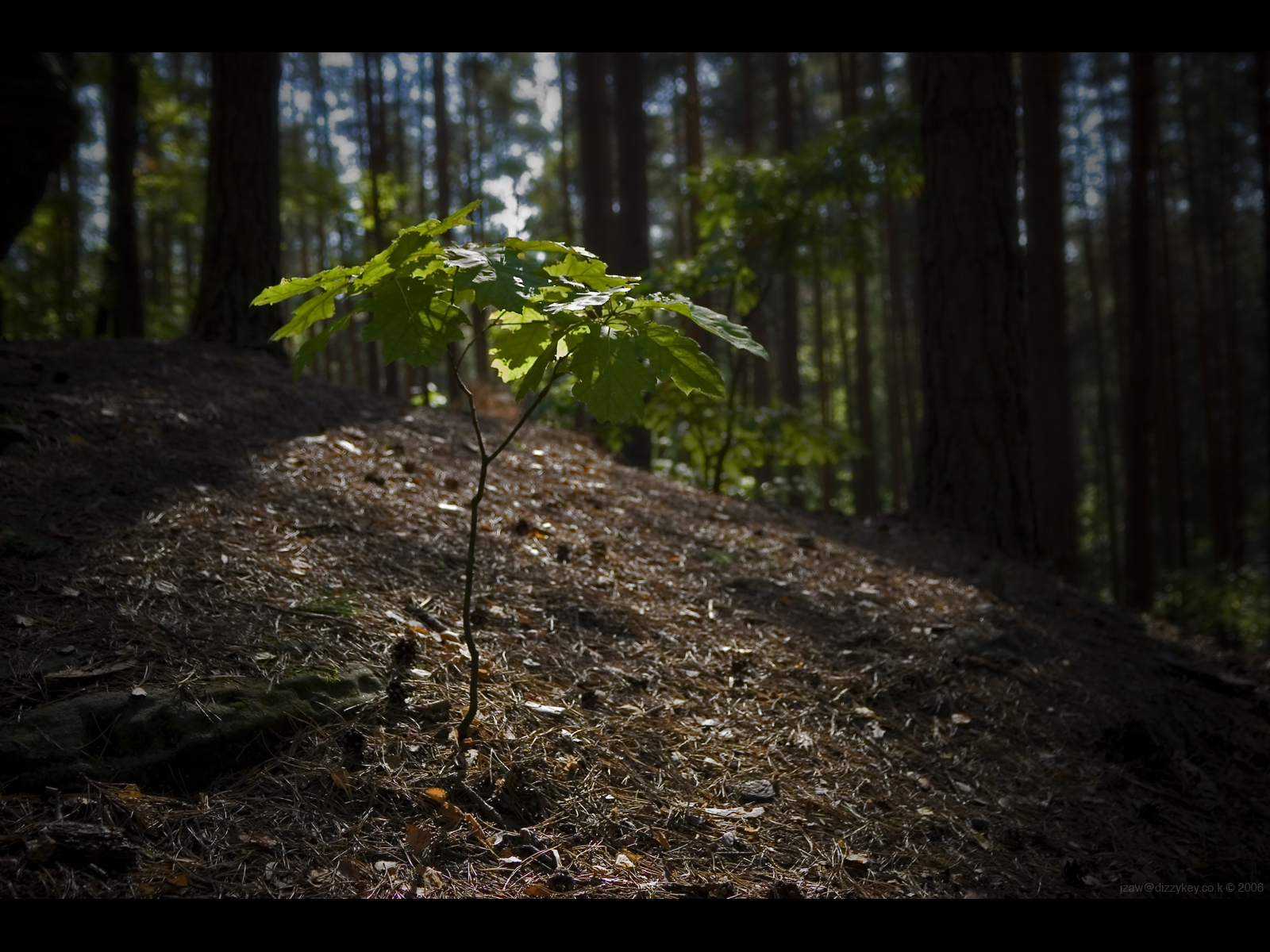
oak_sapling_warming_itself_in_the_morning_sun1

For a while at that time, a carefree attitude took over my heart, which was also reflected in my outward actions. I found it laughable to conform to the society’s courtesies by accepting them as truths. All that didn’t touch me at all. For a few days, I was completely oblivious to who thought what of me. I would just drape a thick shawl over my dhoti and wear a pair of chappals to go to Thacker’s shop for buying books. My meals were also characterized by haphazardness. For some time, my bed, even during rains and winters, remained on the balcony of the second story; there, I could see the stars eye to eye and meet the light of the dawn without any delay.

On the terrace of our house, alone at night, I would run my fingers like a blind man all over the night, in hopes of seeing a flag atop any peak in the domain of death or a letter or even some symbol etched on its black stone gates. Then, the next morning when light filled my bedding on the balcony, I would open my eyes and find the covering of my heart clearing away; I would find that the expansive view of life appeared as dew-fresh new and marvelous to my eyes as the way in which the world’s rivers, mountains and forests dazzle with the lifting of a fog.

Not that any of these was an austerity for practicing detachment. This was more like a holiday for me. When I found the cane-wielding teacher of this world to be a deception, I ventured to taste freedom by trespassing even small controls. If one fine morning one woke up and found out that the earth’s gravitational pull had lightened by half, why would one want to carefully tread the official path? One would, most definitely, wish to jump across the four-five storied houses on Harrison Road, and if, while enjoying the breeze in Maidan, one came across a monument, one wouldn’t even want to walk past it, but rather  lep over it. My condition was similar—the moment the pull of life loosened under my feet, I was eager to completely leave the beaten path.

Note: Recently, I lost a loved one to cancer. Though not born into our family, the person had become family for us, and the death only showed me how attached I had been to him without ever realizing that when the person was around. As I grappled with this loss, almost unable to accept the reality of it, I turned to Tagore for solace. The piece below, part of Tagore’s autobiography, reflects how he himself felt the depth of grief following his sister-in-law’s death, and how his heart finally found acceptance and even peace. Working on this translation proved to be a balm for me in these difficult moments.

Photo source: http://blog.bikeridr.com