Book News!

Senior journalist (with the Indian news channel, IBN7) and former colleague, Prabhat Shunglu’s book, “Yahan Mukhaute Bikte Hain” (literally meaning “Here Masks are on Sale”) is due to be released around mid-June, 2010.

The book, a collection of articles in Hindi on politics, personalities and society, has been divided into three segments–सियासत (Politics), शख्सियत(Personalities), समाज(Society)। As the title suggests, the book, through its bouquet of articles, attempts to unmask the Indian political system and to expose the loopholes in the country’s governance. There are about 45 articles, covering subjects such as media and Kargil. Some of the essays are political satires.

Antika Prakashan
is bringing out the book.

I look forward to reading this one. Sending best wishes to the author.

Pagol or Madman by Rabindranath Tagore

Translated by Bhaswati Ghosh

A small town in the west. At an end of the big street, five or six palm trees rise above thatched roofs like a mute man making signs to the sky. Next to a derelict house, an ancient tamarind tree puffs up its dense, glistening foliage like clumps of green cloud. Young goats move about on the ground of this roof-less house. Behind them, the lushness of the forest range spreads across the horizon of the afternoon sky.Today, rain has completely withdrawn its dark cloak off this town’s head.

I have a lot of important things to write—those remain unwritten. I know this would be a cause of regret in the future; let that be; I would have to accept that. One can never know or stay prepared for the moment when or the form in which wholeness emerges, but when it does, one can’t welcome it empty-handed. At that moment, the one who discusses loss and gain must be a smart accountant and would do well in the world; but dear vacation of light in the midst of glum ashadh (1), in front of your momentary bright, cloud-less glimpse, I put to dust all my important activities—today, I won’t make calculations about the future—I am sold off to the present.

One day follows another, none of them demands anything of me; the calculations all add up, work happens smoothly. At such times, life progresses by linking one day to the next, one task to another, making everything uniform. Suddenly, when a special day appears without notice, like a prince from across the seas; a day unlike any other, the trail of all the days past is lost in an instant—on that day, it becomes difficult for routine work to proceed.

Such a day, though, is our big day—a day of irregularity, of ruining work. A day that arrives to defeat our everyday is our day of joy. The other days are for the intelligent, the careful. This one day is for giving ourselves completely up to madness.

Mad isn’t a hateful word to us. We worship Nimai (2) because of his craziness; Maheshwar (3) too is our lunatic god. The West is debating as to whether talent is only a form of developed craziness—but here (in the East), we don’t feel ashamed to accept this as true. Inspiration is, of course, craziness, it is an exception to the rule, it comes only to upset order—it emerges all of a sudden—like today’s haphazard day—and destroys all the work of working people—some curse it, some others go crazy, dancing and delighting with it.

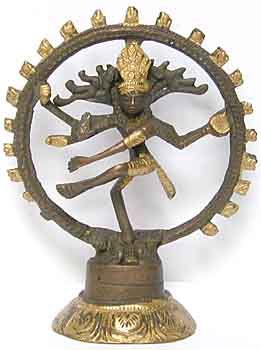
Bholanath (4), who remains as the joyful one in our scriptures, is one such oddity among all deities. I see that mad lord amidst the flood of sunshine shining through this day’s washed blue sky. His tabour plays steadily within the heart of this thick afternoon. Today, death’s naked pure face stands still in the middle of this work-filled world—with beauty and peace.

Bholanath, I know you’re strange. In every moment of life, you’ve appeared with your begging sack. and completely wrecked all calculations and measurements. I’m familiar with your Nandi (5) and Bhringi (6). I can’t say that they haven’t given me a drop of your intoxicating beverage; these drops have inebriated me, everything has been upset—today nothing is in order for me.

I know that happiness is an everyday item, but bliss is beyond every day. Happiness remains constricted, fearing it may get dirty; bliss rolls over dust and shatters its separation with the universe; that is why to happiness, dust is inferior, but for bliss, dust is an ornament. Happiness is afraid of losing something; bliss is delighted to relinquish everything; for this reason, to happiness, emptiness is poverty, but to bliss, poverty is abundance. Happiness carefully protects its grace within the confines of order; bliss openly expresses its beauty in the freedom of destruction; this is why happiness is bound to outward rules, but bliss breaks those bounds to create its own rules. Happiness waits for nectar to arrive; bliss drinks the poison of sorrow with ease. For this reason, happiness is partial to only good, but for bliss, good and bad are no different.

There’s a madman in all of this creation who brings in everything that is inconceivable for no reason at all. He’s the centrifugal force who is forever pulling the universe outside rules. The god of rule is always trying to put all the world’s paths into a neat orbit, and this madman overturns that and twists it into a coil. At his whim, this madman creates birds in the clan of snakes and man in the family of apes. There’s a desperate attempt in the world to permanently protect all that has occurred and all that is; he plunders all of that to carve paths for what is not yet there. His hands don’t hold a flute, harmony isn’t his tune; his pinak (7) rumbles, all orderly yagna (8) is ruined, and out of nowhere, something wonderful appears on the scene. Craziness and talent, both are his creations. The one whose string breaks at his pull goes mad, and the one whose string plays in an unheard melody becomes gifted. Mad people are outside the range of the ordinary, and so it is with talented people. The mad, however, remain on the fringe only, while the gifted take ordinary people into a new realm, thereby increasing their rights…

It’s not as if this mad lord of ours appears only at certain moments; in creation, his madness is always at work; we only get a glimpse of it in certain moments. Death is forever making life new, bad is brightening good, and the inconceivable is giving value to the trifle. When we get such a glimpse, the freedom within the form becomes evident to us.

Today, amid this cloudless light, I see that amazing face. The road across, the thatched-roof provisions store, the broken house, the narrow by-lane, the trees and vegetation—I used to see all these with the pettiness of everyday familiarity. That’s why these had confined me—kept me in house arrest within these daily images. Today, all of a sudden, all the pettiness is gone. On this day I see that for so long as I had been viewing the unknown as familiar; my seeing wasn’t clear at all. Today, I can’t finish looking at all these. Today, all of these things surround me, yet they don’t imprison me, they all make way for me. My madman was here only—that spectacular, unknown wonder, who did not ignore this thatched-roof provisions store—only, I didn’t have the light before my eyes with which to view him. What is amazing about today is that these nearby images have acquired for me the glory of a far-off place. The impenetrability of the snow-capped Himalayas and the impassability of the wave-ridden ocean express their fraternity with the madman.

In this way, one day we suddenly realise that the one with whom we had established a familial relationship remains outside our family. The one whom we had taken to be readily available in every moment is actually rare and hard to get. Those, around whom we had drawn a boundary thinking we knew them well, appear to have acquired a marvellous mystery by crossing all boundaries. The same one who, when viewed from the side of rules and balance, appeared rather small, quite regular, very familiar, when viewed from the side of breach, from the angle of that graveyard-roaming madman, turns me speechless—amazing! Who is that! The one whom I have always known is now this, who! The one who is part of the home on one side belongs to the heart on the other. The one who is important to work on the one hand is completely outside all necessities on the other. The same one whom I touch on the one hand is, on the other, beyond all grasp. The one who has managed to fit well with everyone is, at the same time, a total misfit, absorbed in self.

Today I saw the one whom I don’t see every day. In so doing, I gained freedom from every day. I thought I was bound by the everyday rules within the fence of familiarity surrounding me. Today I see, I have been forever playing on the lap of grand wonder. I thought that I had been making my daily calculations under the sharp gaze of a big officer in the office. Today, at the roaring laughter of the miscalculating madman—who is bigger than the big officer—reverberating through water, land, sky, air and the entire universe, I heave a sigh of relief. My workbook remains untouched. I lay down the pile of my important work at the feet of that capricious madman—let the blow of his Tandava (9) smash it into pieces and blow it off as dust.

1. Ashadh: A month of the Hindu calendar

2. Nimai: A prominent saint of medieval Bengal and the founder of Bengal Vaishnavism. Also known as Chaitanya Mahaprabhu.

3. Maheshwar: Another name for Shiva, a major Hindu deity. The god of destruction.

4. Bholanath: Alternative name for Shiva.

5. Nandi: Shiva’s vehicle, a bull.

6. Bhringi: Originally a demon who was transformed by Shiva into a humble devotee and admitted into his force as a commander of his armies.

7. Pinak: Shiva’s bow.

8. Yagna: A Hindu ritual, dating back to Vedic times, carried out to please gods. Oblations are poured into sacrificial fire, as everything that is offered into the fire is believed to reach the gods.

9. Tandava: In Hindu mythology, Shiva’s Tandava is a vigorous dance that is the source of the cycle of creation, preservation and dissolution.

Peep Peep Don’t Sleep: Book Review

Peep Peep Don’t Sleep
By: Ajay Jain
Kunzum
Non-fic (Travel)
Price: INR 350, US $19.95, UK £11.95

Available at: Ajay Jain’s Blog

We thought travel was about visiting places, soaking in new territories, and relishing the journey. Who could have known Road Signs could be part of the travel entertainment package as well? Yes, Road Signs, those inevitable pointers that we take no more seriously than empty coke cans strewn across the terrains we travel through.

Welcome then, to the world of Border Roads Organisation (BRO), the Indian agency responsible for construction and maintenance of all roads in areas along India’s borders with Pakistan, China, Nepal, and Bhutan. For, BRO, with its BROtherly (even fatherly at times) attitude, can turn the toughest of driving trips along India’s edges into the funniest. Many a traveler journeying through these often rugged stretches must have enjoyed a smirk or four reading BRO’s imaginative Road Signs. Author-journalist Ajay Jain has, however, done a favour to those of us who are yet to grab the fun for ourselves. With his book, Peep Peep, Don’t Sleep.

Jain drove more than 10,000 kilometers, all by himself, through Indian highways for more than a year to photograph some of the most hilarious, and at times, indecipherable Road Signs and advertisements. He didn’t stop there, though, but went on to add witty captions to these images, along with some chuckle-provoking commentary.

Ready for some sampling?

“I am curvaceous, be slow.” Relax, this is no porn movie dialogue; it’s just a hilly road in Ladakh, nudging you, the driver, to go easy with the wheels. And if you still don’t get the message, you are again poked to just “Feel the curves (do) not test them.”

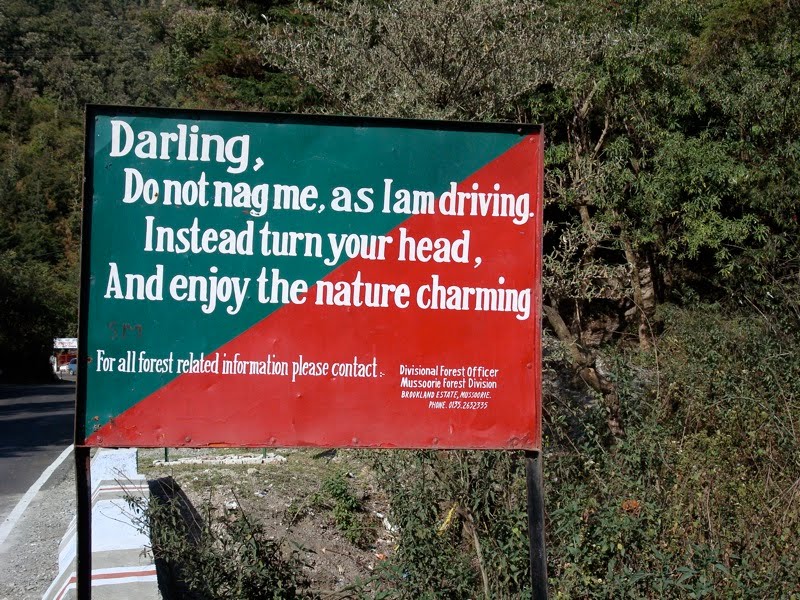
The extent to which BRO can go to encourage drivers to play it safe is amazing. On a road from Dehradun to Mussoorie, a sign speaks thus for a distressed husband:


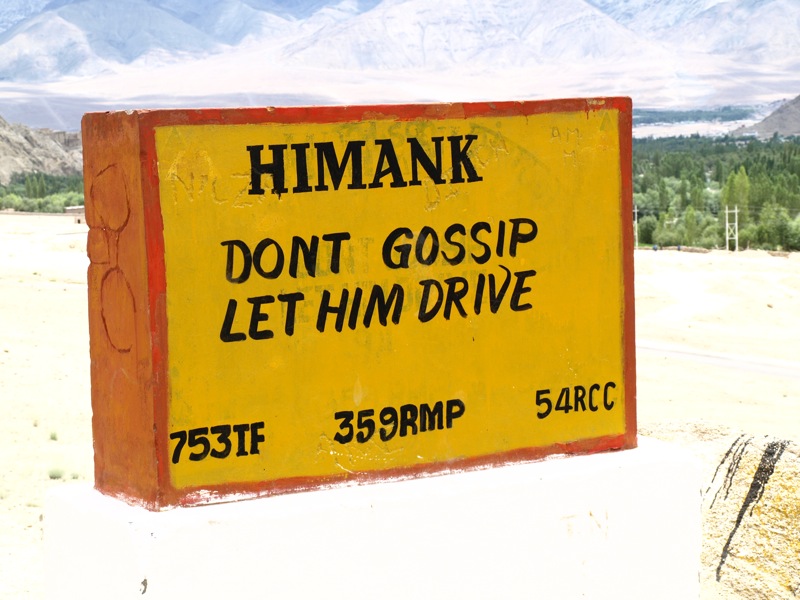
But BRO can’t place such a sign in just one place. And so they warn female partners again at another spot to not gossip as their male companions control the steering.

Jain’s caption to that image can’t stop wondering though, “…Do only ladies gossip?” My question too.

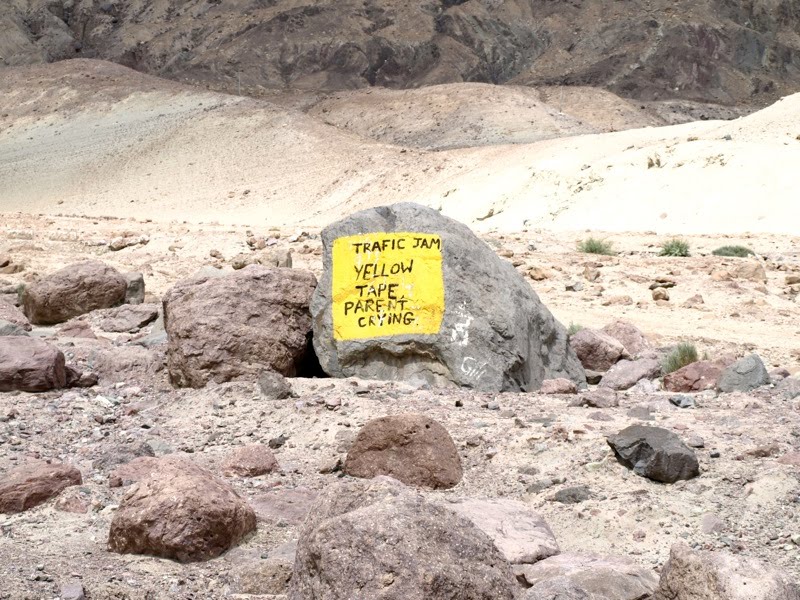
Then there are the cryptic signs. Ones that instead of making you more cautious with your feet on the accelerator will likely leave you scratching your head. Like the following sign. If you can decipher it, kindly do the author and me a favour by letting us know what it means.


And while you are at it, please crack this one too:


By now, you can make out how earnest BRO is in its aim to keep a check on travelers, especially drivers. If one still fails to heed its message, though, one must be prepared to face embarrassment at some point. With a message that says, “Cution. Short cuts may cut shorts.” With such a warning, one can never take any chances, can one? And if the driver still doesn’t listen to the BRO, well, he or she might have to contend with the deadliest of outcomes:


Ajay Jain didn’t just compile funny, inane, and quirky Road Signs in these 200-odd pages. He also went on to put together some of the most bizarre advertisements found across India. A lot of these he found in Dharamsala, the sanctuary of the Dalai Lama and a large number of his followers. His commentary on this section of the book says it all, “Welcome to the Dharamsala School of Quick Learning… You can find enlightenment and knowledge being sold—fast food style—all over Dharamsala…”


Did you know shopping discounts led to tension? So if you are in Dharamsala, spare yourself needless anxiety by shopping at:


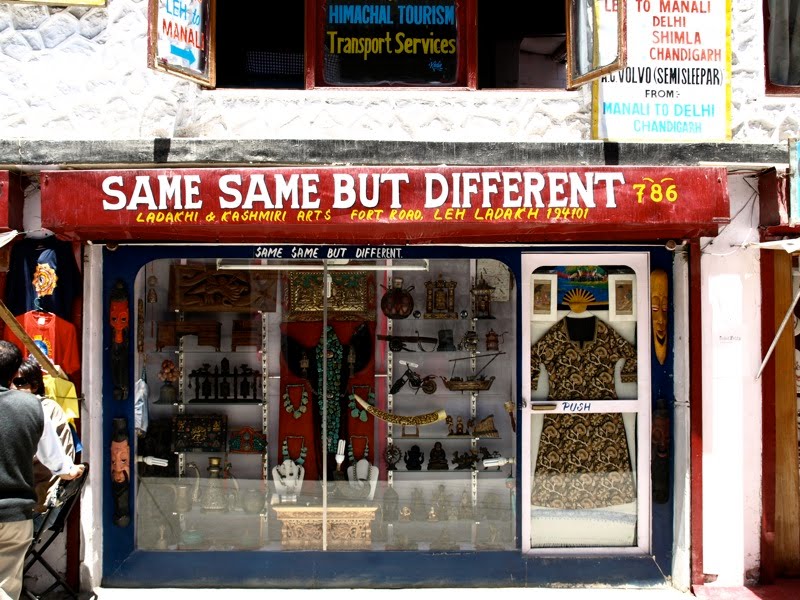
In case you thought all shops selling similar stuff are the same, think again. Or rather, know for yourself by visiting this store in Ladakh:


In the short space of a review, it’s hardly possible to capture the amount of fun “Peep Peep Don’t Sleep” (one of the Road Signs in the book, by the way) packs. As I laughed, smirked and found myself bewildered through Peep Peep’s pages, I also realized this excellently produced book is a keeper. Not only is it a testament to what can happen when the English language is twisted albeit inadvertently, it’s also a manifesto of the BRO’s sincere, if a bit over-the-top aim of cautioning the (sometimes) sleepy, reckless, or drunken driver.

All photos © Ajay Jain

Cross posted at: A Reader’s Words

"I relived my last 25 years while writing this book"

Interview with Abhay K, author of River Valley to Silicon Valley. To visit Abhay’s blog, click here:

What inspired you to write River Valley to Silicon Valley? Please share the experience of writing the book with us.

AK: I had made a promise to myself that I should have my own book before I turn 25. I was going to turn 25 on 1st March 2005 and I was so anxious to tell the world that how Indian democracy and economic reforms that are taking place in India are bringing real and concrete changes in the Indian society by citing example of three generations of my own family. I wanted to write this book at this stage of my life and not later because I feared that I’ll lose my innocence and simplicity after getting immersed into the bureaucratic world of which I had become a part after passing the Civil Services Exam in 2003. I also wanted to share my family’s story with millions of young Indians who were in the schools, colleges and universities and inspire them to dream big. I wanted to gift a book to my young friends in India and abroad who struggle every day for a better tomorrow, who do not have a level playing field, who want to move forward overcoming all obstacles.

I wrote this book between November 2005 and February 2006 in Moscow, mostly post mid-night when the city went off to sleep, and I could peacefully take a journey back in time. Those days I was learning the Russian language at the Center of International Education at the Moscow State University and I had to do a lot of assignments everyday. The only spare time I was left with was after the mid-night. I wrote this book almost regularly for four months except the last ten days of December 2005 and a few days in the beginning of January 2005 when I was traveling in Europe with my friends.

There is a saying that writers live twice and I completely agree with that. I relived my last 25 years while writing this book, as flashes of my past played in mind and turned into words on my notebook. Just to add, I was highly inspired by “The Outsider” by Albert Camus and “The Old Man and the Sea” by Ernest Hemingway, not only by the content of these books but also by their size. Both these books have around 100 pages each and are easy to read and carry. I too wanted a small book that was easy to read so that a normal reader would not get scared just looking at its size and had the psychological satisfaction of finishing the book in a few days. Somehow, unnecessary details in some novels irritate me and make the whole experience of reading a very boring for me. What really attracts me is a rich story with a flow without unnecessary details unconnected with the story. This is what I wanted to bring out in my book. I must share with you how overjoyed I felt the day I completed my book even while I had no idea whether it will ever be published. I felt triumphant as perhaps there is no greater joy in life than the joy of creating something. Writing itself can be such a joy if it comes from inside, if one has the feeling that one must write.

I felt the book should be read by every young Indian who dares to dream big. What feedback have you received from the book’s young readers? This would include your brother and your friends.

AK: I have received very encouraging comments and reviews about the book from across the globe. In fact I have collected their comments and reviews like precious diamonds and put them together on my website (www.abhayk.com) for readers. One may read all the comments by clicking on the following link-
http://rivervalleytosiliconvalley.blogspot.com/2007/05/readers-comments-about-river-valley-to.html

Link for the Book Reviews- http://www.abhayk.com/Books.php

Have your parents read the book? If yes, what did they have to say?

AK: The book is dedicated to my great father who passed away in July 2006, but he knew all along about this book. In fact, he is the silent narrator of first few pages as all that I came to know about the life of the first and the second generation of my family was through him. He was a great story teller like my grandma. Sadly, he could not see its publication and release.

My mother is waiting for the Hindi translation of the book to read it. Professor Pushpesh Pant from JNU is working on the Hindi translation, and it should be ready by the end of this year.


How are you marketing the book?

AK: These days I am posted in St. Petersburg as Consul of India, far away from my country and I have left it to the publishers to market the book. A thousand copies of the first edition of the book was printed out of which 500 copies have already been sold.
The book can be ordered from anywhere in the world from Linuxbazar.com clicking at the following link http://www.linuxbazar.com/index.php?main_page=product_info&cPath=33_82&products_id=18713
The book can also be purchased from the major bookshops in the big cities of India or can be ordered by writing to Bookwell India at the following address- 24/4800,Ansari Road,Darya Ganj, New Delhi-110002, India, Ph-91-1123268786.

I am thinking of bringing out a second edition of the book with a different publisher by the beginning of the next year. I would welcome suggestions from readers to market “River Valley to Silicon Valley” in a better way.

What other writing/publishing projects are you working on these days?

AK: I have written more than a hundred poems during the last two years of my stay in Moscow. I have sent publishing proposals to a number of Poetry publishers in UK, USA and India. I am still waiting for their reply.

Currently, I am working on two books. They deal with different themes. The first book is based in India and tells the chilling story of a young girl from the beginning to the end. The second book is based in the post-Soviet Russia and explores the psychological undercurrents of the Russian society in recent years.

How did you get your book published?

AK: First time writers have always difficulties in publishing their work, and I had to wait for more than a year after writing the book to get it published. I sent the manuscript of my book to many publishers in India who are still kind enough to receive the book directly from the authors unlike in UK or USA where they only receive manuscripts through literary agents. Most of the publishers in India and literary agents in UK turned it down because they could not find anything sensational in my book. Finally, Bookwell India decided to publish 1,000 copies for of the book in April 2007.

The publishing industry has its own business interests in mind. so for them good writing or average writing do not make a difference if the writing can bring in good money. Thus, today the world may never get to know many good writers and poets whose precious works keep biting dust for years until they are discovered or forever if not discovered. The influence of big budget publishing houses do distort the writing trend in the world as more and more people want to write that has the commercial value and not essentially humane values.

How is “River Valley to Silicon Valley” being received outside India?

AK: The book has been translated into Russian and soon a thousand copies will be printed for young Russian readers.
The book has generated interest in UK, USA, Australia, Poland and South Korea. It is also being translated into Korean by a young Korean who wants to share this Indian story with young South Koreans.

In Conversation with Ramkinkar: Book Review

Yes, I have already blogged about this book. But it’s worthy of two mentions, if not more. Shilpi Ramkinkar Alapchari or In Conversation with Artist Ramkinkar ranks as one of the best books I have read in the last five years. The author, Somendranath Bandopadhyay sure knows how to bring conversations alive on the printed page. For, not one among the series of dialogues this book features reads like a well-structured interview or stiff intellectual discourse. The tone of the book, in itself conversational and informal, makes the animated interaction between the two principal voices even more life-like.

The book’s most overpowering element is the close, personal, and honest view of Ramkinkar, the man. Here is a barber’s son, coming from a financially humble background, pulled by the charm of idol-making in his village, who reaches the zenith of India’s art horizon. This ascension is only a fraction of Ramkinkar, though. What makes it so remarkable is his complete obliviousness to the fame and recognition he achieves. The book presents layer after layer of this lovable artist completely shorn of materialistic or pride-geared ambitions, rooted to the soil for all his life, not overwhelmed while receiving honor, and unfazed in the face of the most shattering despair. I saw a simple man, who never considered himself any special when the whole world revered him as a genius. A man who felt the closest to the people of the earth—the santhal tribal folks—whom he loved and respected from the core of his being for their simplicity, hard working nature and joyful living. I saw an artist so innocent and unadorned that he cared naught for the ways of the civilized world. The same ways he sometimes found so uncomfortable to deal with he calls the people displaying those as “the ones that sound so out-of-tune. “ I also saw a man pulsating with the rhythm of life, radiating warmth, and uninhibited when laughing out loud. Although a book doesn’t carry sound, the power of this one’s words helped me imagine Ramkinkar’s thunderous laughter.

Another day’s story. At the counter of Vishwabharati’s central office. (Kinkarda has) come to the cash section to withdraw his salary. While handing out the pay, the counter colleague politely informs Kinkarda that this would be his last salary packet. Kinkarda is stunned. He says, “Why, why is that?” “You retired a month ago. So…” Hearing that Kinkarda falls off the sky, “What are you saying, what will I eat then? So you won’t give me pay next month?” “No, sir,” the counter official informs awkwardly.

Kinkarda dashes off to the Vice Chancellor’s house. Kalidas Bhattacharya, the VC, was having lunch. Hearing Kinkarda’s voice he rushes out with food-stained hands. After hearing the story he says, “You heard it correctly at the office. The university has to work according to its rules, you see; that’s the problem. But there are provisions for those who retire. You, too, have those. You will receive a pension every month. Besides that there’s provident fund, gratuity…”

Kinkarda is elated. “Ah! I thought the same. There must be some arrangement. See, good thing I came to you. That’s what I was wondering, there has to be a way.”

This man is strange. His anxiety and its release are both worth watching. His mind is detached from all things material. The fists are loose. In those loose fists he’s only held art all his life.

As endearing as it is to see the sculptor’s personality, it’s still not a full view. Without knowing Ramkinkar the artist, the full depth of his inner self isn’t fathomable. Again, the author brings this part of Ramkinkar Baij in all its glory. The conversations mostly hover around the artist’s works and the author’s keen understanding of them. We get deep into the mind and heart of a creator, learning how each of his works came into being—both mentally and organically. Someone who has no artistic acumen, the discussions on Ramkinkar’s finest creations fascinated me with every nuance leading to their origin. To learn that the figure of Sujata, the woman who had served milk rice pudding to Buddha, had actually been inspired by a lanky student at Shantiniketan was not a let down, but a revelation. Especially when one learned the associated story of how the famous Nandalal Bose, Ramkinkar’s mastermoshai at Shantiniketan, advised putting a bowl on top of the woman’s head, transforming her into Sujata.

“Study isn’t done only with open eyes, but with the eyes closed as well. You see beauty with your eyes and with your heart. Only when the two meet is the seeing complete….Your eye’s vision comes near the heart’s, and the heart’s vision moves toward the eye’s. Somewhere in the middle they meet…But this meeting isn’t free from conflict, my dear, it has a lot of friction. And what remains after all the clash isn’t two any longer—the two then merge into One.”

In Conversation…mentions how even Tagore acknowledged Ramkinkar’s genius. One day, the poet summoned the young artist to his room. When the latter answered the call, frightened and nervous, Tagore said to him, “So, will you be able to fill this entire campus with your works?” Probably the greatest prize Ramkinkar received (and he did receive some prestigious awards).

While reading the book I lamented not being born early enough to see this humane, child-like, genius of a sculptor. But I am glad Somendranath Bandopadhyay preserved his essence so lovingly for me to cherish.

Note: All quoted text written by Somendranath Bandopadhyay, translated by Bhaswati Ghosh.

Living Conversations

Capturing the life, sensibilities, and works of a person—that’s what biographies and autobiographies are made of. But could there be another way to bring to life the essence of an individual? If the book I am reading these days is anything to go by, the answer is yes, emphatically at that.

Shilpi Ramkinkar Alapchari
or In Conversation with Ramkinkar by Somendranath Bandopadhyay (review promised later) is an amazing read. An intriguing glimpse into the mind and heart of one of India’s most revered sculptor-artists, the book is neither a biography nor a series of interviews; yet perhaps it is more than either. The curious thing is that the book cannot be strictly classified into any type. Like Ramkinkar Baij’s life and art, it transcends stale definitions. As I read through this informal set of dialogues the author and the artist shared over the course of a year, I wonder what is it that keeps me—someone who has no background in visual arts—so hooked to the book? I have nailed some of the reasons:

1) Interesting subject: For me, this is the strongest aspect of the book. The author chose to record his interactions with a person who has such an original voice that is sure to pull a reader. Ramkinkar’s free-spirit, touching diffidence, ability to remain untouched by both praise and censure of the highest order, and his child-like innocence and absentmindedness—all these make him so “approachable” for the reader. The author does an admirable job of bringing Ramkinkar as he was, mainly because he keeps the sculptor’s voice intact.

“To tell you the truth, I have found everything from life—no less than twelve annas, could be more. All these things that surround me, the fields, village people, the everyday life of Santhals—all this. Just see all the drama that goes on through the year. Keep your eyes and ears open—and see—fill your two eyes to the brim—soak in all you want to. How much can an artist take during his lifetime anyway?”

2) Distinct voices: Another facet that makes this ongoing conversation so engaging for the reader is the difference in the author’s and the artist’s voices. Bandopadhyay has done a superb job of distinguishing the two voices—his own marked by cultivated sophistication, Ramkinkar’s by unrestrained expression. This only fits the nature of the book—telling us two different people are talking to each other about a shared interest.

This morning, I am a bit late in coming to him. I enter; a little ashamed. He is looking for something. Every now and then, his hands reach under the pillow. Hearing the sound at the door, he looks up. A lost look.

“Where did it go? I’d kept it here only. Saw it in the morning too. Just a while ago.”

“What is it? Have you lost something?”

“A two-rupee note, my dear—red note, small. Trouble is, there’s no bidi. The container is empty. I think there were some bidis in it. Vanished.”

“Shall I look?”

“Do, please.”

No, Kinkarda’s said red note is nowhere to be found. I search everywhere. At last, a torn-cover notebook comes out—from under the bed sheet. If anywhere, the note has to be inside it. In between the folds of small chits. One says “two matchboxes,” another “Charminar—1 packet.” The dates are very old. Suddenly, I notice a folded red something. Yes, it’s money. Not a two-rupee note, though, but a cheque. After the first figure, multiple zeros stand in a row. But the date? Like in those chits, it elapsed long ago.

“You found it?” Kinkarda eyes it, too. His animated eyes gleam with the joy of discovery.”

“Not a note; this is a cheque.”

“Oh, I thought we found it.” Kinkarda becomes frustrated again.

A fat-amount cheque lies in neglect under the covers. The man is restless over a small red note.

The bidi arrives, though. The co-operative store is right in front of his house.

With a gladdened heart, he rotates a bidi in his fingers before putting it into his mouth. Shaky fingers light a matchstick. He releases the smoke in a long, satisfied swirl.

“What’s that book in your hands?”

“Jacob Epstein.”

“Wah, wah! It has plates, I hope?”

“Of course.”

He looks at ‘Rima’ intently. Then, ‘The Day and the Night’. For a long time. The bidi smoke keeps ebbing out, until it disappears. He dumps the unconsumed dying bidi in the container and holds the book up with both hands.

“Do you see what he has done?”

Loving respect lights Kinkarda’s face. His eyes run over the sculptures so familiar to him, as if he is shedding affection on them with his joyful glance.

3. Author’s passion for the main theme: I believe that’s the basis of this conversation. The author, in spite of serving as a professor of Bengali literature in Shantiniketan, happens to be a passionate art enthusiast and has written an important book on Tagore’s art. His conversation with a great sculptor becomes so lively only because he himself is a lover of the subject and has studied it deeply. The author shows a fine appreciation for Ramkinkar’s works and doesn’t shy away from sharing his unease over a few finer points of some of the sculptor’s greatest works.

“I really like that work (The Storm) of yours. I like it because of its stunning vitality. The pulse of life in the two girls’ figures is of course there, but what really astounds me is the soft smile in that hard rock…

But I have a doubt, Kinkarda. Been having it for a long time now. I have thought of talking to you about it. Couldn’t muster the courage. Now that I have the chance, may I?

That boy’s figure. It feels as if it has been forcibly added. I have seen it carefully a lot of times. Tried to understand the work. Somehow, the boy’s figure isn’t in sync with the rhythm of the women’s figures. Even though I like the figure, I like his stance.”

Kinkarda keeps quiet. For a long time. He must be thinking of something with closed eyes, or revolving around his creation in his mind’s eye.


“There’s vitality in the boy’s figure, too. But I can’t totally dismiss your observation, my dear. No, no, you are right. Right you are…

Listen then.

The folds behind the girls’ saris’ ends—do you know how much those weigh? They are loaded with iron and concrete. It’s very difficult to keep them floating. You are seeing the end is flying; you see it with light ease. And me? I had sunk under the pressure of those folds. How do I keep those ends flying? A sculptor has to think about these practical things. I was harried with those sari ends. Ha, ha, ha. In the end, I added that boy. It’s a support. I even gave him my flute. To stand there, touching the sari ends.”

4. Description of setting: The author’s literary bent comes into full view when he recounts the atmosphere in each chapter. Not just the surroundings, but the atmosphere of Ramkinkar’s face, his typical mannerisms, his loud laughter—all recreate the different hues of moods the author had experience as he chatted with the genius sculptor.

20, Andrews Palli. Kinkarda lives in this house now.

He sits in the front room by the small slice of verandah. Sitting, sleeping—all in this room. The door is ajar. It stays like that all the while. Looking at the near dark, silent room it’s hard to believe Kinkarda is here at the moment. Can he ever be compared to this deafening silence?

The very mention of this name brings up so many images in the mind.

Kalabhavan premises. Kinkarda sits under a tree during some free moments off his teaching. A bunch of curious students from different countries huddle him. A thunderous guffaw booms out of this engrossed assembly and stuns passersby.

Kinkarda stands on an elevated platform. He wears a saffron lungi, a tal-leaf toka on his head, his lips sealed. The tireless hammer and chisel in his hands break the afternoon stillness. A newly-born sculpture faces him with a hard concrete body. There’s no measure of time.

Is it any wonder that the more I read this book, the more I feel I know Ramkinkar, the free man, the marvelous sculptor, intimately?

Note: All quoted text written by Somendranath Bandopadhyay, translated by Bhaswati Ghosh.

Images:

The Speculist
http://www.pbase.com/cassanco/image/48243916

Script the Trip

My notebook filled with journal entries of the Bengal trip sits before me. When I left, I decided to bring back a few travel stories with me. You see, I have always dreamt of being a travel writer—that free-spirited entity which gets to traverse unseen lands and hears unknown languages and eventually gets paid for that. What little travel writing I have read always left me enchanted—not just with the places and peoples they introduced, but with the writer, whose deft touch magically brought those places and people to life.
Magicians those writers must be, for it isn’t easy to recapture your journey in a way that makes it compelling for others. I realize this as I open the journal and try to spin some tales out of it. My voyage remains interesting to me for sure, but what will make it as appealing to readers? In my quest to find the answer to that question, I did some online research. This included looking at the kind of writing travel markets seek to publish. The guidelines were as varied as the writing styles of noted travel writers. Where some wanted a passionate first-hand account of one’s journey, others strictly prohibited the use of first person. Yet others simply wanted travel brochure type information—how/when to go, what to see, what to buy etc.

Me, I personally enjoy reading first person travel accounts. Of course the best of writings don’t highlight the writer as the main character, but rather as a mirror, which reflects a particular geographical setting with a signature hue or tint that is the author’s perspective. Such narratives pull you into the writer’s original experience, since it’s the one thing that would remain unique, even while the place continues to be generic, outwardly speaking. I aspire to be such a travel writer. The quest is on, although, I have scripted the first of my tales. Writing itself is the best education for a writer, and besides practicing that part, I’ve been reading a Granta Book of Travel which features authors like Bruce Chatwin, Amitav Ghosh, and Salman Rushdie. I also found some great online help:

Published writer Peter Moore shares his travel writing secrets.

Jennifer Stewart has some great tips on the genre.

And finally, a comprehensive guide by journalist Anika Scott.

What’s your take on sharing travel tales and travel travails with others? Tell me; I am listening.

Cricketing Sagas — Imprinted

Cath, who passed me the AW chain baton, mentioned how it was during her first vacation without her family that she took to writing seriously. Evidently, she was in England with a group of friends when the incurable writing malady infected her. And alongside writing and frolicking with friends, Cath’s post also talks about her watching county cricket.

Aha! Cricket. One of those words that make me smile naturally. For, the game of cricket is one of the biggest loves of my life. As I write this post on the eve of India‘s Independence Day, I can proudly say being passionate about cricket adds as much to my Indianness as the food I eat and the language I speak do.

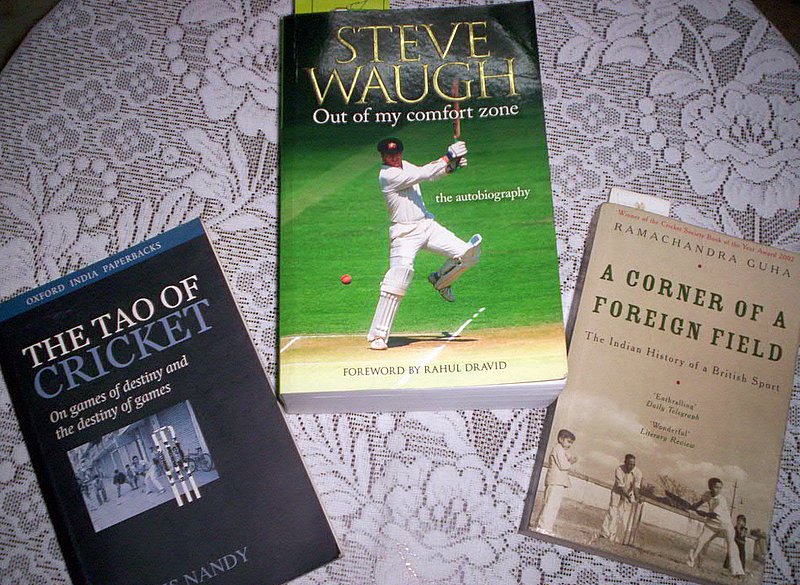
The sport has become so integral to the Indian ethos, that in his book, The Tao of Cricket, eminent sociologist, Ashis Nandy, professes Cricket is an Indian game accidentally discovered by the British…

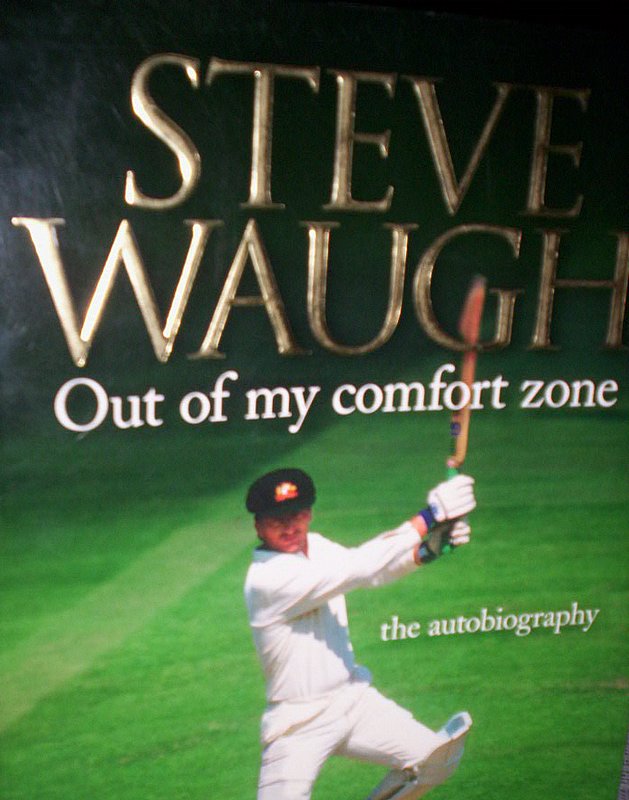
So when my brother recently handed me this hefty tome as a belated birthday gift, I was elated beyond measure. Steve Waugh, the former Australian cricket captain, had remained my favourite for most of his cricketing career. Not just because of his skill with the game, but for his indomitable mental toughness and his commitment to social causes, which includes his work with an institute in India that is a haven for children of leprosy patients. I would always be stunned by his ability to singlehandedly rescue his team from near-losses. His record as captain is no less spectacular. Under his leadership, the Australian team became an impenetrable wall of attack, which no team in the world could match in terms of either flair or tactics.

That’s about what I’ve managed to read of the book thus far. Admittedly, I am a slow reader and bulky books always intimidate me. But Waugh does a great job telling his life story—he maintains a conversational tone, is admirably honest, and gives a fascinating glimpse into facets of his personality that remained masked by cricket. For who could ever tell, this gritty player, who even came across as a cold and calculated strategist while leading his side, detested being in the spotlight? Or that he wrote long, wistful letters to his teenage love (and later his wife), while on his first tour outside home in England? Steve Waugh is also candid about the uneasy and somewhat strained relationship with his twin Mark, who himself was part of the same squad his brother captained, and has an illustrious track record to his credit.

Hopefully, I would finish the Waugh treatise in a few months. I must, because I also have to read the other two books you see in the picture. I am particularly interested in A Corner of a Foreign Field, which presents “The Indian history of a foreign sport.”

What sports do you like? Does its history draw you? Or the life stories of its legends?

A sport teaches us so much, even if we don’t play it.

And now, may I pass the baton to Matt at Mad Scientist Matt’s Lair.

The entire chain:

Peregrinas

Pass the Torch

The Road Less Travelled

Fireflies in the Cloud

Even in a Little Thing

The Secret Government Eggo Project

Curiouser and Curiouser

At Home, Writing

Mad Scientist Matt’s Lair

I, Misanthrope – The Dairy of a Dyslexic Writer

Beyond the Great Chimney Production Log

Flying Shoes

Everything Indian

The Hal Spacejock Series

Organized Chaos

Of Chapters and Reels

Just a Small town girl

Midnight Muse

Kappa no He

, , , ,

Latin America: A Journey Inside Out

The Duo Hits the Road

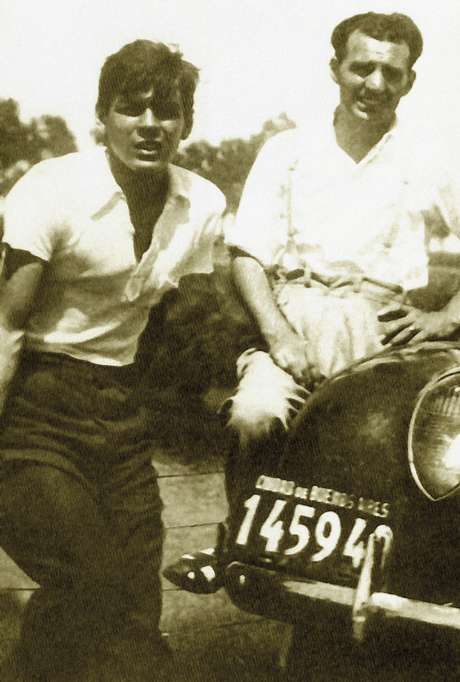
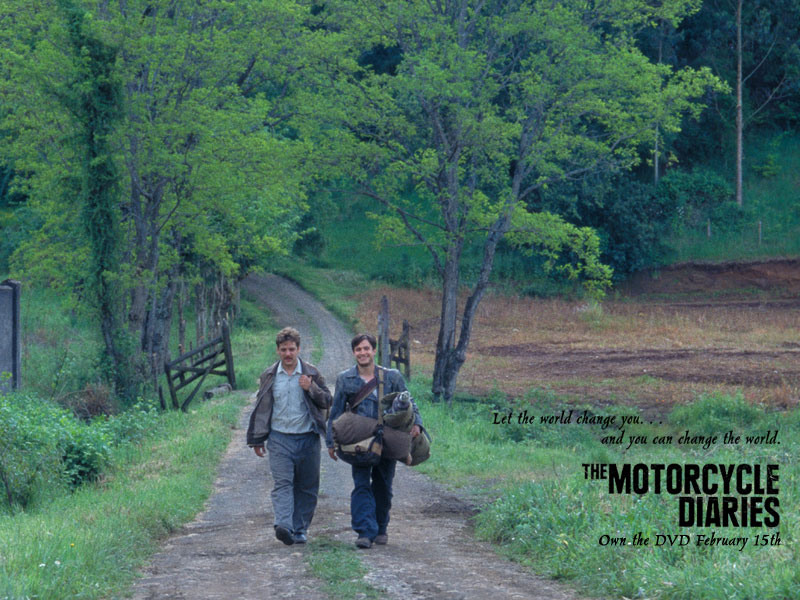
Two friends, bitten by the itinerant bug and armed with little more than a Norton 500 motorcycle and the carefree craze of youth, embark on a journey across a continent. Nothing exceedingly extraordinary about that. The human spirit of adventure has seen a lot of heroic trips being undertaken by daredevil travellers. Yet, what is it about the journey of these two Latin American friends that pulls curious onlookers like me to follow their trail to this day?

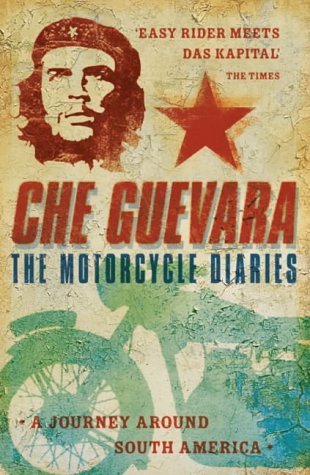
What is it about The Motorcycle Diaries that makes such a lasting impression on me and so many others? The fact that it isn’t just a travelogue, nor is it just another memoir of youthful impulsiveness; but that it’s a man’s inner journey happening hand in hand with the outer sojourn. It’s also your own journey—as a reader and as a person. A bit surreal to describe in words.

This is not a story of incredible heroism, or merely the narrative of a cynic; at least I do not mean it be. It is a glimpse of two lives that ran parallel for a time, with similar hopes and convergent dreams.

[From The Motorcycle Diaries, by Ernesto ‘Che’ Guevara]

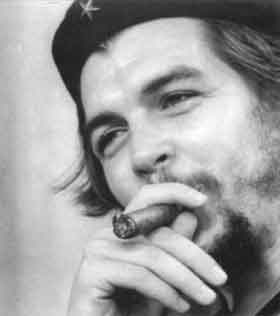
Indeed, Ernesto Guevara hits the nail on the head there, at the beginning of the book. When I first read The Motorcycle Diaries some three years ago, I knew little about Guevara. He was this t-shirt and poster figure, the epitome of “revolution.” I only knew him as a left-inclined man who stood and fought for the rights of the oppressed. In hindsight, it’s a good thing that The Motorcycle Diaries, and not one of his political pieces, was the first Guevara writing I came across. The book surprised me. For, here I saw a 23-year-old young man, going on 24, just like any other of his age—bursting with restless energy and the spirit of quest. I saw this young man poking fun at himself, his older pal, and their often unfriendly motorcycle. I found little or none of the political rhetoric that Ernesto Guevara came to be associated with, just a few years since making this defining road trip. And layer by layer, chapter by chapter, I saw the young man changing, until the end of the nine-month journey, when he seemed to have come of age and matured way beyond he could have imagined at the outset.

On Celluloid

And then last month, just like he had done three years ago with the book, my brother gave me the DVD of The Motorcycle Diaries. I had pestered him a lot to bring home the movie. Yet, when it finally arrived, I didn’t show any urgency to watch it. I let it lie until my brother rang an alarm bell saying the DVD was a friend’s and had to be returned. That’s when I finally watched it.

Why this lack of interest? Did I think the film would be boring? No. I just felt sceptical about the movie because I wasn’t so sure the book could be adapted for celluloid without a measure of documentary-like info-dumping. And even though the book is written chronologically, it still has this scattered and fragmented persona, which I thought would make a film made from it less cohesive.

And this is why they say, don’t think about it based on what you read. Go, watch the film.

The silver screen version of The Motorcycle Diaries moved me just as much as Guevara’s own words had. In fact, there couldn’t be a better rendition of the book in film format than the one we now have from Director Walter Salles. It stands out for all the elements that define fine filmmaking. Besides being technically slick, it impacts the viewer at a very human level. That is where it’s real victory lies. It entertains you wholeheartedly yet leaves you uneasy by posing difficult but nagging questions through young Ernesto’s observations.


http://www.motorcyclediariesmovie.com/home.html

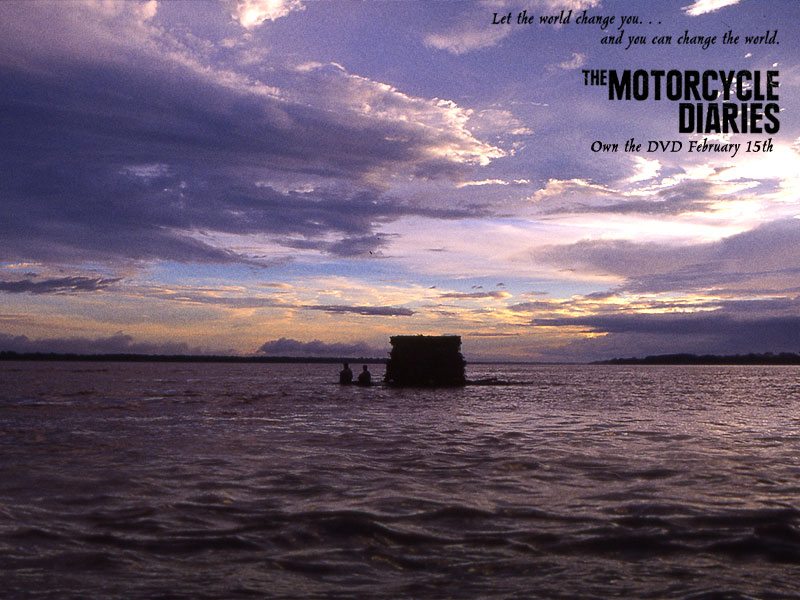
The breathtaking scenery first. Guevara himself does a fantastic job of describing the spots he and Alberto Granado pass by and visit during their epic journey through five South American countries—Argentina, Chile, Peru, Colombia, and Venezuela. The manner in which he shows a human intimacy with the immediate landscape can put a lot of fiction writers to shame. He talks of the sea as his confidant and friend that can absorb all secrets and offers the best advice, if only you carefully listen to its various noises.


http://www.motorcyclediariesmovie.com/home.html

That the filmmakers chose to shoot the film at the exact locations where the journey took place doesn’t just enhance its credibility, but also makes for exhilarating visual treat. Cinematographer Eric Gautier superbly captures the scenic charm of the places on his camera, often giving the viewer the feeling of being there with Ernesto and Alberto. And the landscapes covered are magnificently diverse—from the green of Argentina, to the Atacama Desert in Chile, to Peru’s mountain tracks. I seriously want to see Latin America based on what the film portrays.

The Light Side

The Motorcycle Diaries is a testimony of Guevara’s brilliant sense of humour, something he is said to have possessed until the very end, even when he turned into a hard-boiled guerrilla fighter and a mass leader.

Alberto, unmovable, was resisting the morning sun’s attempt to disturb his deep sleep, while I dress slowly, a task we didn’t find particularly difficult because the difference between our night wear and day wear was made up, generally, of shoes.

[From The Motorcycle Diaries by Ernesto ‘Che’ Guevara]

Toward the end of the book, Ernesto lays out a neatly chalked-out “anniversary” routine he and his friend had devised to manage some food off unsuspecting people. The five-step program started with the two friends talking loudly with some local twang thrown in to pique the curiosity of those around them. A conversation would ensue, and our peripatetic friends would subtly enumerate their hardships on the road and then one of them would ask what date it was. As soon as someone told them the date, the other friend would let out a massive sigh, saying softly it had been a year since they started their journey, and they couldn’t even celebrate, they were so broke. Their “victim” would then offer some money, which the duo would refuse, before finally accepting it with reluctance. Their host then treats them to drinks. After the first drink, Ernesto refuses another one. The host persists, asking why he wouldn’t have another one, and after much requesting, Ernesto confesses that according to a custom in Argentina, he can’t drink without eating alongside.

In the film, actors Gael García Bernal (Ernesto) and Rodrigo de la Serna (Alberto) portray the “anniversary” act hilariously before a couple of Chilean girls, about their age. I was in splits watching the duo performing their antic, mischievous innocence and the desperation to fulfil their stomach’s cries leading them to stand-up comedy brilliance.

The Humanist Emerges

However, what set both the book and the film completely apart are the pertinent and often not-so-easy questions about the human condition. As Guevara and Granado travel farther and deeper, they have a close brush with the lives of the poor and exploited. This becomes possible because of the tramp-like nature of their journey for the greater part of the trip, since their bike breathes its last at a location in Chile. As they hitchhike their way through the Latin American landscape, a lot of times aboard trucks laden with indigenous people, Ernesto realises the tremendous humiliation meted out to poor people across the continent—whether it be a mining couple they meet in Chile who are persecuted for the man’s “communist” leanings, or the abject conditions to which Peru’s native mountain tribes are relegated, or the hapless state of leprosy patients they visit at the San Pablo leper colony in Peru. Every instance of coming across such injustice pains young Guevara and his anger and frustration is reflected throughout the book. Director Salles brings out this sense of pain very well in the film.

It isn’t unnatural for a human to feel moved or sad at the plight of a fellow human. Most of us would feel the same emotions that Ernesto does. However, there are a few human beings, for whom the pain becomes so intense they can’t remain silent about it. Even though the book is primarily a record of Guevara’s and Granado’s journey, you can see Ernesto belongs to that rare breed of empathising human beings.

The book carries tell-tale signs of the man he was to become later. The man who would galvanise poor peasants across Latin America to take up armed struggle for the life of dignity to which they had a birth right yet which was denied to them for lifetime after lifetime. And underlying the most violent of approaches he undertook as a guerrilla commandant was his deep love for human lives that had been rendered powerless through centuries of unjust subjugation. The Motorcycle Diaries—the book and the film–reveal this loving, soft-hearted man time and again. We see Ernesto’s vision of a United Latin America, when at a party thrown by the staff and patients of the San Pablo leper colony to celebrate his twenty-fourth birthday, he delivers a speech saying “the division of Latin America into unstable and illusory nations is completely fictional.”

Yet, the maturity doesn’t happen overnight. The self discovery happens layer by layer, and here, the filmmakers pull it off with great sensitivity, without the slightest trace of sensational exaggeration.

The symbolic nine-month journey is also a tale of immense physical grit. The two friends brave harsh blows of nature—from walking through a completely uninhabited stretch at pitch dark, to trekking their way through forests and the Atacama Desert, even as Ernesto falls prey to a series of asthma attacks (he was chronic asthmatic).

The Motorcycle Diaries includes a few letters Guevara wrote to his parents. These lend a fresh dimension to the book, reflecting his close bonding with family members with whom he freely shares his disenchantment with the appalling conditions of the poor across Latin America.

Chillingly Prophetic…

Although it’s difficult and unfair to pick sections of the book as favourite, the parts I found the most chilling were those in which Guevara envisions a future for himself exactly as it unfolds years later. Early in the book he says his destiny is to travel. Indeed, in the succeeding years, right up to his death, he travels and travels—across the world—from Russia to Asia and Africa. Only now he is shorn of youthful indulgence and is a champion for the voice of the proletariat.

And again at the end of the book, in the very last chapter, “A Note in the Margin,” Guevara gave me goose bumps, when he predicted his death.

“…I knew when the great guiding spirit cleaves humanity into two antagonistic halves, I would be with the people…I see myself, immolated in the genuine revolution, the great equalizer of individual will, proclaiming the ultimate mea culpa.”

[From The Motorcycle Diaries by Ernesto ‘Che’ Guevara]

As insensitive as it may sound, perhaps it was only fitting that Guevara died young. He remains a youth icon through generations, although it’s sadly ironical that the ideals he stood for are now mere footnotes in history for the very people who use merchandise bearing his image.

Ernesto Guevara would be 78 today (June 14). In my opinion, people like him don’t die. Only their bodies perish. Happy birthday, Che.

And a useless bit of trivia: Ernesto Guevara shares his birthday with yours truly. How old am I? Let’s hope like Che, forever young.

, , ,

Outstanding Nonfiction – III

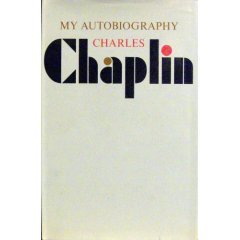
My Autobiography
Charles Chaplin

At the risk of carrying on with the refrain of the previous two books I mentioned in this series, I will say I chanced upon this book rather than consciously deciding to read it. I was in my school-leaving year, when, during summer vacation, I found a tattered, yellowed copy of this book lying around the house. Evidently, my brother had borrowed it from a friend. At that point, Charlie Chaplin to me was this funny-looking, clumsy tramp who featured in some wonderful silent films. My knowledge of Chaplin came from, and was limited to, the films of his I saw at theatres as a child with my mother and brother. City Lights made the greatest impression on me as a little girl, and without my knowing, the tramp on the screen and the name Charlie Chaplin had morphed into one entity, for whom, one could only feel sorry. For, he was almost always at the receiving end in the films, even though he did good for others.

One tattered book, read over 13 days of my school-leaving-year summer vacation, changed my impression of Charles Chaplin. Forever. From the very beginning of My Autobiography, I found Chaplin’s voice strong and confident enough to draw me in as a reader. Given my complete ignorance about this movie maestro, I found his life story mind blowing and nothing short of a miracle in places. From his boyhood dream to act as he saw vaudeville performers passing by his home, to making his debut on stage as a teenager starring as “Billy” the page boy, to his joining vaudeville, which brought him to the United States, and his eventual entry into the film world via Mack Sennett and the Keystone Film Company in 1913, his journey as he puts it in his own words is a rollercoaster of fortune favouring the brave. That he was a hit with American movie goers overnight and decided to go independent within just four years of joining Keystone only reinforces his self-conviction and vision as an artiste and filmmaker.


The book provides an excellent peek into the early days of Hollywood, the film fraternity, and Chaplin’s exemplary rise to success. It also tells us how the world-famous attire of the tramp, the principal character in Chaplin films, came about by almost sheer accident and his ingeniousness. As I progressed with the chapters, I couldn’t help feeling astonished at his gumption, focus, and the ability to dream and inspire. From 1921 onwards, this genius of a director/producer produced one gem after the other such as The Kid, Gold Rush, City Lights, Modern Times, The Great Dictator, Limelight and more. We learn how he was able to extract the poignantly memorable performance from Jackie Coogan, the boy who plays the lead character in The Kid. The interaction between little Jackie and Chaplin establishes, how, like many great directors who were to follow him, Charles Chaplin was perhaps among the earliest band of “actor’s directors,” who come with the intuitive knack of eliciting excellent performance from their actors.


The book records Chaplin’s resistance to switching to talkies as opposed to his silent films that conveyed dialogues through subtitles at the bottom of the screen. Yet, when he does finally makes talkies, his magic shines in them too, The Great Dictator being a prime example.

Chaplin narrates how he had to pay the price for certain political undertones in his films by being forced to leave his movie-making Mecca, America. He makes his observations on the controversy with great conviction and in my view, does a good job of defending himself. The irony of the situation plays itself out in the grandest of manners, when in 1972, after a three-decade exile, Hollywood confers upon him an honorary award “for the incalculable effect he has had in making motion pictures the art form of this (2oth) century.” For the record, when Chaplin received the award, he was greeted with what is the longest standing ovation in the history of Academy Awards, lasting a full five minutes.

My Autobiography is every bit personal as it is professional. For a man like Chaplin, the two realms often blur, as is the case with a lot of members from the entertainment industry. The tramp endeavours to present a discreet yet honest account of his real life relationships, his three failed marriages, his scandalising brush with a paternity litigation (which he won), and finally his eyebrow-raising yet blissfully happy affair and married life with Oona O’Neill, daughter of the famous playwright, Eugene O’Neill and almost forty years younger than Chaplin. The final few chapters are a testimony to this remarkable love affair of the last century, and they brought a smile on my face. After all, I am a sucker for happy endings. And Chaplin’s life, reel and real, end on the happiest of notes.

Image courtesy: http://www.biografiasyvidas.com

Charles Chaplin’s autobiography may have some holes in so far as presenting facts fully is concerned (he is discreet about his failed relationships in order to maintain his children’s privacy). However, that takes nothing away from the merit of this passionately-told story. This is not just any rags-to-riches yarn. It is the story of a legend–as it unfolded scene by scene–rising phenomenally, fighting against the worst sorts of odds, building a legacy that would remain untouched by time, and putting his stamp on the film world as one of its all-time geniuses.

When I completed reading the book, I couldn’t let it remain tattered. I mended it, using the best adhesive at home and covering it with a nice plastic sheet. Books like this are not meant to be ignored for wearing out. They deserve to be preserved.

Note: This is the third and last of my posts on some top-quality non-fiction books I have read. It is a follow up to my post Not Fiction? Not a Bore.