Two Lights: Flash Fiction

First published as a part of a contest in The Clarity of Night

“Coffee?” He exclaimed, without waiting for my reply, then jived his way to the kitchen, a song on his lips. I smiled. The rugged terrain and the daily dance of death had failed to harden him.

I finished the painting with a smudge of blue. He joined me, holding his drink. For an infantryman fighting seven thousand miles away, a four-day trip back home was luxury.

After discussing his health, the kitties, and the weather, I told him about the divorce and Mark remarrying. Was he upset for being kept in the dark? His lips clipped with unsaid words. Was it the heat when he yelped at gulping a large sip of coffee?

Caffeine over, he was back to his ebullient self. “Let’s see how the masterpiece looks.” He placed the canvas on the wall. “I’m gonna steal this one once I start living on my own. Make sure you sign it.”

“It’s yours,” I said with a weak grin.

“Well, aren’t you a sweetheart?” He hugged me.

Then, he gave me the gift; two beautiful crystal lights. He positioned them at the ends of the chest, just below the painting.

Three days later, a day before his nineteenth birthday, I received his death notice. Today, he would have been twenty.

I stepped into the room that had remained unlit for a year. I turned on the two lights and glanced at the painting.

“May the light shine for you, my son,” I whispered, before a lump blocked my throat.

Secrets and memories

Hateship, Friendship, Courtship, Loveship, Marriage
Alice Munro
Penguin Canada

First published in DNA

https://i.gr-assets.com/images/S/compressed.photo.goodreads.com/books/1407175370i/17431483._UY475_SS475_.jpg

As I unroll the reels of my life’s movie, the stories of my mother and grandmother, two women who shaped my growing up unravel before me. All three of us have lives distinctly different from each other’s. Yet, when I look closely, I see we have all been shape shifters — slipping into moulds we scarcely anticipated, not necessarily with ease or delight, but always with the readiness that our circumstances demanded. In Hateship, Friendship, Courtship, Loveship, Marriage, Alice Munro’s collection of nine short stories, I found many of our comrades — women across small towns and big cities juggling domesticity and the rigours of the professional world — slipping into and out of moulds and bearing the consequences of their actions with or without grace.

The book derives its title from a counting game young girls play with the names of potential boyfriends. Yet time and again, Munro’s adult protagonists prove that their lives need not remain constrained within the clusters of hateship, friendship, courtship, loveship and marriage. Like an ocean’s waves that don’t adhere to a boundary while undulating, the women of Munro’s stories don’t hesitate to spill outside the defined perimeters of their existences.

In the opening story, which shares the book’s title, Johanna takes the bull by its horns, torso and tail, when unbeknownst to herself, she falls for a prank played by two young girls. The girls write her love letters on behalf of one of their fathers, who lives in a different province. Johanna finds not just emotional succour in the letters, but true to her working-class industry, she smells an opportunity to banish her status as a pitiable spinster once and for all.

Johanna’s success in achieving what she sets out to establishes the book’s tone. In Munro’s more-real-than-real-life stories, women are not always in control of their destinies — sometimes by choice and at other times, without any. But what arrests the reader is their remarkable refusal to be pathetic, sympathy-arousing creatures. And they accomplish this with utterly ordinary, non-awe-inspiring actions.

In Floating Bridge, my favourite story of the collection, Jinny, a cancer patient, steps into the light — metaphorically speaking — even as she is engulfed in darkness. Thanks to a stranger, a young man, she walks on a floating bridge for the first time while her husband socialises with the same man’s family. But that’s not all. Jinny also receives the youth’s passionate kiss as he guides her steps on the bridge — an affection without any nomenclature, a fleetingly eternal moment of breathtaking freedom.

“What she felt was a lighthearted sort of compassion, almost like laughter. A swish of tender hilarity, getting the better of all her sores and hollows, for the time given.” [Floating Bridge]

Weaving inter-generational tapestries that span not just months or years but decades isn’t an easy act to pull together in short fiction, but Munro achieves this with the effortlessness of a teenager’s unabashed giggle. Even as the characters and stories swing back and forth in time, one is left amazed and bewildered by the author’s ability to carry the innocent reader through her intricately mapped-out territories. This is brilliantly evidenced in Family Furnishings, a story that interlaces family drama, the female protagonist’s brisk, nonconformist quips clashing with the deep-set conventional thinking of other family members, and finally intrigues and secrets that make the reader see the same character in a completely new light.

In this collection, Munro explores the idea of fidelity in marriage in more than one way, with no easy answers or moral positioning for the reader. And not all trespassing, if one could call them, happen in a blatant, deliberate manner. Stories like Comfort, What is Remembered, and The Bear came over the Mountain show how ephemeral and impulsive a moment of ‘stepping out’ can be at times. And not necessarily sexual in nature either.

“Ed Shore puts an arm around Nina. He kisses her — not on the mouth, not on her face, but on her throat. The place where an agitated pulse might be beating, in her throat.” [Comfort]

Memory can be a treacherous, manipulative and even therapeutic poultice. We realize this while reading the layered narratives of Nettles, What is Remembered and The Bear came over the Mountain. In What is Remembered, Meriel cherishes the sole pulsating whiff of an extramarital affair that breezes through her long married life, yet she wants to remember things differently than the actual sequence of events that took place.
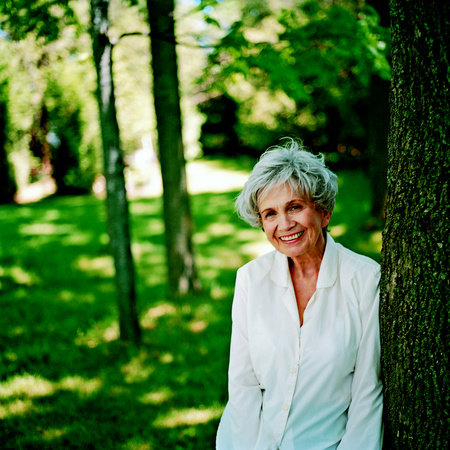
https://images.randomhouse.com/author/21567

Transitions — geographical and otherwise — often form the metaphorical motif of Munro’s stories. Nettles, Queenie and Family Furnishings, chart the perplexity-ridden phase between young adulthood and grown-up in Munro’s spade-is-a-spade candour.

“I know exactly how old he was because that is something children establish immediately, it is one of the essential matters on which they negotiate whether to be friends or not.” [Nettles]

And it is this sense of negotiation, the constant trading of emotions, personal space, the necessity of belonging — that guides Munro’s characters, especially her women. This is not always easy or even plausible and must be done on the sly, but the women that we come across in Hateship, Friendship, Courtship, Loveship, Marriage aren’t shy of doing so.

“Young husbands were stern in those days…What a lot they had to learn, so quickly. How to kowtow to bosses and how to manage wives. How to be authoritative about mortgages, retaining walls, lawn grass, drains, politics…It was the women then, who could slip back — during the daytime hours, and always allowing for the stunning responsibility that had been landed on them, in the matter of children — into a kind of second adolescence. A lightening of spirits when the husbands departed. Dreamy rebellion, subversive get-togethers, laughing fits that were a throwback to high school, mushrooming between the walls that the husband was paying for, in the hours when he wasn’t there.” [What is Remembered]

I came to Munro as a reader with her first book of stories, Dance of the Happy Shades. Every story in that anthology charmed me as I read about young girls and women at crossroads, getting a taste of the bitter truths of life and coming of age. In Hateship, Friendship, Courtship, Loveship, Marriage, I met women who had already come of age and were mature and daring enough to dance and even miss a step or two on the paths that beckoned them.

Whenever I read Munro, I am seized with both the thrill and dread of a scientist in a laboratory, who discovers the minutiae of organic life under a microscope. Munro turns the spotlight on lives around us with such astonishing alacrity that it is but impossible not to find strains of one’s own living reality in her stories. The modern-day fables in Hateship, Friendship, Courtship, Loveship, Marriage hold a clear-as-daylight mirror to women’s lives — imperfect and rocky, but never without the possibility of a spark, a fresh leaf and a redeeming edge.

The Rendezvous by Bhaswati Ghosh (flash fiction)

You never approved of it as a meeting point; I always found it interesting.

After all, the whole city’s lovers would converge in Victoria Memorial, Nicco Park, or even the not-one-bit romance inspiring Moidan. I found my intensive coaching for the IIT entrance test to be a boon. Stealing those few minutes by the graying walls meant we weren’t thrown amid that snuggling, juvenile mass of couples in public places. For me, this secret (or was it, with the housewives peeking out of their first and second floor windows?) meeting with you every alternate evening worked perfectly. Until Baba appeared on the scene, that is. Not in my wildest dreams would I have imagined him passing by this stretch, catching a glimpse of me tapping on books, waiting for you.

“What were you doing in that neighborhood?” He asked me at dinner that night.

“Umm, where, Baba?” I looked as startled as I felt.

“In that lowly North Calcutta area. What took you there?”

“A friend lives there,” I muttered.

His caustic glare didn’t escape my eyes. The son of a sugar magnate, I wasn’t supposed to step into a North Calcutta ghetto. His look scared me he would find out. He did. For three months, we didn’t talk.

One evening, while trotting toward the gray walls, I saw Baba talking to some people. He had met your parents afterwards. A month later, he blessed us. At our wedding.

I still love those leaking pipes lining our gray, you know.

First published in The Clarity of Night “Silent Grey” short fiction contest.

Book Review: Rashida Murphy’s ‘The Historian’s Daughter’

First published in Cafe Dissensus

Title: The Historian’s Daughter
Author: Rashida Murphy
Publisher: UWA Publishing, 2016

The Historian’s Daughter could well have been titled The House of Secrets. Isn’t that what a “house with too many windows and women” is likely to be? The historian in question is the father of Hannah, the novel’s secret-digging young protagonist. Throughout the first-person narrative, she refers to her father as the Historian because of his real-life profession and her mother as the Magician due to her spell-inducing sweetness. Why then isn’t the book called The Magician’s Daughter? That’s a secret Hannah must accidentally come upon, and one that her creator Rashida Murphy guards with skilled control as she takes the reader on a voyage spanning familial and political upheavals and migrations across continents and personal mind maps.

Hannah’s fetish for secret busting is a natural function of her environment. History is the kernel wrapped in its homonym cousin – mystery. Both mystery and history flow freely in Hannah’s house in the hills, which she shares with her parents, older sister Gloria, brothers, Warren and Clive and her numerous aunts who come visiting and stay put for extended periods of time. Her historian father’s library – one he has inherited from his “despicable” British father – is the first depository that would trigger, and in time train, her sleuthing skills. A series of books on the English “conquistadors” of India sets her off on her quest to understating and even confronting the past, however unsettling.

The dramas and dark corners of family life dominate the early part of Hannah’s – and the book’s – world. While she’s happy to be under Gloria’s elder-sisterly wings and bask in the Magician’s affection, what makes her recoil at the sight of her father is a muddied phantasm the reader must, like Hannah, uncover in layers. This is also the part of the novel that brims with Persian fragrances – black tea with mint and carrot halwa; and with fables – of heroes Rustom and Sohrab, which the Magician reads to her daughters and of Rani, a less-than-heroic aunt dubbed crazy and living practically under house arrest.

The dynamics of this universe of chaotic delight changes forever when Sohrab, an Iranian young man – enters the scene. An acquaintance of Farah, the Magician, Sohrab bears about him an uneasy wind – that of the turmoil sweeping through Iran during the period of the country’s revolution in the late 1970s.

As with seeds that winds disperse all over the place, the lives of Hannah and her family get scattered, and Hannah finds herself in Australia as an immigrant. Transplanted without the nourishing support of her mother or sister, it is in Perth that Hannah has to find her own bearings. This is also where she finds love as well as a reason to return to the continent she came from – first in Iran in search of her sister, then in India to look for the Magician. Through it all, she must not only witness but also endure – hardship and the excesses of revolutions; cruel family secrets and the maturing of love, loveless hearts and an infant’s unbridled affection. The story in this part oscillates between physical and mental spaces as Hannah negotiates the distance between her present and her memories. The narrative feels somewhat jerky at times, perhaps not too different from the rugged emotional terrain Hannah herself treads through.

Through it all, Hannah also finds her own voice as a woman – one that’s not shaped or seasoned by the stronger women of her childhood. She’s funny and sharp, confident, and vulnerable – a mass of real flesh and blood. She is bold but her courage isn’t about an absence of fear. It is about running with – not away from – fear. She’s impulsive and a passionate lover, but most of all, she’s a baton-bearer of the two women who she first learned to love from – her mother and sister. This is what makes The Historian’s Daughter a remarkably feminist novel in the garb of a family saga. Rashida Murphy is clear about fashioning it so, whether it is by making Gloria prevent Hannah’s genital mutilation by their aunt; the girls’ mother staging her own silent rebellion; or Hannah’s firmness in chasing her convictions, regardless of self-doubt and social pressure. These are strong women who aren’t afraid to acknowledge their weaknesses. 

The Historian’s Daughter engages as much with its plot twists as with its honesty and narrative sweep. The language is crisp, the imagery vibrant, and the plotlines like stable trellises for the vines they support. This is Murphy’s first book and, for me, a wellspring of promise and anticipation. The malleability with which her love of history, research, politics, and storytelling meld into a whole makes her a writer to look forward to.

‘The Historian’s Daughter’ is available on: Amazon.com

Dead Man Talking — Hassan Blasim’s short stories

The Corpse Exhibition and Other Stories of Iraq
Hassan Blasim
Penguin
Translated from the Arabic by Jonathan Wright


What is left when a place dies a thousand violent deaths?

A million stories sprout over the graveyard. Each narrator is a Scheherazade (of One Thousand and One Nights), except none of them is compelled to tell a tale for fear of being killed. Some of them have already crossed over to the other shore and even the 18114111-_uy475_ss475_ones living know death to be staring them in the face. Yet the emotive force — mind-bending and magnetic — of the voices echoing through Hassan Blasim’s short stories forces the listener/reader to be pulled into their universes — macabre and enigmatic as they are.

I felt the sharp stab of Blasim’s storytelling knife in The Corpse Exhibition — the very first story in the collection. Written in the backdrop of the Iraq War, the story puts a chilling spin on the practice of displaying executed bodies in public. The narrator, evidently the boss of an organization curating the corpse exhibitions speaks in a clinical tone to a prospective new hire. The emphasis on the aesthetics of displays — one of the top pieces the boss cites is that of the corpses of a breastfeeding mother and her child both naked placed under a dead palm tree with not a trace of wound — layers the story with a degree of perversion that’s so disturbing it is riveting.

Read the rest of the review here.

The Bulldozer (short story)

I was sleeping when suddenly it started banging inside my ears, and I jumped up on the bed. As I looked out of the window, I could see the egg-yolk sun in the sky. Just then, Ab came running up to me, grabbed my arm and took me outside. Everything was broken all around us—big chunks of stones and concrete. As I walked out with Ab, I saw Umm standing outside the door. She was crying. Then I saw the fat blue bulldozer walking away—the monster machine that always smashed the walls of our homes.
bulldozer-small
When I came inside, I couldn’t find Husna on the bed. I dug under the pillow and bed sheet to look for her, but she wasn’t there. When I looked around, I saw everything mixed up on the floor. The calendar, the wall clock, which was broken, my favourite flower vase with Umm’s beautiful flower painting, Ab’s books, his glasses—everything was on the floor. I looked for my doll, but couldn’t see Husna in the mess. The walls were cracked and pieces of them were lying in the mix too. 
Read the rest of the story in Warscapes magazine.

Snow and Coffee (Short story excerpt)

By Bhaswati Ghosh

An excerpt from a short story, published in the latest issue of Stealing Time (a literary magazine for parents), themed Relations. To read the full story, purchase the issue here.Snow CoffeeAs she hurried for her train, a blast of snow slapped her cheeks, reminding Aruna of when she had landed at Toronto’s Pearson International Airport for the first time. The frigidity had made her question her decision to come to Canada. It was too late, she had reminded herself.

When she landed in this haven for immigrants nine years ago, Aruna had been nervous. At their parting, her husband Raghu assured her, “It’s only a matter of a few months, maximum a year, Aru. I will be there after that.”

But those few months had multiplied into as many as it took to make nine years. Years that taught Aruna that time was as slippery as her husband’s promise to join her in Canada. Between trying to make a living and raising twelve-year-old Vishnu, she had aged by two decades instead of one. Looking at the mirror one day, Aruna tried to make sense of how it turned out to be like this—three lives that were supposed to make a family now fragmented like left-over noodle strands on a diner’s plate. Those early years they had spent together contained no suggestion of the later distancing. Her husband had seemed caring and involved, if excessively guided by his quest for a “good life.”

Now, snow and coffee — once alien to her– had become second nature to Aruna. And her good life had little to do with what her husband had imagined. She reflected on how time changes a person’s inner landscape in accordance with the outer one.

The train sped past white houses, streets, trees. Aruna planted her cheek, covered with the woolen scarf she’d wrapped around her neck, to the window. The thickly snow-decked walls that vanished and re-appeared on the horizon were home. She rubbed her glove-clad hands and sipped coffee from the paper cup that danced slightly to the train’s motion on a tray table in front of her.

Arriving in the province, she had felt confident of getting a job. Her many years as a lifestyle journalist in India couldn’t have been for nothing. So she consumed herself with the other variables—managing her son’s education, getting a health card made, securing a driver’s licence, and all the other minutia of moving to a new place.

But she rented a damp basement apartment and managed the other details with ease. Only the job eluded her.

In three weeks, the city had turned from an indifferent host into an unforgiving master. The city demanded labour from Aruna in order to grant her an extended stay. A conversation with her widowed landlady made the prospects look bleaker than the foggy winter mornings…

Reader’s reviews:

The story very well opens the eyes of ‘outsiders’ in India etc., who look longingly towards the West as a utopia, to its sordid reality. The life of the immigrant, the brutal self reliance it has to fall back on in an unknown land, is nicely stated. In a way the story shows how non self reliant we are in India with all our relatives ready to absorb the shocks of our life and to make it more tolerable; in this sense, it is to the essentially relations-bound Indian mind to which the story speaks. 
~ Prathap Kamath
Your story brings out both the struggle and the elation after a successful struggle very beautifully. At first, it is quite unbelievable why Aruna was putting up with Raghu. Couldn’t she just pack up and start life afresh? And then it dawned upon me that life wasn’t so easy. Breaking all ties isn’t easy at all. And this difficult life is what you have described so well in this story.
…Just the feeling that Canada is so far away from home – and Raghu, in India – and is so, so cold makes this entire struggle so sublime and so worth it. Congrats to you for making some kind of a comparative study between the bleakness of Canada’s climate and the bleakness within Aruna to more beautifully sketch her struggle.Another good thing about the story is its length. You haven’t wasted words and sentences.
~ Hansda Sowvendra Shekhar

Dashrath’s Dinner Party by Amiya Sen (Short Story)

Translated from the Bengali by Bhaswati Ghosh

As she pulled the curtains off the doors and windows and dumped them on the floor, Shakuntala hollered, “Munga, come here, fast!”

Dashrath was at the dining table, shaving. Casting a glance towards Shakuntala, he said, “Why are you taking those off yourself? Have Munga do that…if you fell down—”

“That worthless servant of yours. You brought home a rascal from the orphanage. It’s eight in the morning, and he is yet to finish his work in the kitchen. A heap of clothes remains to be washed. I must load them into the washer myself and wait until the cycle is completed. If left to him, he will ruin the clothes like he did last time. Sigh, your new safari suit and Gudiya’s expensive zari-bordered lehnga-choli.”

“Let it be. Where will you get a servant for 30 rupees in today’s market? We are managing just fine. Hey, Munga, get up on the stool, take down the curtains and pile them in the backyard. Then bring a duster. Clean everything in all the rooms. Khabardar, nothing should break, or else I will beat you to a pulp, you understand?”

Read the rest at Humanities Underground

The Kitchen, another story by the same author.

Titti

Amiya Sen (1916-1990) is a Bengali novelist and short story writer. Her writing has been published in various Bengali journals, including Desh, Jugantar, and Basumati.Aranyalipi and New Delhi-r Nepathye are her non-fiction books. She also wrote a children’s book called Shonai Shono Rupkatha.

Of Martyrs, Marigolds and Mayhem (Book Review)

Of Martyrs and Marigolds

Aquila Ismail

Create Space

Available at: http://www.amazon.com/Martyrs-And-Marigolds-Aquila-Ismail/dp/1463694822

Sixty-five years ago, India was freed of two centuries of British rule. The freedom, however, came with massive human tragedy. The country was divided into what is present-day India and Pakistan, on the basis of religion. The Partition of India resulted in some of the heaviest bloodshed witnessed in the history of the subcontinent. More than 12 million people were displaced as a result of the division. Sadly, the bloodletting that started at the time of Partition did not die down with the passage of time. In the years and decades to follow, the monster of communal tension assumed numerous sinister faces across the subcontinent and continues to rear its head to this day.

One manifestation of this simmering tension was the 1971 war between India and Pakistan, triggered by the Liberation War–a conflict between the Pakistani army and East Pakistanis. The actual war lasted only 13 days, making it one of the shortest wars in history. But the events leading up to it had started long before, culminating in the formation of a new country called Bangladesh. These events and their consequences–tragic and irreversible–are at the core of Aquila Ismail’s debut novel, “Of Martyrs and Marigolds.”

The novel narrates the story of a young girl, Suri, and her family–Urdu-speaking Muslims who had moved to East Pakistan from India at the time of Partition. It is estimated that between 2,000,000 and 3,000,000 civilians were killed in Bangladesh, and as many as 400,000 women were raped by the Pakistani armed forces. The conflict led a further eight to ten million people from the erstwhile East Pakistan seek refuge in neighbouring India.

The story of Bangladesh is mired in geographical, ethnic and linguistic complexities. In the division of India and Pakistan, the latter got parts of Punjab and Bengal, separated from each other by more than a thousand miles. Language emerged as a major bone of contention, with the majority East Pakistani population demanding Bengali to be made an official language. The language resistance that saw students becoming martyrs forms the backdrop of “Of Martyrs and Marigolds” as the story of Suri’s love affair with Rumi, a Bengali Muslim boy, unfolds.

The narrative, through rich detailing, reveals the liberal outlook of Suri’s father, a civil servant in the Pakistani administration. All through, Suri’s family remains supportive of the legitimate democratic movements in East Pakistan and critical of the high-handed and arbitrary ways of the West Pakistan leadership, which eventually unleashes military action upon its own people in East Pakistan. Numerous novels and short stories have brought to light the horrors of the atrocities committed by the Pak army on Bengalis.

In March of 1971, the tables turned with the same army conceding defeat to the Indian army. Along with freedom to Bengalis in the form of the new country of Bangladesh, this also brought reprisals against non-Bengalis, many of whom were believed to have colluded with the Pakistani military. However, as is the sad fallout in any conflict involving two communities, a lot of innocent civilians bore the brunt of the backlash too. Suri’s family represents one of many such Urdu-speaking units that got caught in the crossfire and were rendered helpless and homeless overnight.

“Of Martyrs and Marigold” impresses with its flourish of imagery–the verdant landscape of East Bengal, its folk songs, and cuisines happily share the pages with the Western influences–English literature, baseball, the Beatles to name a few–in Suri’s life. Remarkable too is the sensitivity with which a delicate subject that continues to generate strong reactions among people within the Indian subcontinent and outside it has been handled. The author’s sincere narrative stays away from vitriol or any suggestion of hate mongering, relying instead on a helpless victim’s heartfelt questioning of her fate.

The descriptions of reprisals against Urdu-speaking East Pakistanis are vivid to almost a disturbing effect. As in most conflicts, women are the worst sufferers, as they face both ends of the sword–the wrath inflicted upon those being targeted and a further sexual violence in the form of rape and physical torture. Ismail depicts instances of such violence with chilling workmanship. A few chapters towards the end present these horrors with excruciating details that continue to haunt the reader long after the book has been put down.

Some of the dialogues in the novel sound stilted and the pace of action slows down in the middle. The multiplicity of characters sometimes makes it difficult for the reader to follow the storyline, but this gets easily overlooked by the overall force of the story. “Of Martyrs and Marigolds” definitely instills hope in the reader for more such moving tales from Aquila Ismail’s pen.

The Crater Doesn’t Move: Flash Fiction

I’ve stopped sleeping in our bedroom. Without the blare of heavy metal booming out of Shankar’s room, slumber eludes me. I lie on the blue-green cot on the terrace, staring at the sky. Sleep is still absent.

I sit up and light a cigarette—my nemesis and redemption.

Fluffy mounds of cloud shroud the moon. As the cloud masses drift along the darkening horizon, the moon ambles with them. But this isn’t supposed to happen. Doesn’t the moon stay in one place while clouds sweep over it? If this is some strange celestial phenomenon, I will take it. Anything that defies reality.

My smoky mind joins the floating clouds.

Read/listen to the rest in Issue 3 of Open Road Review.