Guest Blog – Bhupinder Singh

At Home, Writing is pleased to welcome its wonderful readers to the first Guest Blog. I am excited at the opportunity to learn from the perspective of fellow bloggers. I hope you all would enjoy interacting with these discerning guests too.


We begin with Bhupinder Singh’s review of:

Santa Evita
By: Tomás Eloy Martínez

In the short span of six years between 1946 to 1952, Eva Perón, the wife of the Argentinean dictator and founder of the Perónist party, Juan Perón, won over the Argentinean people so much so that her popularity was said to rival, if not exceed, that of Juan Perón himself. Having risen from obscurity, the youngest daughter of an unwed mother, her rise had been all the more spectacular.

Tomás Eloy Martínez’s Santa Evita could have been termed as a biographical account Eva Perón’s life had the author chosen to write about her short but eventful life.

Instead, he has chosen to write about her corpse.

Eva Perón’s body, like Lenin’s, was embalmed after she died of cancer at the age of 33, at the height of her popularity. However, before the corpse could be housed in a mausoleum for public display, Juan Perón was overthrown in a military coup, and thus began the after- life journey of Eva Perón, as the incumbent military government wondered what to do with the embalmed body.

To bury the corpse could have, they feared, incited the loyal Perónists and even the masses. And Eva dead was perceived as more dangerous than the living one.

Even a few replicas were created to mislead any followers, and attempts were made to bury them. For over a decade, the corpse and the replicas changed hands and locations, traversing within Argentina and to Europe- one replica was buried in Bonn and the actual corpse in Milan, Italy from where it was finally recovered and returned to Juan Perón after his return from exile in Spain.

Martínez recounts the stories of all those that came in contact with the corpse, and the often calamitous ends that they came to. Insidious accidents awaited those entrusted with the corpse.

Some were haunted till death, some met with inexplicable accidents and others were relentlessly followed by a mysterious person called the ‘Commander of Vengeance’.

It is characteristic of Martínez to write a novel that takes the after- life of Eva Perón rather than her not less eventful life as its theme. He does show us slices of her life too, but often as flashbacks and in recollections of those that he meets with.

In a sense, therefore, he underlines the persona that outlived Eva Perón herself.

This is akin to his previous novel, the redoubtable The Perón Novel, where he focused not so much on Peron’s politically active years, but the seemingly innocuous journey of an exiled dictator returning to his home country in old age.

Santa Evita is a novel within a non- fictional account where Martínez goes out in search of information about Eva Perón’s corpse- the story emerges as he interviews people associated with Eva or later with her restless corpse.

He makes the reader an accomplice in this journey of discovery- it becomes very much like a mystery in which the reader has as many, and more often as few, clues as the writer. This makes the novel extremely readable, if not racy.

Santa Evita turned out to be unputdownable, and I finished it within a week. Along with The Perón novel, it has been one of my best reads from Latin America in the last one year.

Note:Bhupinder Singh is the author of a reader’s words–a blog encompassing a wide spectrum of the literary world. From Dalit literature to Latin American authors, and from regional Indian writers to Leftist writings, Bhupinder covers it all. His blog is not limited to just books and authors, though. The subtitle–comprising keywords such as literature, left, liberal, socialism, globalization, dalit, books, Urdu poetry, south Asia, Indiais indicative of the inclusive nature of his blog.

, , , , ,

The Book of Bright Ideas

Bright Idea #96: When you go on a trip to buy a special surprise for your best friend, sing “You Are My Sunshine” and think of all the big people and the little people who are your sunshines. Then look at the old houses you pass, and think about the people who lived in them, and hope that they were somebody’s sunshine too.

[From The Book of Bright Ideas, by Sandra Kring]

That idea is the heart of this book. That there are times when some spark—a person, an incident, or both—enter your life like soft rays of sunshine gliding through an ajar window. And not only do these sparks brighten up the dark clefts within and without you, they actually turn out to be catalysts in transforming you into a bundle of sunshine. The Book of Bright Ideas celebrates these sparkling agents of change.

The narrator, nine-year-old Evelyn Peters, or Button as we better know her in the book, doesn’t have the faintest idea of the extent to which her life would change with the arrival of two strangers in their town. Twenty-something Freeda Malone and her sister, Winnalee, the same age as Button, enter the rural Wisconsin township like a sudden gust, threatening to blow over the steady but mechanical lives of the Peters family. The summer of 1961, the year these two ladies make this place their home, undoubtedly emerges as the biggest and wildest summer in the life of Button and her family. It is the summer when the timid nine-year-old would find a voice she can call her own, the time when her stiff and perfectionist mother would “loosen up” quite a bit, the year when her living dead father would find his music and his life back. And while all this happens, two little girls would pen down a book together. It’s their Book of Bright Ideas.

It’s a good thing Sandra Kring introduces the two strangers in the book’s first chapter. With them in place, the reader gets to see the whole range of characters—the book’s strongest aspect. Uptight Button versus buoyant, untamed Winnalee, huge-sized and giant-hearted Aunt Verdella vis-à-vis skinny, insecure Jewel–Button’s Ma, easy-going Uncle Rudy in contrast with sedate and dreary Reece Peters–Button’s dad. The characters are so real they almost leap out of the pages and share the living, breathing space with you. Button, all of nine years old, has already a lot to deal with—her mother’s missionary-like strictures, the idea of being ugly like her mother, the apathy of her father. No wonder the child grows up timid to the extent where she copes with her fears by chewing on her gums often to the point of bleeding. Jewel herself is seen to struggle with complexes of being ugly and inadequate fostered during her childhood. She masks them under a cover of perfectionist stiffness, the very feature that distances the two people who should be closest to her—Button and Reece. The same two people who are equally drawn to the household of Rudy and Verdella Peters—a couple embodying love and the joy of carefree spirit.

Then there’s the fiery Freeda and the dazzling Winnalee. The latter, moved around from one place to the other by her older sister, ends up being Button’s first “best friend.” From the very start we see her carrying the two most important things in her life—a vase containing her dead mother’s ashes and a bright leather-bound book. This book is the vine that twines the novel together, for in it Winnalee and Button note down the bright ideas they come across through their experiences. Winnalee believes when they have a hundred bright ideas, they would have figured out all the clues to life.

A series of episodes—from a community cookout to a stormy outburst by Jewel toward Verdella—lead to a complete reversal of the scheme of things. Just like her daughter, Jewel Peters finds a best friend, too—in Freeda Malone, the young woman she had detested initially. And Verdella and Rudy? Do they change? Why yes, they become more of themselves—more loving, more joyful.

The Book of Bright Ideas shines, not only with its amazing cast, but also with the charming atmosphere of a rural small town. In this second book of hers, Kring brings about the same community spirit that marked her brilliant debut novel, Carry Me Home. The coming together of the townsfolk for a cookout with food, drinks, and a wagonload of gossip; the animated community sales, where the selling of knick knacks brings those extra pennies all working families so appreciate; the 4th of July “Marty Graw” celebrations that sees the Peters and Malones letting their hair down in true American style and spirit.

Kring is the kind of writer who sweeps a large number of readers with her words. A big reason behind this is her use of strikingly simple and conversational language to tell complex stories. In both her books, the protagonists are children, who observe and present facts much as they happen, without colouring them. Yet, within that simplicity rests the intricacies of human nature, the wisdom that comes from appreciating life as it is, and the conviction that even the worst of blows can’t trample the peace and beauty that dwells in the human heart.

The Book of Bright Ideas surprised me at many a bend, with the plot throwing up unexpected twists, compelling me to keep moving without putting the book down. I remember keeping awake until four in the morning on one occasion, closing the book only when I felt reassured that the characters were safe and there was no reason to worry. How naïve I was. Yes, the worry might have been over, but not the surprises. While the story itself has a spell-binding effect, what nourishes the reader the most is the heartwarming transformation of the characters. It all happens naturally, none of it is forced. Therein lies the triumph of this book and the message it caries. That long after the agents of change are gone, the newness you acquire because of them remains unblemished. And then, you yourself become an agent of change in other people’s lives.

This is indeed one bright book.

My Bright Idea #1: If after switching off the lights once the final page of a book has been turned over, you feel your eyes are wet but your inside is smiling with a big-sized “happy,” don’t forget to share the gift with other book-loving friends.

, , ,

Latin America: A Journey Inside Out

The Duo Hits the Road

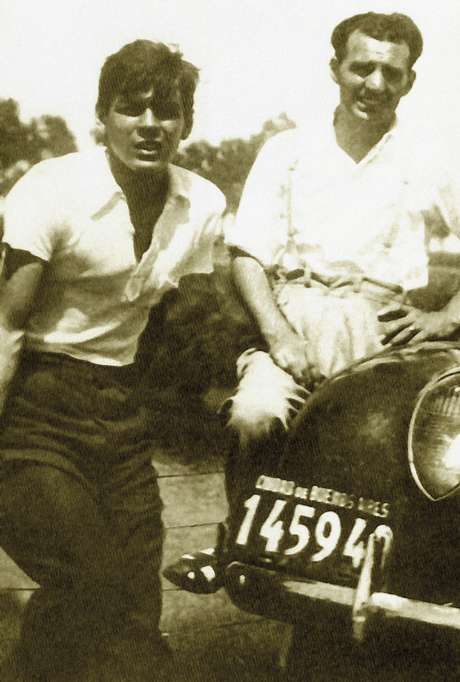
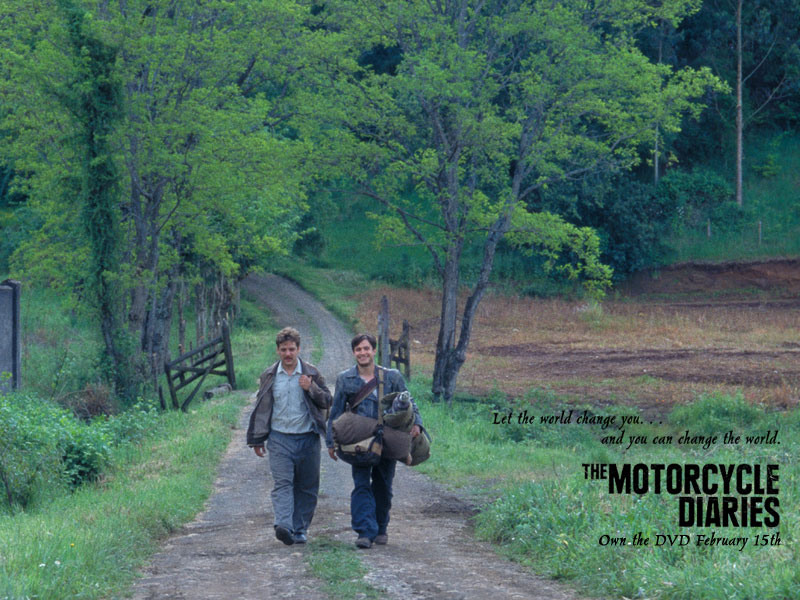
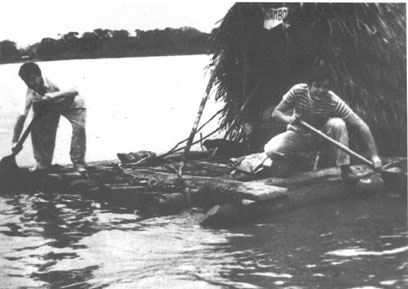
Two friends, bitten by the itinerant bug and armed with little more than a Norton 500 motorcycle and the carefree craze of youth, embark on a journey across a continent. Nothing exceedingly extraordinary about that. The human spirit of adventure has seen a lot of heroic trips being undertaken by daredevil travellers. Yet, what is it about the journey of these two Latin American friends that pulls curious onlookers like me to follow their trail to this day?

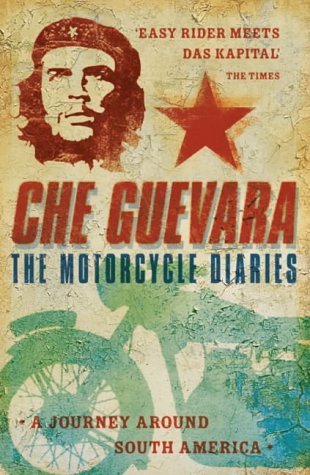
What is it about The Motorcycle Diaries that makes such a lasting impression on me and so many others? The fact that it isn’t just a travelogue, nor is it just another memoir of youthful impulsiveness; but that it’s a man’s inner journey happening hand in hand with the outer sojourn. It’s also your own journey—as a reader and as a person. A bit surreal to describe in words.

This is not a story of incredible heroism, or merely the narrative of a cynic; at least I do not mean it be. It is a glimpse of two lives that ran parallel for a time, with similar hopes and convergent dreams.

[From The Motorcycle Diaries, by Ernesto ‘Che’ Guevara]

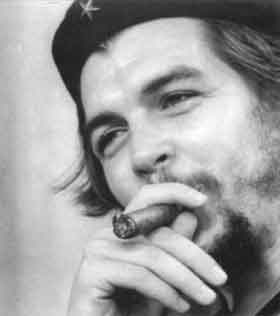
Indeed, Ernesto Guevara hits the nail on the head there, at the beginning of the book. When I first read The Motorcycle Diaries some three years ago, I knew little about Guevara. He was this t-shirt and poster figure, the epitome of “revolution.” I only knew him as a left-inclined man who stood and fought for the rights of the oppressed. In hindsight, it’s a good thing that The Motorcycle Diaries, and not one of his political pieces, was the first Guevara writing I came across. The book surprised me. For, here I saw a 23-year-old young man, going on 24, just like any other of his age—bursting with restless energy and the spirit of quest. I saw this young man poking fun at himself, his older pal, and their often unfriendly motorcycle. I found little or none of the political rhetoric that Ernesto Guevara came to be associated with, just a few years since making this defining road trip. And layer by layer, chapter by chapter, I saw the young man changing, until the end of the nine-month journey, when he seemed to have come of age and matured way beyond he could have imagined at the outset.

On Celluloid

And then last month, just like he had done three years ago with the book, my brother gave me the DVD of The Motorcycle Diaries. I had pestered him a lot to bring home the movie. Yet, when it finally arrived, I didn’t show any urgency to watch it. I let it lie until my brother rang an alarm bell saying the DVD was a friend’s and had to be returned. That’s when I finally watched it.

Why this lack of interest? Did I think the film would be boring? No. I just felt sceptical about the movie because I wasn’t so sure the book could be adapted for celluloid without a measure of documentary-like info-dumping. And even though the book is written chronologically, it still has this scattered and fragmented persona, which I thought would make a film made from it less cohesive.

And this is why they say, don’t think about it based on what you read. Go, watch the film.

The silver screen version of The Motorcycle Diaries moved me just as much as Guevara’s own words had. In fact, there couldn’t be a better rendition of the book in film format than the one we now have from Director Walter Salles. It stands out for all the elements that define fine filmmaking. Besides being technically slick, it impacts the viewer at a very human level. That is where it’s real victory lies. It entertains you wholeheartedly yet leaves you uneasy by posing difficult but nagging questions through young Ernesto’s observations.


http://www.motorcyclediariesmovie.com/home.html

The breathtaking scenery first. Guevara himself does a fantastic job of describing the spots he and Alberto Granado pass by and visit during their epic journey through five South American countries—Argentina, Chile, Peru, Colombia, and Venezuela. The manner in which he shows a human intimacy with the immediate landscape can put a lot of fiction writers to shame. He talks of the sea as his confidant and friend that can absorb all secrets and offers the best advice, if only you carefully listen to its various noises.


http://www.motorcyclediariesmovie.com/home.html

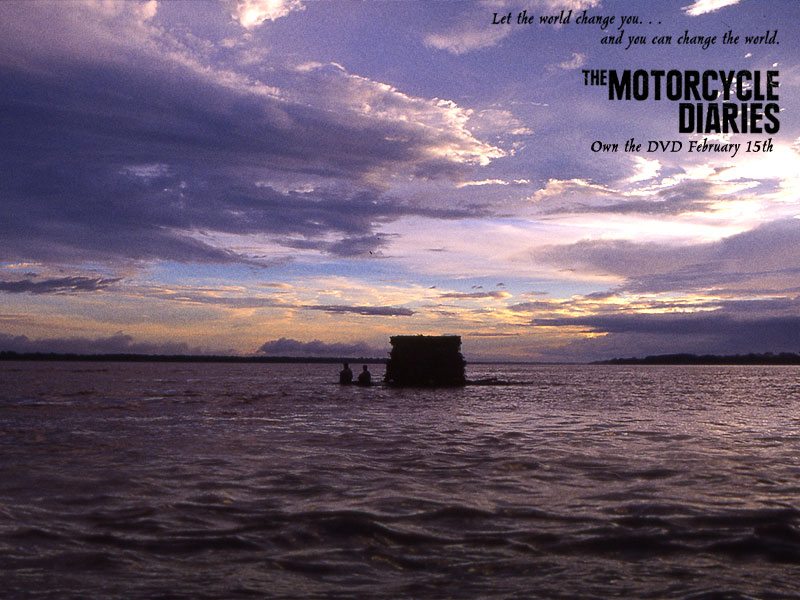
That the filmmakers chose to shoot the film at the exact locations where the journey took place doesn’t just enhance its credibility, but also makes for exhilarating visual treat. Cinematographer Eric Gautier superbly captures the scenic charm of the places on his camera, often giving the viewer the feeling of being there with Ernesto and Alberto. And the landscapes covered are magnificently diverse—from the green of Argentina, to the Atacama Desert in Chile, to Peru’s mountain tracks. I seriously want to see Latin America based on what the film portrays.

The Light Side

The Motorcycle Diaries is a testimony of Guevara’s brilliant sense of humour, something he is said to have possessed until the very end, even when he turned into a hard-boiled guerrilla fighter and a mass leader.

Alberto, unmovable, was resisting the morning sun’s attempt to disturb his deep sleep, while I dress slowly, a task we didn’t find particularly difficult because the difference between our night wear and day wear was made up, generally, of shoes.

[From The Motorcycle Diaries by Ernesto ‘Che’ Guevara]

Toward the end of the book, Ernesto lays out a neatly chalked-out “anniversary” routine he and his friend had devised to manage some food off unsuspecting people. The five-step program started with the two friends talking loudly with some local twang thrown in to pique the curiosity of those around them. A conversation would ensue, and our peripatetic friends would subtly enumerate their hardships on the road and then one of them would ask what date it was. As soon as someone told them the date, the other friend would let out a massive sigh, saying softly it had been a year since they started their journey, and they couldn’t even celebrate, they were so broke. Their “victim” would then offer some money, which the duo would refuse, before finally accepting it with reluctance. Their host then treats them to drinks. After the first drink, Ernesto refuses another one. The host persists, asking why he wouldn’t have another one, and after much requesting, Ernesto confesses that according to a custom in Argentina, he can’t drink without eating alongside.

In the film, actors Gael García Bernal (Ernesto) and Rodrigo de la Serna (Alberto) portray the “anniversary” act hilariously before a couple of Chilean girls, about their age. I was in splits watching the duo performing their antic, mischievous innocence and the desperation to fulfil their stomach’s cries leading them to stand-up comedy brilliance.

The Humanist Emerges

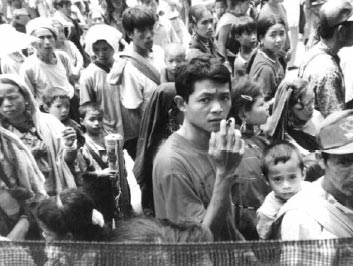
However, what set both the book and the film completely apart are the pertinent and often not-so-easy questions about the human condition. As Guevara and Granado travel farther and deeper, they have a close brush with the lives of the poor and exploited. This becomes possible because of the tramp-like nature of their journey for the greater part of the trip, since their bike breathes its last at a location in Chile. As they hitchhike their way through the Latin American landscape, a lot of times aboard trucks laden with indigenous people, Ernesto realises the tremendous humiliation meted out to poor people across the continent—whether it be a mining couple they meet in Chile who are persecuted for the man’s “communist” leanings, or the abject conditions to which Peru’s native mountain tribes are relegated, or the hapless state of leprosy patients they visit at the San Pablo leper colony in Peru. Every instance of coming across such injustice pains young Guevara and his anger and frustration is reflected throughout the book. Director Salles brings out this sense of pain very well in the film.

It isn’t unnatural for a human to feel moved or sad at the plight of a fellow human. Most of us would feel the same emotions that Ernesto does. However, there are a few human beings, for whom the pain becomes so intense they can’t remain silent about it. Even though the book is primarily a record of Guevara’s and Granado’s journey, you can see Ernesto belongs to that rare breed of empathising human beings.

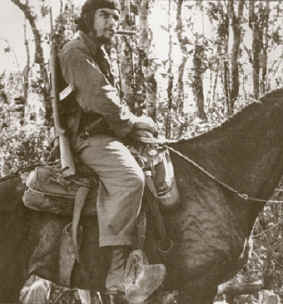
The book carries tell-tale signs of the man he was to become later. The man who would galvanise poor peasants across Latin America to take up armed struggle for the life of dignity to which they had a birth right yet which was denied to them for lifetime after lifetime. And underlying the most violent of approaches he undertook as a guerrilla commandant was his deep love for human lives that had been rendered powerless through centuries of unjust subjugation. The Motorcycle Diaries—the book and the film–reveal this loving, soft-hearted man time and again. We see Ernesto’s vision of a United Latin America, when at a party thrown by the staff and patients of the San Pablo leper colony to celebrate his twenty-fourth birthday, he delivers a speech saying “the division of Latin America into unstable and illusory nations is completely fictional.”

Yet, the maturity doesn’t happen overnight. The self discovery happens layer by layer, and here, the filmmakers pull it off with great sensitivity, without the slightest trace of sensational exaggeration.

The symbolic nine-month journey is also a tale of immense physical grit. The two friends brave harsh blows of nature—from walking through a completely uninhabited stretch at pitch dark, to trekking their way through forests and the Atacama Desert, even as Ernesto falls prey to a series of asthma attacks (he was chronic asthmatic).

The Motorcycle Diaries includes a few letters Guevara wrote to his parents. These lend a fresh dimension to the book, reflecting his close bonding with family members with whom he freely shares his disenchantment with the appalling conditions of the poor across Latin America.

Chillingly Prophetic…

Although it’s difficult and unfair to pick sections of the book as favourite, the parts I found the most chilling were those in which Guevara envisions a future for himself exactly as it unfolds years later. Early in the book he says his destiny is to travel. Indeed, in the succeeding years, right up to his death, he travels and travels—across the world—from Russia to Asia and Africa. Only now he is shorn of youthful indulgence and is a champion for the voice of the proletariat.

And again at the end of the book, in the very last chapter, “A Note in the Margin,” Guevara gave me goose bumps, when he predicted his death.

“…I knew when the great guiding spirit cleaves humanity into two antagonistic halves, I would be with the people…I see myself, immolated in the genuine revolution, the great equalizer of individual will, proclaiming the ultimate mea culpa.”

[From The Motorcycle Diaries by Ernesto ‘Che’ Guevara]

As insensitive as it may sound, perhaps it was only fitting that Guevara died young. He remains a youth icon through generations, although it’s sadly ironical that the ideals he stood for are now mere footnotes in history for the very people who use merchandise bearing his image.

Ernesto Guevara would be 78 today (June 14). In my opinion, people like him don’t die. Only their bodies perish. Happy birthday, Che.

And a useless bit of trivia: Ernesto Guevara shares his birthday with yours truly. How old am I? Let’s hope like Che, forever young.

, , ,

Outstanding Nonfiction – III

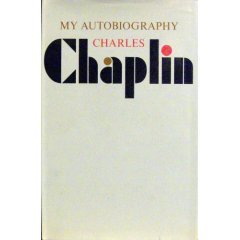
My Autobiography
Charles Chaplin

At the risk of carrying on with the refrain of the previous two books I mentioned in this series, I will say I chanced upon this book rather than consciously deciding to read it. I was in my school-leaving year, when, during summer vacation, I found a tattered, yellowed copy of this book lying around the house. Evidently, my brother had borrowed it from a friend. At that point, Charlie Chaplin to me was this funny-looking, clumsy tramp who featured in some wonderful silent films. My knowledge of Chaplin came from, and was limited to, the films of his I saw at theatres as a child with my mother and brother. City Lights made the greatest impression on me as a little girl, and without my knowing, the tramp on the screen and the name Charlie Chaplin had morphed into one entity, for whom, one could only feel sorry. For, he was almost always at the receiving end in the films, even though he did good for others.

One tattered book, read over 13 days of my school-leaving-year summer vacation, changed my impression of Charles Chaplin. Forever. From the very beginning of My Autobiography, I found Chaplin’s voice strong and confident enough to draw me in as a reader. Given my complete ignorance about this movie maestro, I found his life story mind blowing and nothing short of a miracle in places. From his boyhood dream to act as he saw vaudeville performers passing by his home, to making his debut on stage as a teenager starring as “Billy” the page boy, to his joining vaudeville, which brought him to the United States, and his eventual entry into the film world via Mack Sennett and the Keystone Film Company in 1913, his journey as he puts it in his own words is a rollercoaster of fortune favouring the brave. That he was a hit with American movie goers overnight and decided to go independent within just four years of joining Keystone only reinforces his self-conviction and vision as an artiste and filmmaker.


The book provides an excellent peek into the early days of Hollywood, the film fraternity, and Chaplin’s exemplary rise to success. It also tells us how the world-famous attire of the tramp, the principal character in Chaplin films, came about by almost sheer accident and his ingeniousness. As I progressed with the chapters, I couldn’t help feeling astonished at his gumption, focus, and the ability to dream and inspire. From 1921 onwards, this genius of a director/producer produced one gem after the other such as The Kid, Gold Rush, City Lights, Modern Times, The Great Dictator, Limelight and more. We learn how he was able to extract the poignantly memorable performance from Jackie Coogan, the boy who plays the lead character in The Kid. The interaction between little Jackie and Chaplin establishes, how, like many great directors who were to follow him, Charles Chaplin was perhaps among the earliest band of “actor’s directors,” who come with the intuitive knack of eliciting excellent performance from their actors.


The book records Chaplin’s resistance to switching to talkies as opposed to his silent films that conveyed dialogues through subtitles at the bottom of the screen. Yet, when he does finally makes talkies, his magic shines in them too, The Great Dictator being a prime example.

Chaplin narrates how he had to pay the price for certain political undertones in his films by being forced to leave his movie-making Mecca, America. He makes his observations on the controversy with great conviction and in my view, does a good job of defending himself. The irony of the situation plays itself out in the grandest of manners, when in 1972, after a three-decade exile, Hollywood confers upon him an honorary award “for the incalculable effect he has had in making motion pictures the art form of this (2oth) century.” For the record, when Chaplin received the award, he was greeted with what is the longest standing ovation in the history of Academy Awards, lasting a full five minutes.

My Autobiography is every bit personal as it is professional. For a man like Chaplin, the two realms often blur, as is the case with a lot of members from the entertainment industry. The tramp endeavours to present a discreet yet honest account of his real life relationships, his three failed marriages, his scandalising brush with a paternity litigation (which he won), and finally his eyebrow-raising yet blissfully happy affair and married life with Oona O’Neill, daughter of the famous playwright, Eugene O’Neill and almost forty years younger than Chaplin. The final few chapters are a testimony to this remarkable love affair of the last century, and they brought a smile on my face. After all, I am a sucker for happy endings. And Chaplin’s life, reel and real, end on the happiest of notes.

Image courtesy: http://www.biografiasyvidas.com

Charles Chaplin’s autobiography may have some holes in so far as presenting facts fully is concerned (he is discreet about his failed relationships in order to maintain his children’s privacy). However, that takes nothing away from the merit of this passionately-told story. This is not just any rags-to-riches yarn. It is the story of a legend–as it unfolded scene by scene–rising phenomenally, fighting against the worst sorts of odds, building a legacy that would remain untouched by time, and putting his stamp on the film world as one of its all-time geniuses.

When I completed reading the book, I couldn’t let it remain tattered. I mended it, using the best adhesive at home and covering it with a nice plastic sheet. Books like this are not meant to be ignored for wearing out. They deserve to be preserved.

Note: This is the third and last of my posts on some top-quality non-fiction books I have read. It is a follow up to my post Not Fiction? Not a Bore.

Outstanding Nonfiction – II

City of Djinns
By: William Dalrymple

It’s funny how some books come your way in the most casual of manners and leave a lasting impression. This was definitely the case for me with City of Djinns. My brother borrowed it from a friend, and when I saw the book was about Delhi, the city where I was born and grew up, I picked it up out of sheer curiosity. I hardly knew such a goldmine lay before me.

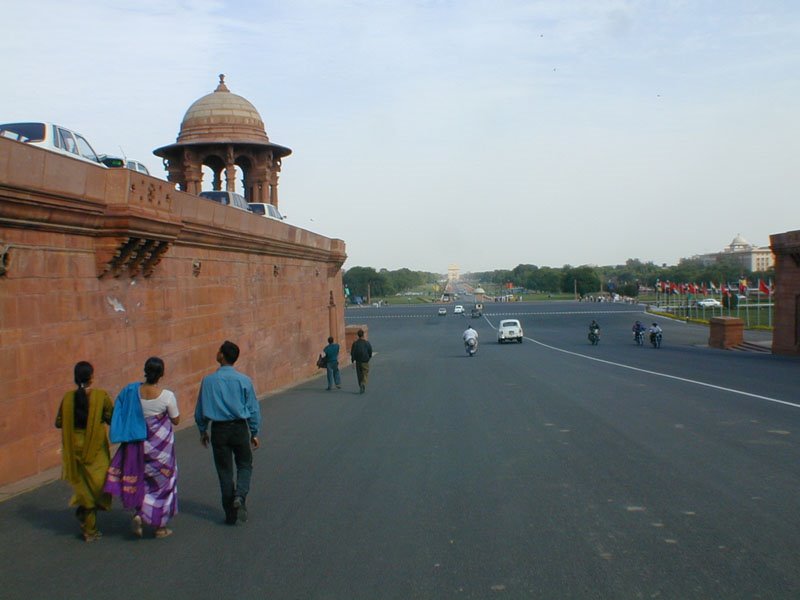
William Dalrymple, a Scotsman, lived in Delhi for four years, beginning in 1989. This stay became the seed for this travel-history-memoir, marked with sincere research and sparkling wit. The city’s many wrappings of history, its layered personality through the ages, its complex division of contrasting images, all catch the author’s inquisitive eye as he goes about exploring layer after layer with the passion of an archaeologist and brings the same vitality back for the reader. From the ancient times of the great Indian epic Mahabharata, to the reign of the Mughal dynasty, from scrutinizing the architecture of the British in the city while they were ruling India (the part designed by the British is what came to be known as New Delhi, thus dividing it from Old Delhi) to talking to the descendants of the Mughal empire and interacting with mystic sufis–Dalrymple’s is a journey that switches between aeons time and again, resulting in a vast, multi-hued canvas of the Indian capital’s history.

As I hinted earlier, the book held a personal interest for me. I will admit I was a little skeptical when I started reading it though. This is the sort of skepticism that comes from the typical Western style of interpreting India. A lot of judgment overshadowing observation creeps into the narrative of foreigners recounting their experiences in India. Yes, this is a poor, third-world country, yes, a lot of images (poverty, squalor, congestion) here are not exactly what the Western eyes are attuned to witness. But that’s not all this land is about. Trust me, I was born here.


City of Djinns, however, comes as a refreshing read in this respect. While the author does throw in a lot of humour by way of telling us about his practical landlady, Mrs. Puri and his taxi-driver-with-attitude, Balwinder Singh, he draws what can best be called a heartfelt, affectionate picture of the city that was his home for four years (the book covers one year of his stay in Delhi). A workable grasp of Hindi in his armour, he does a fantastic job of interviewing different sections of people–from the Sikhs who were at the receiving end of a religious riot in 1984, to descendants of Anglo-Indians who carry on living a ‘misfit’ existence (not fully accepted by the Indian society and excluded by the British back home), to eunuchs whose sad lives make the reader cringe.

As I read through the book, I was enamoured by its compelling power to grasp me as a reader. Given the amount of history and information it packs within its covers, it doesn’t become dry or info-dump-like at any point. In fact, the more I read, the more I wanted to read. It was as if I was discovering the city I had lived in for so many years for the first time!

Indeed, City of Djinns was an eye-opener that left me feeling embarrassed. I hardly knew my city. Reading the book made me realize how many obvious clues of history, scattered all over the city, had I let pass my notice. The book made me love my city more, made me care more for the fascinating stories its monuments held within their walls. It taught me to be more observant of the nuggets of the past that beckoned to me at turns and corners through the length and breadth of this vast and ancient-modern city.

When a book does that to you, rest assured it has achieved its purpose. With remarkable authority even.

Note: This is the second of my posts on some top-quality non-fiction books I have read. It is a follow up to my post Not Fiction? Not a Bore.

Outstanding Nonfiction – I

In an Antique Land

By: Amitav Ghosh

I came across this book during my undergraduate days. My mother, then working in the post-graduate library of the University of Delhi, got the book issued on her staff card. I had heard some nice things about the author and asked her to get one of his books for me to read. In an Antique Land was her random pick. There couldn’t have been a better choice in so far as creating a first impression about the writer was concerned.

The book’s subtitle is: History in the guise of a traveller’s tale, and it is just that. What starts off as an unassuming yet highly entertaining travelogue told in first person by Ghosh, who finds himself in Egypt as an anthropology research scholar, gradually winds its way through the alleyways of history going back to 7oo years. How so? Well, we are introduced to the story of Bomma, an Indian slave, who had travelled to the Middle East, and lived along the coast of Nile, all those centuries ago. From this point, the book shifts between the two narratives–that of Ghosh, the research scholar-traveller, who records his observations on modern Egyptian life with fascinating detail and curiosity; and of the history of Bomma, the slave. Then at some point, the two narratives find a common ground, and for the reader, it becomes as gripping as a well-plotted detective story. As Ghosh pieces together history, travel and the cultural conflict in the Egyptian society (the tug between conservative values and modern-day desires), he crosses boundaries of genre and emerges a trailblazer of a writer.

The manner in which Ghosh juxtaposes history with travel narrative in this book is outstanding. To keep readers engaged on two different story tracks without confusing them requires finesse of the highest order, and Ghosh displays that in a most effortless way. The book, while being non-fiction, has some fictional elements and is only richer on that account. What’s more, in the atmosphere the author creates for the reader, history, present-day facts, and fiction, all blur and merge together a lot of times in the book, making it intriguing.

Like I said, this was the first of Amitav Ghosh books I read, and I was simply blown over. I would easily rate him amongst the finest of modern-day English writers. I am yet to read his fiction, but even as I write, I am spending my reading time getting engrossed in a section of his book The Imam and the Indian, reprinted in a Granta Book of Travel edition. Once again, I am not disappointed.

Amitav Ghosh belongs to a rare breed of writers. The main characteristic of these writers is, once you read one of their books and get charmed, you expect them to repeat the act in other works. The good news is, they always deliver.

Note: This is the first of my posts on some top-quality non-fiction books I have read. It is a follow up to my post Not Fiction? Not a Bore.