First Sorrow by Rabindranath Tagore

The path by the shadow of the forest is now covered with grass.

On that deserted road, someone called me from behind.

“Don’t you recognise me?”

I turned back to look at him.

“I remember you, but do not recall your name.”

He said, “I am the sorrow who came to you when you were twenty-five.”

The corner of his eyes revealed a spark of ray, just like moonlight on a lake.

I stood there, surprised.

“Back then, you appeared like a dark monsoon cloud. Now, you look like a golden idol. Have you lost the tears of that day?” I asked.

He didn’t say anything, just smiled. I realized everything was contained in that smile.


The clouds of the rainy day had learned to smile like bright sunny days of the summer.

I asked him, “Have you preserved my youth of twenty-five?”

“Yes, I made it my necklace. Not even a single petal of the spring’s garland had fallen.”

I said, “See, how I have shriveled with age. But my youth is still adorning your neck, as fresh as ever.”

He slowly put that necklace around my neck and said, “Do you remember, that day you had said, you don’t need consolation, you only want sorrow?”

I shrugged a little. “Yes, I did. But it has been so long; I had forgotten about it.”

“But the one within you hadn’t forgotten. Now, you must accept me,” he said.

I held his hand and said, “How wonderful you look!”

He smiled and said, “That which was once sorrow, is now peace.”

Translated by Bhaswati Ghosh

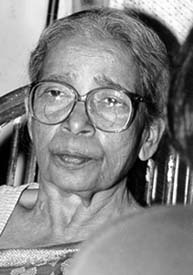
Writing as Resistance: The indomitable Art of Mahasweta Devi

This post was written as a guest entry for a reader’s words, the blog of the perceptive and literary-inclined Bhupinder Singh.

Writers are often cited as perceptive observers of the prevailing human condition. Some of the greatest writers have used the power of their written word to bring across the struggles and sufferings of the exploited before a wider audience. There exists a small section of writers, however, which feels compelled to act as more than mere spectators and reporters of the human condition. They throw themselves into the fight, as it were, of deprived people.

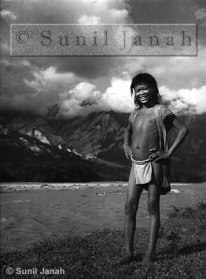
This trailblazer of a writer is arguably the finest example of activist writers in India. For more than a quarter of a century now, she has been actively working with tribals in certain Indian states. She fights for their basic rights, helps them unite and become self-reliant, and writes about their life, often reduced to a sub-human level by the rich and powerful. A prolific writer, most of her recent work draws from her association with these marginalized communities.

The Person:

Mahasweta was born in undivided India in 1926, about two decades before India’s independence. The daughter of Manish Ghatak, a poet and novelist, and Dharitri Devi, a writer and social worker, Mahasweta probably had literary activism in her genes. It was community service that emerged on the scene before writing, though. As a college student, Mahasweta joined her friends for providing relief to the victims of the infamous man-made Bengal famine (1942-44). They would distribute food, check through dead bodies lying in street to reach out to those still alive, feed them and take them to relief centres. This direct, raw brush with suffering became the seed of Mahasweta’s empathizing disposition.

Marriage came early, at the age of 20, when she tied the knot with Bijon Bhattacharya, a renowned Bengali playwright. Her husband was also a member of the Communist Party of India (CPI), and at the time the couple was establishing its marital life, communists often became the targets of persecution. As a result, it became tough for Bhattacharya to support his family, extended with the birth of their son, Nabarun, two years after their marriage. Mahasweta did several odd jobs to keep the hearth burning—selling dye powder, supplying monkeys for research to the U.S., teaching at a school, private tuitions—before she finally got a government job at the Post and Telegraph department. But this job was not to last for too long either. Someone dropped a few books of Marx, Lenin, and Engels in her office drawer, and Mahasweta was terminated on the charge of being a communist.

The Writer:

This is when she took to the pen—mainly to supplement family income. She started with light fiction for literary magazines. Her first book-length work appeared in 1956. Jhansir Rani or The Queen of Jhansi was a fictional account of the life of Lakshmi Bai, an Indian woman ruler who valiantly led her forces to fight the British, before being killed by them at age 22. Even as a first-time author, Mahasweta showed the impractical sincerity that distinguishes true writers of historical fiction. She borrowed money from family and friends to travel to the Bundelkhand region in north India, where Lakshmi Bai ruled, and walked her way through remote villages and deserts, collecting oral history, folklores, and ballads. Interestingly, this same seriousness of approach in collecting data for her stories would be seen years later, during the activist phase of her life.

The debut book brought Mahasweta recognition as a writer, and thus started her ascent in the world of Bengali literature. She authored several books, adding the pennies toward sustaining her family, while at the same time mirroring the prevailing social atmosphere. This promising writer went through a period of personal turmoil, during which time her marriage broke apart, and she suffered from acute depression. Bouncing back soon, she completed her master’s degree in English and served as a lecturer of English literature for two decades. This was also the period when she came up with her seminal novel, Hajar Churashir Ma (The Mother of 1084), which deals with the Naxalite movement in West Bengal that saw many young lives ending before their prime. The book captures the sad realities of the movement through the eyes of the mother of one such young boy. In her attempt to understand the violent movement, this mother comes face to face with her sense of estrangement from the double standard-ridden bourgeois society to which she belongs. Poignant, yet shorn of overt sentimental elements, the novel made a big impact on readers across India and was recently taken to the silver screen by director Govind Nihlani.

The Activist:

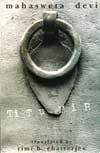
Over the next few years, Mahasweta’s pen took a decisive turn. She started integrating history into her storytelling. This wasn’t the conventionally disseminated history though; this was forgotten history, a part of the past that had been conveniently kept under the wraps. She wielded the power of narrative to document as well as spread stories of tribal resistances against the British and other social exploitations in books such as Aranyer Adhikar (Right to the Forest), and Chotti Munda O Tar Teer (Chotti Munda and his Arrow), among others. Here was a writer who truly wrote what she knew. Her vocation wasn’t divorced from her writing. She is amongst the foremost activists working for a better life for India’s tribals. Not content to stay cosy within her writing room, she ventured deep into the forests to live and work with tribal people.

She founded India’s first bonded-labour organization in 1980, bringing together thousands of bonded labourers to give them an organised platform for raising their voice against forced labour. A year before this, she turned Bortika, a literary periodical edited by her, into an open forum in which tribal people, peasants, factory workers, and rickshaw pullers wrote about their day-to-day experiences and problems.

This effort of hers is groundbreaking, since it records the issues of the underprivileged in their own words, unadulterated and unadorned. She went on to create a tribal welfare society for the Kheria and Shabar tribes, which are among the poorest in India. In 1986, this untiring champion of the voiceless founded the Adim Jaati Aikya Parishad or Ancient Tribes Union, a forum of 38 West Bengal tribal groups.

Nine years ago, at 71, Mahasweta received the Ramon Magsaysay Award for “her compassionate crusade through art and activism to claim for tribal peoples a just and honorable place in India’s national life.” While accepting the award, she said, “I will have a sense of fulfillment if more and more young writers took to unbeaten tracks. My India still lives behind a curtain of darkness. A curtain that separates the mainstream society from the poor and the deprived. But then why my India alone? Cannot one say the same for so many countries and societies today? As the century comes to an end, it is important that we all make an attempt to tear the curtain of darkness, see the reality that lies beyond and see our own true faces in the process.”

Images:
Delirium
The Hindu
Sunil Janah’s Site


, , ,

Holiday Preparations by Rabindranath Tagore

Translated by: Bhaswati Ghosh

Puja holidays draw near.
Sunshine is draped in the colour of Champa.
The air ripples with dew,
the Shiuli’s fragrance lingers
like the delicate caress of someone’s cool hands.
White clouds make the sky lazy—
seeing which, the mind relaxes.

Mastermoshai continues to teach
the primitive story of coal
A student sits on a bench and paddles his feet,
his mind awash with images—
The cracked ghat of Kamal pond,
And the fruit-laden custard apple tree of the Bhanjas.
And he sees in his mind’s eyes, the zigzag path
that leads from the milkmen’s neighbourhood

by the side of the haat,
into the tishi fields, next to the river.

At the economics class in college
the bespectacled, medal-winning student
jots down a list–
which recent novel to buy,
which shop will give on credit—
the sari with the “Do Remember” border,
shakha washed in gold,
a pair of red velvet chappals, handcrafted in Dilli
and a silk cloth-bound poetry book,
printed on antique paper—
the title of which eludes him.

In the three-storied Bhawanipore hosue
Thin and heavy voices converge in confabs —
Will it be Mount Abu or Madurai this time
Or perhaps Dalhousie or Puri
Or shall it be the tried and tested Darjeeling.

And I see on the auburn road
leading to the station
kid goats on lease from the city
five or six of them — tied with ropes.
Their futile cries rend the
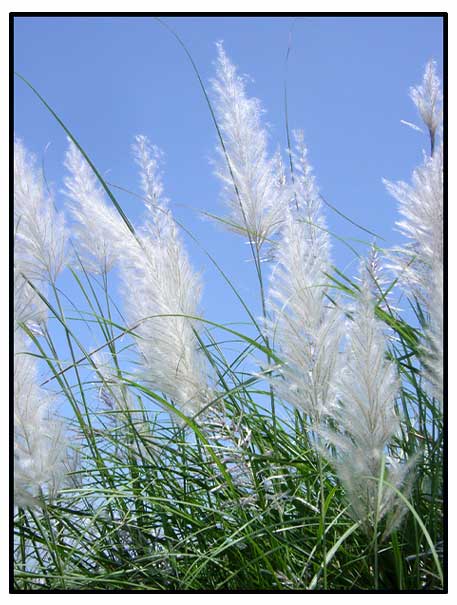
kaash tasselled silent autumn sky.
As if they have somehow sensed
their puja holidays are near.

                        ~

Mastermoshai = Respectful term for teacher (Bengali)
Champa, Shiuli = Flowers
Ghat = Bank
Haat = Weekly village market
Tishi = Linseed
Shakha = White bangle made of a particular stone. Is worn by married Bengali women.
Chappal = Footwear

 ~~~~~~~~~~~~~~~~~~~~~~~~~~~~~~~~~~~~~~~~~~~~~~~~~~~~~~~~~~~~~~~~~~~~~~~~~~~~~~~~~~~~~~~~~~~~~~~~~~~~~~~~~

ছুটির আয়োজন

কাছে এল পূজার ছুটি।
রোদ্‌দুরে লেগেছে চাঁপাফুলের রঙ।
হাওয়া উঠছে শিশিরে শির্‌শিরিয়ে,
শিউলির গন্ধ এসে লাগে
যেন কার ঠাণ্ডা হাতের কোমল সেবা।
আকাশের কোণে কোণে
সাদা মেঘের আলস্য,
দেখে মন লাগে না কাজে।

মাস্টারমশায় পড়িয়ে চলেন
পাথুরে কয়লার আদিম কথা,
ছেলেটা বেঞ্চিতে পা দোলায়,
ছবি দেখে আপন মনে–
কমলদিঘির ফাটল-ধরা ঘাট
আর ভঞ্জদের পাঁচিল-ঘেঁষা
আতাগাছের ফলে-ভরা ডাল।
আর দেখে সে মনে মনে তিসির খেতে
গোয়ালপাড়ার ভিতর দিয়ে
রাস্তা গেছে এঁকেবেঁকে হাটের পাশে
নদীর ধারে।

কলেজের ইকনমিক্‌স্‌-ক্লাসে
খাতায় ফর্দ নিচ্ছে টুকে
চশমা-চোখে মেডেল-পাওয়া ছাত্র–
হালের লেখা কোন্‌ উপন্যাস কিনতে হবে,
ধারে মিলবে কোন্‌ দোকানে
“মনে-রেখো’ পাড়ের শাড়ি,
সোনায় জড়ানো শাঁখা,
দিল্লির-কাজ-করা লাল মখমলের চটি।
আর চাই রেশমে-বাঁধাই-করা
অ্যাণ্টিক কাগজে ছাপা কবিতার বই,
এখনো তার নাম মনে পড়ছে না।

ভবানীপুরের তেতালা বাড়িতে
আলাপ চলছে সরু মোটা গলায়–
এবার আবুপাহাড় না মাদুরা
না ড্যাল্‌হৌসি কিম্বা পুরী
না সেই চিরকেলে চেনা লোকের দার্জিলিঙ।
আর দেখছি সামনে দিয়ে
স্টেশনে যাবার রাঙা রাস্তায়
শহরের-দাদন-দেওয়া দড়িবাঁধা ছাগল-ছানা
পাঁচটা ছটা ক’রে।
তাদের নিষ্ফল কান্নার স্বর ছড়িয়ে পড়ে
কাশের-ঝালর-দোলা শরতের শান্ত আকাশে।
কেমন ক’রে বুঝেছে তারা
এল তাদের পূজার ছুটির দিন।

, ,

PAGLA DASHU (Crazy Dashu) — II, By Sukumar Ray

Missed Part I? Read it here.

The Deeds of Dashu (continued)

On one occasion, just after the vacations, Dashu came to the school with an intriguing box. Master Mashai asked him, “What’s in that box, Dashu?” He replied, “My things, sir.” A little debate ensued among us regarding the nature of his “things.” We noticed Dashu had all the essential school items with him–books, notebooks, pencil, blade. Then what “things” was he talking about? When we asked him, he didn’t give a direct reply. Instead, he clutched the box to his chest and said, “I am warning you all. Don’t ever mess with my box.” Then, he opened the lid slightly with a key and peeked inside while mumbling some calculations. The moment I tried to lean over to catch a glimpse, Dashu locked it up.


Soon, this became a hot topic of discussion for the rest of us. Someone said, “It’s his lunch box. He must be hiding food inside it.” But I never saw him opening the box during lunch time to eat anything. Some suggested, “It could be his money bag. It must contain a lot of cash. That is why he never parts with it.” To this, another boy said, “Why such a big box to keep money? Is he planning to open a money-lending business in the school?”

During lunch one day, Dashu hastily gave me the key to the box and said, “Keep this with yourself, make sure you don’t lose it. If I get a little late in returning, please hand over the key to the watchman before you all go to the classroom.” With that he went away, leaving the box with the watchman.

We were thrilled! After so long, we had an opportunity; now only the watchman needed to move away for a while. Shortly, the watchman lit his stove to make rotis* and went to the water tap with a few utensils. This was just the moment we were waiting for. Five-seven of us boys bent over the box. I opened it and saw a fat bundle of papers rolled tightly with tattered cloth strings. Quickly opening the knot, we found another paper box inside, which in turn carried yet another small paper bundle. On opening that, a card popped out. One side of the card said, “Eat a green banana,”^ while the other side had the words “Excessive curiosity is not good.” We started exchanging stupefied glances with each other. At last someone said, “The lad sure took us for a ride.” Another boy said, “Let’s tie it up exactly the way it was, so he doesn’t have any inkling that we’d opened it. That would teach him a lesson, all right.” I said, “Fine. When he returns, you all politely request him to open the box and show what it contains.” We quickly wrapped up all the papers with strings and dropped the bundle inside the box.

I was just about to lock the box when we heard a thunderous guffaw. That’s when we saw Dashu, seated atop the boundary wall, laughing insanely. The buffoon was actually watching the whole show from a vantage point. We realised the entire chain of events–giving me the key, keeping the box with the watchman, making an excuse of going out at lunch–all these were part of Dashu’s prank scheme. He had been carrying that box for all these days just to make us appear like idiots.

Is it without any reason that we call him Crazy Dashu?

* Roti = Indian flat bread
^ Eat a green banana = In Bengal, this phrase is used to mildly snide effect, after fooling someone or to indiacate that a person’s wish isn’t going to be granted.

[The End]

Translated by: Bhaswati Ghosh

, , ,

PAGLA DASHU (Crazy Dashu) — I, By Sukumar Ray

The Deeds of Dashu

In our school, there was hardly anyone who didn’t know Crazy Dashu. Even those who knew nobody was familiar withDashu. One time, a new watchman came to our school; he was totally rustic. No sooner than he heard about Crazy Dashu, had he identified him. That’s because from his looks, speech, and movement you could tell Dashu was a bit off in the head. He had big round eyes, unnecessarily long ears, and a scrub of scruffy hair. Whenever he walked fast or spoke in a busy manner, it reminded one of lobsters for some reason.

Not that he was foolish. When it came to arithmetic, especially complex multiplication and division problems, his brain worked rather well. Again, there were occasions when he reveled in duping us with such well-forged plans, that we were left embarrassed and stunned.

At the time Dashu or Dasharathi joined our school, Jagabandhu was famous as the “best boy” of our class. He was good in studies no doubt, but we hadn’t seen a jealous wet cat like him. One day, Dashu approached Jagabandhu to ask him the meaning of an English word. Jagabandhu snapped at him without any reason, saying, “Do I have nothing better to do? Today I will teach him English, tomorrow I’ll have to help someone else with maths, the next day another one would come to me with a new request. And I’d just go on wasting time on this!” A livid Dashu replied, “Hey, you are such a petty little rascal.” Jagabandhu complained to Pandit Mashai, “That new boy is calling me names.” Pandit Mashai* gave Dashu such a yelling that the poor fellow just went quiet.

Bishtubabu taught us English. Jagabandhu was his favourite student. While lecturing, whenever he needed to refer to the textbook, Bishtubabu would get it from Jagabandhu. One day, while teaching us grammar, he asked Jagabandhu for the book. Our friend immediately handed him the green-cover-wrapped grammar tome. As he opened the book, Master Mashai^ asked grimly, “Whose book is this?” Broadening his chest in pride Jagabandhu said, “Mine.” Master Mashai said, “Hmm, is this a new edition? The entire book has changed, I see.” With that, he started reading, “Hair-raising detective tales of Inspector Jashobant.”

Unable to understand whatever was happening, Jagabandhu just froze, flabbergasted. Master Mashai rolled his eyes devilishly and said, “So you are learning such higher things, haan?” Jagabandhu tried to mutter something, but Master Mashai cut him short and said, “Just shut up now. No need to act nice and good. Enough of that!” Jagabandhu’s ears went red with shame and insult, and we sure were delighted to see that. Later of course, we learned that this was the handiwork of brother Dashu, who had replaced another green-cover book with Jagabandhu’s grammar book.

We always poked fun at Dashu, often ridiculing his intelligence and looks, right in front of him. I don’t recall him getting upset about it even once. A lot of times, he would colour our comments and make up funny stories about himself. One day he said, “In our neighbourhood, whenever someone makes dry mango candy, I am in big demand. Can you guess why?” “Why?” We asked, “Do you relish mango candy?” He said, “Oh no, that’s not the reason. You see, when they spread the candy for drying on the terraces, I go there and show my face a couple of times. That’s enough to drive all the crows away from the area. So no one needs to guard the mango candy while it dries.”

* Pandit Mashai = Respectable term for teacher.
^ Master Mashai = Respectable term for teacher.

Enjoyed? Read Part II here.

Translated by: Bhaswati Ghosh

, , ,

Making Sense, Nonsensically: Sukumar Ray

As the AW Chain Ship (see sidebar) sails its way through the fifth round, it’s landed at my dock after crossing BK 30’s harbour. BK wrote about how you can never trick her into exercising or dieting, unless you mask those evil things as something else. Makes complete sense to me. Her post is hilarious. If you are in need of a laugh, go read it.
I admire people who can make you laugh with their writing. It requires a special skill and the ingenuity to view the world in a skewed manner. Writers who trigger a tickle in the funny bone time and again are, in my view, geniuses. And no, I don’t use that term lightly. The writer we meet today is a master of those funny missiles. He is the versatile, uproarious, and nonsensical Sukumar Ray—Bengali literature’s very own Lewis Carroll.

I am so glad I learned reading Bengali as a child. Otherwise, I would have been denied the magic of this master of nonsense. My first brush with his strange worldview took place when I was a toddler. That was around the time I was made to learn by heart some poems from Abol Tabol or Gibberish, Ray’s repository of nearly 50 balderdash verses. I didn’t hate memorizing these poems; if anything, the converse was true. To the innocent and unbridled mind of the little me, such weirdness was delicious and worth getting serious about.

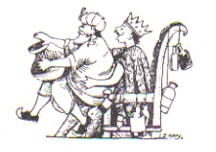
For, who would not delight to learn about the activities of the royal folks and subjects of Bombagarh, a fictitious kingdom, where the king keeps dried mango candy framed on his walls, the queen roams around with a pillow tied to her head, the citizenry does cartwheels on catching a cold, the king’s aunt plays cricket with pumpkins, and the minister beats an urn while sitting on the king’s lap?

In Gaaner Gunto or Musical Knock, he talks about the voice of the great Bhishmalochan Sharma—who starts singing on a scorching summer day—traveling from Delhi to Burma. People fall off and die by the dozens, unable to survive the “good vibrations” rampaging through the streets. Scores of animals fall prey to this thunderous singing session too, until a crazy goat knocks Bhishmalochan down with its menacing horns. That’s when his savage vocal chords are finally laid to good rest.

Sukumar Ray becomes a child’s friend in the most effortless way, just as Lewis Carroll or Edward Lear do. For here is someone who gives them the license to not only ponder on nonsense, but also to have limitless fun with it.

Ha Ja Ba Ra La or Mumbo Jumbo is a novelette peopled by strange creatures who are governed by even more outlandish rules. This complete nonsensical story is often compared to Alice’s Adventures in Wonderland in style and presentation. Yet, Ha Ja Ba Ra La, which is actually a random ordering of six Bengali consonants, remains peculiarly Bengali in its idiom and rendition.

While in your childhood, Sukumar Ray and his creations entertain you as dear friends, as an adult, you begin noticing the subtle satirical undertones in his works. He takes a dig at corrupt politicians in Ha Ja Ba Ra La, pokes fun at non-laughing pseudo intellectuals in the poem Ramgarurer Chhana (Ramgarur’s Offspring), and even some of the images in Bombagarher Raja insinuate the lack of activity that leads members of the royalty to find inane vocations to busy themselves with.

Over the course of the next few posts, I will introduce you to Dashu, a character created by Sukumar Ray. Be alarmed; Dashu is a bundle of surprises, accidents, and craziness. If you don’t like laughing, you may not be interested in knowing about him. But otherwise…stay tuned!

And now, keeping this a strictly funny business, may I anchor the AW Chain Ship at Andrea’s port, situated in the charming town of Southern Expressions.

Note: Illustrations by Sukumar Ray

, , , , ,

The Path to Walk on, by Rabindranath Tagore

This, indeed, is the path to walk on.

It has wound its way through the woods to the fields, through the fields to the riverbank, next to the banyan tree; then it courses its way through the villages. As it moves further, beside the lush fields, amid the shadows of the mango orchards, by the bank of the Padma River, I cannot tell in which village it would wind up.

So many have passed by me on this path, some joining my company, others seen from afar; some with a veil over their heads, others without any; some walking to fetch water, others returning with water.

II

The day has retreated and darkness descends.

Once this path had seemed personal, intimately mine; now I see I carried a summon to walk on it only once, no more.

Past the lime trees, the pond, the riverbank, the cowsheds, the paddy mounds, the familiar glances, the known words, the acquainted circles, there won’t be any returning to say “Hey, there!”

This is the path to walk on, not one to return from.

This hazy evening, I turned back once and found the path to be an ode to many a forgotten footstep, all entwined in the notes of Bhairavi.

This path has summarized the stories of all its travelers in a single dirt trail; the one track that traverses between sunrise and sunset, from one golden gate to another.

III

“Dear walking path, don’t keep all the stories you have accumulated through the ages tied quietly into your dust strand. I am pressing my ears against your dust, whisper them to me.”

The path remains silent, pointing its index finger toward the dark curtain of night.

“Dear walking path, where have the worries and desires of all the travelers gone?”

The mute path doesn’t talk. It just lays down signals between sunrise and sunset.

“Dear walking path, the feet that embraced your bosom like a shower of wildflowers, are they nowhere today?”

Does the path know its end—where forgotten flowers and silent songs reach, where starlight illumines a Diwali of resplendent pain.

Translated by: Bhaswati Ghosh

,

The Alleyway, by Rabindranath Tagore

One day, this concrete-laden alleyway of ours set out—twisting her way right and left again and again—to find something. But she would get stuck at every move–a house on the right, a house on the left, a house right across.

From what little she could see by glancing above, a streak of the sky revealed itself—as narrow and as skewed as herself.

She asked that filtered slice of sky, “Tell me sister, of which city are you the blue alley?”

In the afternoon, she would catch a glimpse of the sun for just a moment and think, “I couldn’t understand any of that.”

Thick monsoon clouds cast shadows over the two rows of houses, as if someone had scratched out the rays of light from the alleyway’s notebook with a pencil. Rain slid through the concrete, swooshing the snaky stream away with a snake charmer’s drum beats. The road became slippery, the umbrellas of pedestrians hit each other, and the water from an open drain suddenly splashed up to an umbrella, stunning its carrier.

Overwhelmed, the alleyway uttered, “There wasn’t any problem when it was parched dry. Why this sudden pouring trouble?”

                                                                                                   ***

At the end of spring the southern wind looks delinquent, raising swirls of dust and sweeping torn pieces of paper. The alleyway says, bewildered, “Which god’s drunken dance is this?”

She knows that all the garbage that gathers around her every day—fish scales, stove ash, vegetable peels, dead rats—are reality. With those around, she never thinks, “Why all this?”

Yet when the autumn sun slants itself on the balcony of a house, when the notes of Bhairavi float from the puja nahabat*, she thinks for a second, “Perhaps something big really lies beyond this concrete track.”

The day yawns; sunlight drops from the shoulders of the houses to rest in a corner of the alleyway, just like the slipping away of the end of a housewife’s sari. The clock strikes nine; the maidservant walks by, tucking to her waist a basket of vegetables she bought from the market; the smell and smoke of cooking envelopes the alleyway; office goers get busy.

And the alleyway thinks again, “All of reality is contained within this concrete road. What I had thought of as something big must be just a dream.”

* Music room or a tower from which live music is played/performed during festive occasions.

Translated by: Bhaswati Ghosh
Image courtesy: Flickr