ESL or not? Matters Not

I first heard the term ESL when I joined a mostly-American online writing community three years ago. One day while chatting one of my (American) friends from the board remarked, “Your English is very good for an ESL.” I had to ask her to translate the mysterious abbreviation for me, and only when she told me it was English Second Language, did I understand the full import of her compliment. Subsequently, I received praise for my grasp of English from a lot of board members. As much as I appreciated their kind words, I didn’t let it all get to my head. For, I still stood hapless and flustered when it came to deciphering everyday American-speak.

After spending about a year with this accommodating community, I joined another writing group–this time a British one. Here, I was reminded of my ESL identity once again. This time though, the compliments were more backhanded than those of the American writing board. As a member of a critique group in the new community, I was required to submit a new short story every month and review the ones submitted by other members. On more than one occasion, my stories would get such notes as “I found the sentence structure a bit awkward. I know it’s difficult to tackle that, and given your ESL background, it was a good effort.” I swallowed the remarks since my primary focus was to improve my writing. But now that I can share it with you, let me vent a bit on that perception. No, those views didn’t hurt me. They angered me.

Such a perception made me angry not because I think too highly of my English proficiency. Far from that. As far as I am concerned, learning–especially that related to writing–is a lifelong endeavour. The idea of me being an ESL, and therefore, only the second best ruffled my nerves because of the sympathetic undertone to it. Yes, English is not my first language. So what? Should that make editors take a lenient approach while reading my work? NO! When I am writing in a given language, I should be rated alongside all others who write in that language, regardless of whether they speak that in their daily lives or not.

For the record, I studied British English in school. The legacy of our colonial rulers is still in place as far as India’s education system is concerned. English happens to be the language of instruction in a lot of schools (including mine) here. So I am not a latecomer to the learn-English club. I started scribbling A, B, C as a toddler, just like any American or British would. Therefore, if I am to be credited for a reasonably okay grasp of the language, I should also be the one to take the onus for any slips and slides I make.

At the same time, readers need to be conscious of what to expect from writers of different geographical backgrounds. As an Indian, whose first language isn’t English, I am not likely to use it like an American, British, or Australian (or those whose native tongue is English) would. Just like the language itself, the slang that cultures using English as their first language have made up, are foreign to me. If my Indian characters start speaking like that, my story will end up being a ridiculously phony disaster. You won’t even buy into the characters, would you? Another point that comes to mind is when I write about rural Indians, I am mostly translating their words into English. For, they would never speak in English; most don’t know the language apart from some basic words. All these factor into my writing of this immensely universal language.

Are those points excuses for making weak prose acceptable to the Western audience? Never. More than one non-native, or should I say ESL, writer has proved how much English belongs to the whole world and not just to pockets where people speak it.

Want proof?

1. Amitav Ghosh
2. Joseph Conrad
3. Salman Rushdie
4. Ayn Rand
5. Rohinton Mistry
6. Arundhati Roy
7. Vikram Seth

I am sure there are more. And the world of words is only richer because of them.

Friend, True North, Ocean of Life


The day darkens as the sun’s about to set
Clouds swarm the sky, it’s the moon they want to get
Cloud overtakes cloud and colour cloaks colour
The dong-dong of temple bell rings loud and clear
Rain pours on that side, hazy goes the green
On this side of the horizon, a million gem stones shine
The cloudy breeze brings back a song of my childhood
Rain falls pitter patter, on the river comes a flood.

(Rain Falls Pitter Patter, Rabindranath Tagore)

That’s how you came into my life–in the playful guise of a grandfather sharing this eternal childhood ballad with the five-year-old me. This was the first of your poems I uttered–in a recitation competition for children. Ma taught me the poem and also your name, but back then, your name meant no more than a big, tough-to-pronounce word. You knew better; you drew the innocent heart in with the pitter-patter of rain and a million gem stones. Don’t I also remember the poem in which you talk about a little boy imagining playing hide-and-seek with his mother by becoming a champa flower? The boy’s wish, to quietly watch Mother go through her day–doing her worship ritual, reading the scripture in the afternoon, lighting the evening lamp on her way to the cattleshed–even as he remains hidden from her view, is something with which every child heart would commune. How did you know that, wise grandfather?

Even as the sea beckons at the river to join it, your ocean kept splashing gently across the humble stream of my life. Every Wednesday evening during my growing-up years, Ma would tune in to a radio station to listen to a fifteen-minute broadcast of your songs, sung by various artistes. I understood little of the words then, but your melody had made me a captive for life. In time, the words resonated too:


“My freedom is in the sky’s bright light,
My freedom is in dust and in the green of the grass.”

Your songs of freedom gave me the key to unlock the realm of unbounded freedom; of liberation that’s found in the blue of the sky, the green of the grass, in the hearts of all people, and in work that defies all danger and sadness.

Your immortal call of “Walk alone if no one heeds thy call,”has been the beacon that has guided many a lives through darkness, even after nearly fifteen decades since you called the earth your abode.

Slowly, your picture started becoming clear to me. As we paid homage to you on your birth anniversary in junior school, I was entranced by your music. When I sang in the chorus for Chandalika, it felt like swinging rapturously amid a musical joy ride–from the boistrous song of the curd-seller to the meditative melody of the Buddhist monk. Later, as I grew up, I wouldn’t tire of wondering how you brought about such magnificent diversity in your nearly three thousand songs. I haven’t stopped being amazed.

More songs, more memories, more of my little stream meeting the ocean that you were. I remember many a summer afternoon, sitting on the floor with Grandma, who would prod me to sing your songs to her. She had her favourites, no less. The one where you cried for peace with your disenchanted opening lines, “The world, fervid with violence, sees new skirmishes daily.”And the song of the seeker that goes like,

“Who is the crazy one that makes me wander from one neighbourhood to another?
What tune is it that rings in the air so melodiously?”

And then came the poetry, the novels, the short stories. All bearing your heartfelt understanding of humanity, nature, and the timeless mystique that governs the day-to-day functioning of the universe.


“In what way has the sun’s rays touched my life today
How has the morning bird’s song penetrated the cave’s darkness
I can hardly fathom how life has awakened after so long!

Life has awakened,
And water surges forth,
I am unable to hold back my desires and emotions any longer.”

(The Waterfall Awakens, Rabindranath Tagore)

Sanchaita, your anthology of selected poems, became my guiding star through many a difficult times. As I saw my feelings manifesting in your eloquent poetic expression, I wondered how you found access to my innermost being. How did you, dear true North?

In Gora, you taught me what nationalism and political consciousness really meant, without ever being didactic about it. I am stunned to see how relevant it reads even today, so many decades since you penned it. But isn’t timeless your middle name?


Photographer: Eve Andersson

And how could I ever forget little Mini’s innocent-yet-demanding interactions with the unforgettable Kabuliwala? How effortlessly you made two such disparate characters bond. And the poignancy as Mini grows out of her carefree childhood even as the Kabuliwala yearns for the innocence of her toddler days, years later?

In my adulthood, you continued to enmesh me into your infinite realm. The songs became more prominent, and every time I sang them, my heart felt emancipated. What’s it with your words, mystic sage?


“The sky is laden with stars and the sun,
The earth full of life,
In the midst of it all, I have found my place,
Amazed I am, and thus bursts forth my song.”

The songs continue. In the middle of a chore, on seeing a fresh morning, or without any reason at all. How did you entwine them with the beat of my life, dearest friend?

Today, on your 145th birthday, am I paying you homage? Nah, I hardly can. I can’t even claim you as mine. For as you would have said, how can the stream claim the ocean? It can only aspire to merge with the ocean. And like my mother says, even oceans have limits, but Rabindranath is limitless.

You belong to the green of the grass, the song of the morning bird, the pain of the kabuliwala. And to the whole of humanity.


As I remember my life’s journey holding your hands, I only aspire for my country and the world, what you would have.

Where the mind is without fear and the head is held high
Where knowledge is free
Where the world has not been broken up into fragments
By narrow domestic walls
Where words come out from the depth of truth
Where tireless striving stretches its arms towards perfection
Where the clear stream of reason has not lost its way
Into the dreary desert sand of dead habit
Where the mind is led forward by thee
Into ever-widening thought and action
Into that heaven of freedom, my Father, let my country awake

, ,

BTW, CYFT?

It’s been about three years since I became an active Internet user. From the moment I began exploring the cyberspace, I was enchanted. Little did I know what I was getting myself into. Seriously.

No, I am not referring to any experiences of stumbling upon infamous nooks and crannies of the World Wide Web. Thankfully, I’ve had few of those. It is the initiation into a new language that had me stumped from almost the moment I began interacting with fellow cyber explorers. One of my earliest Internet friends would often suffix her instant messages (oops, that would be IM) with an indecipherable LOL. I tried to figure that out for a long while, and when I saw she would use that word alike to say “I am having a bad hair day. Lol”, and “My son stole a cookie and wasn’t happy when we penalized him. Lol,” I decided it was time for me to put aside my embarrassment of coming across as a dipstick and ask her what exactly LOL stood for. She just typed LOL once more in response to my question. How frustrating. And no, it wasn’t funny at all.

She gave me the expanded version soon though. Those familiar with Internet jargon will know it for sure–it’s Laugh Out Loud. Aha! How enlightened I felt when I finally learned the words behind the ever so enigmatic LOL, which seemed to fit into every life situation for my LOL-loving friend.

That was only the start. Soon, I came upon one Internet acronym after another, until it was almost a whole heap of them. At times I would be overwhelmed by this strange new lingo everyone in the writer’s chat room I used to visit seemed to perfectly understand. Everyone, but poor, ignorant me. With time, I grew out of my what-if-they-laugh-at-my-dumbness self-conscious mode and started pestering my more learned friends for every acronym I couldn’t figure out on my own (yes, I did decipher a few; I am not that dumb, you know).

It was as if a whole new code language of communication had opened up before me. And once I started making sense of BRBs and BBSs; AFKs and AYTs; LOLs and LMAOs and ROFLs; IMOs, and IMHOs; and WBs and TYs, I was just as suave in using them as my other internet-smart friends.

As much as I thought I had mastered this cutting-edge lingo, I was shaken out of my naive arrogance by a fellow food blogger, who, in a comment in our (I write it jointly with a Peruvian friend) food blog, gave me a few tips, following them with HTH. I racked my brains to unravel the words behind that cryptic trinity of letters, but when I had spent enough minutes without getting a suitable answer from my brain, I wrote back to my blogger friend, saying “Thanks for your tips. BTW, what does HTH mean?” She told me it stood for Hope That/This Helps. Duh me; why couldn’t I guess that? Anyway, along with educating me on HTH, my friend also told me of a new one I had never before seen or heard anywhere. It was POS. Can you guess what it could be? If you are parenting a teenager, you possibly can. In case you are parenting a teen and still don’t know, watch out the next time you hear your kid saying that to his or her friends. POS stands for Parent Over Shoulder. Ouch! I bet that one is a student coinage.

So as I pondered about my still incomplete education in this wacky new language, I joked to my publisher that maybe I should write a sequel to Making Out in America, based on Internet acronyms. She spontaneously said…well, “LOL,” what else? And followed it up by saying it wasn’t such a bad idea after all.

Just in case you haven’t figured out some of the acronyms I mentioned but never expanded in this post, I got this terrific resource for you. Beware: It includes some less-than-decent expressions; but it’s a great compilation overall.

HTH.

P.S. The title of this post is: By the way, Can You Figure This? The latter of the two acronyms is a new creation. The creator? Yours truly 😉

When the Voiceless Speak

THE THEME OF DISPLACED PEOPLE IN LITERATURE, FILMS, PEOPLE’S MOVEMENTS. EVERYWHERE, BUT IN POLITICIANS’ MYOPIC RADII.

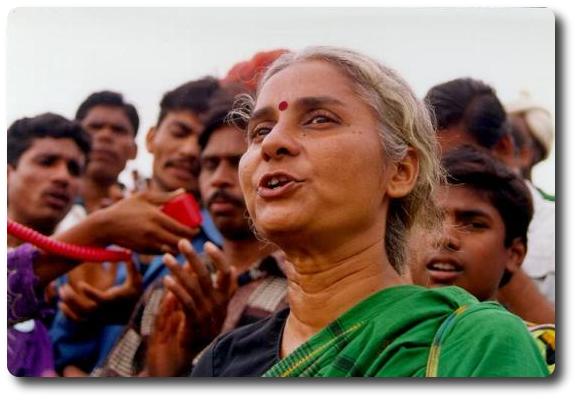
Over the past few weeks, a dam suddenly took centrestage in Indian television news channels. The issue wasn’t new though. The dam, Sardar Sarovar, was first envisaged in the reign of independent India’s first prime minister, Jawaharlal Nehru. Since then, there has been steady progress on its construction. Not without a cost though. Apart from the gigantic financial figures involved, the dam has in the past, and continues to, uproot people from their lands. And that’s what took the spotlight in the TV channels–the ongoing protest of these displaced people, most of them illiterate farmers and adivasis.
Image source: Friends of River Narmada (http://www.narmada.org/index.html)

They have been leading a peaceful people’s movement, called the Narmada Bachao Andolan (NBA) or Save the Narmada Movement, led by the indomitable Medha Patkar for nearly two decades, demanding proper rehabilitation. Yet, like so often happens with poor and dispossessed people, their needs have been marginalized by successive governments.

Photographer: Venu Govindu
Image source: Friends of River Narmada (http://www.narmada.org/index.html)

Things came to a head in the past few weeks, as it became evident that all the rehabiliation the government assured it had done, was only carried out on paper. This is when the movement took a decisive turn, with Medha Patkar going on an indefinite hunger strike until work on the dam was stopped, and the affected people were properly resettled. She and her band of activists, which includes the affected farmers and adivasis, launched a peaceful protest in New Delhi, battling it out under the open sky in the middle of the searing summer heat. The Indian government was embarrassed as public support rose for these hapless victims of “development.”

Image source: Friends of River Narmada (http://www.narmada.org/index.html)

And then, a famous Hindi film actor, along with some of his colleagues jumped into the scene by showing solidarity with these displaced people. Suddenly, the movement became a big, flashy news for the electronic media. This is exactly what the actor, Amir Khan had sought to do–bring the issue back to public focus and elicit support for the displaced people in the process.

Amir isn’t the first celebrity to show support for the NBA though. Booker Prize winner, Arundhati Roy, has been voicing her concerns for the affected people for quite a few years now. As have been other actors, writers, and scholars.

As I watched the news reports of these high-profile creative personalities joining hands with a people’s movement, a question came to me. Why is it that politicians fail to see what artists and those involved in education do? The simple fact that development which comes at the cost of depriving people of a dignified existence is self-defeating to say the least? I haven’t found the answer.

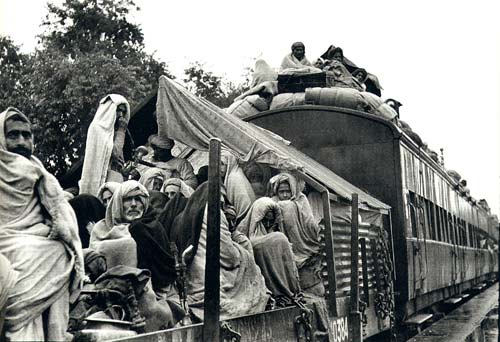
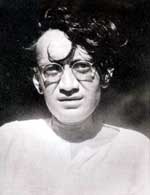
This led me to think about how this very theme–displaced people–has resulted in some of the finest literature and filmmaking. I recalled the stories Sadat Hasan Manto wrote on the partition of India, an event that led to the creation of Pakistan and remains one of the bloodiest carnages in human history. Manto’s stories are spine-chilling in their matter-of-fact, unembellished style. The partition, carried out on the basis of religion (a majority-Hindu state of India vs an Islamic Pakistan), was of course masterminded by politicians, in which innocent civilians paid the price with their lives. Doesn’t that sound all too familiar?

As the seeds of hatred were sown, using rumours and provocative insinuations as devices, Hindus and Muslims who had been co-existing peacefully for centuries, were suddenly fervid to slay each other. I remember a statement of Manto reflecting on this mass insanity that seemed to have gripped the populace of the region at the time (1947-48). He said, “The funny part about them (Hindus and Muslims) killing each other wasn’t that they hated each other. It was that they loved each other.” (paraphrased)

Manto wrote several short stories on the theme of partition, most of them straightforward depictions of what was happening then. One story particularly jolted me. It talks of how an armed man goes on a killing spree while walking on the streets. He fires gun shots at anyone passing by, for no apparent reason other than the sheer sadistic joy of it. Just as his gun fires its last bullet, killing a woman, he spots a little boy walking towards him. The man gets all excited and aims his pistol at the child. Seeing this, his companion reminds him the pistol has no bullets left. To which the gun-lover says, how would the child know that? Such is his frenzy of spreading terror among ordinary people.

Although I never witnessed the horrors of partition, I experienced it through the stories recounted by my grandparents. Born in an undivided India, they were among the lot who had to give up the land that was once their entire world, forever. I remember how my grandma never grew tired of telling us stories of her childhood, the landscape etched in photographic detail in her mind’s eye. Even as a child I could see how she pined for the Bengal that became a part of Pakistan, and then branched out into a new country–Bangladesh. How vividly she painted the rivers and tributaries, the amazing fruits and vegetables she enjoyed as a little girl and could never find in her new environment, the intrinsic bond between Hindus and Muslims in her village…All that was hers once, yet could never be again.


An accomplished Bengali writer, Grandma used the motifs of her vibrant green past, time and again in her stories. As did she use the themes of people being uprooted, victimized, and humiliated by self-serving politicians (I do plan to post one of her stories on partition traumas, translated by me, here.)
As I grew up, I found a resonance of my grandma’s pain of separation from her land in the films of a remarkable filmmaker. His name is Ritwik Ghatak. A victim of partition himself, Ghatak never got over the trauma of displacement. It appears as a recurrent theme in most of his films. I remember, when I first watched Komal Gandhar (E-Flat), I realized the extent of emotional scars permanent displacement can inflict in people. Ghatak continued to talk about this anguish in films like Subarnarekha, Nagarik (The Citizen), and Meghe Dhaka Tara (The Cloud-capped Star). A lot of his critics felt Ghatak was in denial–refusing to accept the reality he was faced with. Perhaps he was. But perhaps those critics never knew what getting uprooted from home meant. I say this because I know Grandma never got over the fact that she could not claim the land she was born in as her own, ever again.

So my question remains: why is it that politicians fail to see what writers, filmmakers, artists, and musicians do? If you have an answer, let me know.


Contest News

Fellow writers! Here’s a wonderful opportunity to free your muse. The very talented Jason of The Clarity of Night is hosting this interesting contest in which you have to write a story of 250 words or less using a spectacular photograph he has posted on his blog as inspiration. The deadline is 8:00 p.m. (eastern time), Thursday April 27th. There are prizes to be won too, so get writing! This is the link for the contest. Do check it out :).

UPDATE: The contest entries are pouring in. You can read them here and post comments as well. Enjoy!

Outstanding Nonfiction – III

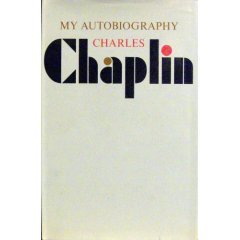
My Autobiography
Charles Chaplin

At the risk of carrying on with the refrain of the previous two books I mentioned in this series, I will say I chanced upon this book rather than consciously deciding to read it. I was in my school-leaving year, when, during summer vacation, I found a tattered, yellowed copy of this book lying around the house. Evidently, my brother had borrowed it from a friend. At that point, Charlie Chaplin to me was this funny-looking, clumsy tramp who featured in some wonderful silent films. My knowledge of Chaplin came from, and was limited to, the films of his I saw at theatres as a child with my mother and brother. City Lights made the greatest impression on me as a little girl, and without my knowing, the tramp on the screen and the name Charlie Chaplin had morphed into one entity, for whom, one could only feel sorry. For, he was almost always at the receiving end in the films, even though he did good for others.

One tattered book, read over 13 days of my school-leaving-year summer vacation, changed my impression of Charles Chaplin. Forever. From the very beginning of My Autobiography, I found Chaplin’s voice strong and confident enough to draw me in as a reader. Given my complete ignorance about this movie maestro, I found his life story mind blowing and nothing short of a miracle in places. From his boyhood dream to act as he saw vaudeville performers passing by his home, to making his debut on stage as a teenager starring as “Billy” the page boy, to his joining vaudeville, which brought him to the United States, and his eventual entry into the film world via Mack Sennett and the Keystone Film Company in 1913, his journey as he puts it in his own words is a rollercoaster of fortune favouring the brave. That he was a hit with American movie goers overnight and decided to go independent within just four years of joining Keystone only reinforces his self-conviction and vision as an artiste and filmmaker.


The book provides an excellent peek into the early days of Hollywood, the film fraternity, and Chaplin’s exemplary rise to success. It also tells us how the world-famous attire of the tramp, the principal character in Chaplin films, came about by almost sheer accident and his ingeniousness. As I progressed with the chapters, I couldn’t help feeling astonished at his gumption, focus, and the ability to dream and inspire. From 1921 onwards, this genius of a director/producer produced one gem after the other such as The Kid, Gold Rush, City Lights, Modern Times, The Great Dictator, Limelight and more. We learn how he was able to extract the poignantly memorable performance from Jackie Coogan, the boy who plays the lead character in The Kid. The interaction between little Jackie and Chaplin establishes, how, like many great directors who were to follow him, Charles Chaplin was perhaps among the earliest band of “actor’s directors,” who come with the intuitive knack of eliciting excellent performance from their actors.


The book records Chaplin’s resistance to switching to talkies as opposed to his silent films that conveyed dialogues through subtitles at the bottom of the screen. Yet, when he does finally makes talkies, his magic shines in them too, The Great Dictator being a prime example.

Chaplin narrates how he had to pay the price for certain political undertones in his films by being forced to leave his movie-making Mecca, America. He makes his observations on the controversy with great conviction and in my view, does a good job of defending himself. The irony of the situation plays itself out in the grandest of manners, when in 1972, after a three-decade exile, Hollywood confers upon him an honorary award “for the incalculable effect he has had in making motion pictures the art form of this (2oth) century.” For the record, when Chaplin received the award, he was greeted with what is the longest standing ovation in the history of Academy Awards, lasting a full five minutes.

My Autobiography is every bit personal as it is professional. For a man like Chaplin, the two realms often blur, as is the case with a lot of members from the entertainment industry. The tramp endeavours to present a discreet yet honest account of his real life relationships, his three failed marriages, his scandalising brush with a paternity litigation (which he won), and finally his eyebrow-raising yet blissfully happy affair and married life with Oona O’Neill, daughter of the famous playwright, Eugene O’Neill and almost forty years younger than Chaplin. The final few chapters are a testimony to this remarkable love affair of the last century, and they brought a smile on my face. After all, I am a sucker for happy endings. And Chaplin’s life, reel and real, end on the happiest of notes.

Image courtesy: http://www.biografiasyvidas.com

Charles Chaplin’s autobiography may have some holes in so far as presenting facts fully is concerned (he is discreet about his failed relationships in order to maintain his children’s privacy). However, that takes nothing away from the merit of this passionately-told story. This is not just any rags-to-riches yarn. It is the story of a legend–as it unfolded scene by scene–rising phenomenally, fighting against the worst sorts of odds, building a legacy that would remain untouched by time, and putting his stamp on the film world as one of its all-time geniuses.

When I completed reading the book, I couldn’t let it remain tattered. I mended it, using the best adhesive at home and covering it with a nice plastic sheet. Books like this are not meant to be ignored for wearing out. They deserve to be preserved.

Note: This is the third and last of my posts on some top-quality non-fiction books I have read. It is a follow up to my post Not Fiction? Not a Bore.

In Submission

That image doesn’t really have a connection to the content of this post. I just put it because I like images in blog posts.

Well, as the title suggests, I am in submission mode these days. Now that the book is past me, I am back to writing some fiction now and then. I am also looking to submit the stories that are already stored in my hard drive. So I have decided to do the needful–searching for markets, polishing the stories, and dispatching them. Then pick another one from the hard drive and do the same.

So about a week back, I sent off the first to-be-submitted story to a couple of writer friends to get their views. They were pretty diligent and got back to me soon enough. And then what happened? Did I incorporate changes based on their suggestions and send the story off to the desired mag? No. In keeping with my superb procrastinating track record, I, well, procrastinated on it! Until I got a nudge from a terrific blog post called Submit to Submission (do read it if you can) from author J A Konrath. He wrote quite a motivating post encouraging writers to submit their work, and even dished out the incentive of including the names of the first five people who did that and reported back to him as characters in his new book. Wow! Just reading that post did the needful to wake me up. I made the changes needed, wrote the small bio note the said magazine asked for and composed the email. Then, I pressed the send button.

The mag’s policy says I may have to wait for two months before I hear from them. What do I do in the meantime? Why, pick up another story from the reserve folder, fine tune it, and send it off!

Simple eh? I tell you, it is. I even tried it myself 😉 Why don’t you do too and we all have fun together?

Outstanding Nonfiction – II

City of Djinns
By: William Dalrymple

It’s funny how some books come your way in the most casual of manners and leave a lasting impression. This was definitely the case for me with City of Djinns. My brother borrowed it from a friend, and when I saw the book was about Delhi, the city where I was born and grew up, I picked it up out of sheer curiosity. I hardly knew such a goldmine lay before me.

William Dalrymple, a Scotsman, lived in Delhi for four years, beginning in 1989. This stay became the seed for this travel-history-memoir, marked with sincere research and sparkling wit. The city’s many wrappings of history, its layered personality through the ages, its complex division of contrasting images, all catch the author’s inquisitive eye as he goes about exploring layer after layer with the passion of an archaeologist and brings the same vitality back for the reader. From the ancient times of the great Indian epic Mahabharata, to the reign of the Mughal dynasty, from scrutinizing the architecture of the British in the city while they were ruling India (the part designed by the British is what came to be known as New Delhi, thus dividing it from Old Delhi) to talking to the descendants of the Mughal empire and interacting with mystic sufis–Dalrymple’s is a journey that switches between aeons time and again, resulting in a vast, multi-hued canvas of the Indian capital’s history.

As I hinted earlier, the book held a personal interest for me. I will admit I was a little skeptical when I started reading it though. This is the sort of skepticism that comes from the typical Western style of interpreting India. A lot of judgment overshadowing observation creeps into the narrative of foreigners recounting their experiences in India. Yes, this is a poor, third-world country, yes, a lot of images (poverty, squalor, congestion) here are not exactly what the Western eyes are attuned to witness. But that’s not all this land is about. Trust me, I was born here.


City of Djinns, however, comes as a refreshing read in this respect. While the author does throw in a lot of humour by way of telling us about his practical landlady, Mrs. Puri and his taxi-driver-with-attitude, Balwinder Singh, he draws what can best be called a heartfelt, affectionate picture of the city that was his home for four years (the book covers one year of his stay in Delhi). A workable grasp of Hindi in his armour, he does a fantastic job of interviewing different sections of people–from the Sikhs who were at the receiving end of a religious riot in 1984, to descendants of Anglo-Indians who carry on living a ‘misfit’ existence (not fully accepted by the Indian society and excluded by the British back home), to eunuchs whose sad lives make the reader cringe.

As I read through the book, I was enamoured by its compelling power to grasp me as a reader. Given the amount of history and information it packs within its covers, it doesn’t become dry or info-dump-like at any point. In fact, the more I read, the more I wanted to read. It was as if I was discovering the city I had lived in for so many years for the first time!

Indeed, City of Djinns was an eye-opener that left me feeling embarrassed. I hardly knew my city. Reading the book made me realize how many obvious clues of history, scattered all over the city, had I let pass my notice. The book made me love my city more, made me care more for the fascinating stories its monuments held within their walls. It taught me to be more observant of the nuggets of the past that beckoned to me at turns and corners through the length and breadth of this vast and ancient-modern city.

When a book does that to you, rest assured it has achieved its purpose. With remarkable authority even.

Note: This is the second of my posts on some top-quality non-fiction books I have read. It is a follow up to my post Not Fiction? Not a Bore.

Moi? Interviewed?

Yes. It came as a sweet surprise when I received an interview request from the newly-launched ezine, Fools of Arcadia. It’s a venture run by a bunch of sprightly and talented teenagers and seeks to give a voice to young writers. Do check it out.

You can read my interview here. Like it? Do leave a comment to let me know 🙂 Hate it? Please leave a comment to tell me!

Outstanding Nonfiction – I

In an Antique Land

By: Amitav Ghosh

I came across this book during my undergraduate days. My mother, then working in the post-graduate library of the University of Delhi, got the book issued on her staff card. I had heard some nice things about the author and asked her to get one of his books for me to read. In an Antique Land was her random pick. There couldn’t have been a better choice in so far as creating a first impression about the writer was concerned.

The book’s subtitle is: History in the guise of a traveller’s tale, and it is just that. What starts off as an unassuming yet highly entertaining travelogue told in first person by Ghosh, who finds himself in Egypt as an anthropology research scholar, gradually winds its way through the alleyways of history going back to 7oo years. How so? Well, we are introduced to the story of Bomma, an Indian slave, who had travelled to the Middle East, and lived along the coast of Nile, all those centuries ago. From this point, the book shifts between the two narratives–that of Ghosh, the research scholar-traveller, who records his observations on modern Egyptian life with fascinating detail and curiosity; and of the history of Bomma, the slave. Then at some point, the two narratives find a common ground, and for the reader, it becomes as gripping as a well-plotted detective story. As Ghosh pieces together history, travel and the cultural conflict in the Egyptian society (the tug between conservative values and modern-day desires), he crosses boundaries of genre and emerges a trailblazer of a writer.

The manner in which Ghosh juxtaposes history with travel narrative in this book is outstanding. To keep readers engaged on two different story tracks without confusing them requires finesse of the highest order, and Ghosh displays that in a most effortless way. The book, while being non-fiction, has some fictional elements and is only richer on that account. What’s more, in the atmosphere the author creates for the reader, history, present-day facts, and fiction, all blur and merge together a lot of times in the book, making it intriguing.

Like I said, this was the first of Amitav Ghosh books I read, and I was simply blown over. I would easily rate him amongst the finest of modern-day English writers. I am yet to read his fiction, but even as I write, I am spending my reading time getting engrossed in a section of his book The Imam and the Indian, reprinted in a Granta Book of Travel edition. Once again, I am not disappointed.

Amitav Ghosh belongs to a rare breed of writers. The main characteristic of these writers is, once you read one of their books and get charmed, you expect them to repeat the act in other works. The good news is, they always deliver.

Note: This is the first of my posts on some top-quality non-fiction books I have read. It is a follow up to my post Not Fiction? Not a Bore.