
Reel-istically Funny

AW Chain 6 is here. An event I am getting addicted to. It’s amazing to see how one subject leads to the other, leaving you enriched and entertained by the end of the process. Before me, Kelly spoke about some comedy flicks that featured muscular action heroes trying their best to manage little babies. Now, that instantly makes me smile. The proposition of tough men at their clumsiest worst when it comes to babysitting is intrinsically funny, isn’t it?

So what is it that makes a good comedy film? If I had to nail it down, I would say it just takes an intelligently crafted story that taps in to the foibles of human nature and gives them a lighter spin. How do you measure a comedy film as good or trash? Again, the yardstick for me is a simple and time-tested one. If the film manages to make your stomach hurt with laughter even after you’ve seen it 58 times, it has to be good.

Let me share with you five of my all-time favourite Hindi comedy films. I am not rating them, since they all make your belly explode equally well. On to the laughter pills then:
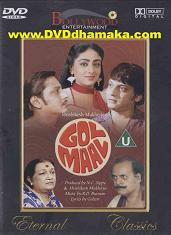
1. GOLMAAL (Topsy-turvy): Ram Prasad is a middle-class chartered accountant, desperately looking for a job to support himself and his sister. He is thrilled to learn about a vacancy at a firm owned and run an eccentric old man called Bhavani Shankar. However, there is a catch. The old man believes the youth of the country should focus only on their jobs, and not waste time on other interests like sports or entertainment. Ram Prasad, a soccer and hockey lover goes prepared for an interview with this quirky gentleman. He impresses Bhavani Shankar when the latter asks him a question on Pele, and he apparently fails to recognize the soccer maestro. He gets the job.

Trouble starts when the boss spots Ram Prasad on the spectator stand at a soccer match he goes to attend. When called in for explanation, Ram Prasad fabricates an impeccable (and imaginary) tale of his younger brother, Lakshman Prasad, who he says is a wayward young man, wasting his youth on sports and music. He convinces his boss that it was Lakshman whom the old man had seen at the stadium. He further claims the younger brother doesn’t sport a moustache. What follows is a rollercoaster of uproarious situations, in which Ram Prasad has to switch between the roles of his own self and that of his sans-moustache fictional brother, forever at the risk of his boss stumbling upon the truth.

2. CHUPKE CHUPKE (Stealthily): A well-plotted story of how a couple decides to dupe their relatives for some harmless fun. A newly-married couple–a botany professor and his wife–plan to play a prank on the wife’s brother-in-law, a judge who is very particular about the use of pure Hindi. The professor, hitherto unseen by these relatives, takes up a driver’s job at the judge’s house, exhibiting his unadulterated Hindi-speaking tendencies.

Things get suspicious for the older couple when the judge’s sister-in-law is seen to openly flirt with the new driver. The situation gets out of control when the duo actually elopes and another (planted) character emerges, claiming to be the botany professor. Imagine the older couple’s embarrassment, even as the man claiming to be the botany professor is actually a scholar of English literature and has a hard time teaching botany to a young girl he begins to fancy while still posing as the married professor.

3. JAANE BHI DO YAARON (Let it be, Friends): A remarkable film that was a blend of black comedy and slapstick. Two photographer friends set up shop in the busy Mumbai city. Their first assignment comes from a newspaper editor, and accidentally the two friends photograph a murder scene. They are dragged increasingly into the dark and deceitful world of corrupt administrators and businessmen. A brilliant satire enacted by some of the finest actors of the Hindi film industry, this flick was marked by witty dialogues, hilariously absurd sequences, and an unmistakable dig at urban ugliness (not just the physical part of it).

4. RANG BIRANGI (Colourful): A riotous comedy on a bachelor friend’s attempt at rekindling the spark in the marital life of another friend. His script turns the lives of the married friend, his secretary, her boyfriend, and a whole lot of other people in the film into a complicated labyrinth of circumstances. The plot hatched by the bachelor friend is the backbone of the film’s plot. Fantastic plotting and rib-tickling scenarios conspire together to produce an explosively funny film.
5. KATHA (Tale): Yet another social comedy, reflecting the dilemmas of urban life. Rajaram is an honest middle-class clerk living in a densely-populated locality of Mumbai. He secretly loves his neighbour, Sandhya, but can’t profess his feelings to her. Soon, he is joined by his smooth-talking-but-idle friend, Bashudev. The latter wastes no time in courting Sandhya, even while living in Rajaram’s flat at the nice guy’s expense. A classic hare-tortoise story, in which, thankfully, the tortoise wins the battle after almost losing it. Bashudev takes the cake, though, entertaining and disgusting the audience at the same time.

All of those sparkling funny bubbles, filled with natural laughing gas are stories of ordinary people caught in the daily grind. They make for healthy, wholesome family entertainment. All of them deserve separate entries. Maybe some other time. For now, let me navigate you to the Indian-movie-loving Simran at Writing From Within.


, , ,

In Memoriam: Naguib Mahfouz

Naguib Mahfouz (1911-2006)

With the passing away of Naguib Mahfouz, Egypt‘s Nobel laureate, the literary world has lost an entire epoch. This 94-year-old writer wasn’t only a pillar of Arabic literature, but the central figure who brought this literature on to the world stage. Someone influenced as much by his Islamic mother’s tolerance for all humanity as by the ancient history of his country, his writing corpus matches the vastness of Egypt‘s heritage. From the reigns of pharaohs to the socio-political state of modern-day Egypt, Mahfouz’s writing captured the entire gamut of this ancient and vibrant culture. A writer who deeply loved his land and never stepped out of it, not even to attend the Nobel ceremony in 1988, his vision was never constrained by any man-made boundaries—geographical or otherwise.

My position on everything I have read throughout my life — and my readings include the Ancient Egyptian and Arabic heritage as well as English and French creative works — was, as far as possible, a neutral, unbiased, one. This in the sense that all these cultures are, in the last analysis, human cultures, produced by man, and I am as entitled to the English [literary] heritage as I am to the Pharaonic heritage. In other words, all these cultures belong to me in my capacity as a human being. And if you were to ask me to enumerate my favourite works in order, you might find among them an Ancient Egyptian work, a French one, a third that is Arabic and a fourth that is English. When I read I allow my self to love what seems worthy of love, regardless of nationality.

~ Naguib Mahfouz, in an interview with Ibrahim Mansour


More on Mahfouz in Egypt’s Al-Ahram Weekly.


,

PAGLA DASHU (Crazy Dashu) — II, By Sukumar Ray

Missed Part I? Read it here.

The Deeds of Dashu (continued)

On one occasion, just after the vacations, Dashu came to the school with an intriguing box. Master Mashai asked him, “What’s in that box, Dashu?” He replied, “My things, sir.” A little debate ensued among us regarding the nature of his “things.” We noticed Dashu had all the essential school items with him–books, notebooks, pencil, blade. Then what “things” was he talking about? When we asked him, he didn’t give a direct reply. Instead, he clutched the box to his chest and said, “I am warning you all. Don’t ever mess with my box.” Then, he opened the lid slightly with a key and peeked inside while mumbling some calculations. The moment I tried to lean over to catch a glimpse, Dashu locked it up.


Soon, this became a hot topic of discussion for the rest of us. Someone said, “It’s his lunch box. He must be hiding food inside it.” But I never saw him opening the box during lunch time to eat anything. Some suggested, “It could be his money bag. It must contain a lot of cash. That is why he never parts with it.” To this, another boy said, “Why such a big box to keep money? Is he planning to open a money-lending business in the school?”

During lunch one day, Dashu hastily gave me the key to the box and said, “Keep this with yourself, make sure you don’t lose it. If I get a little late in returning, please hand over the key to the watchman before you all go to the classroom.” With that he went away, leaving the box with the watchman.

We were thrilled! After so long, we had an opportunity; now only the watchman needed to move away for a while. Shortly, the watchman lit his stove to make rotis* and went to the water tap with a few utensils. This was just the moment we were waiting for. Five-seven of us boys bent over the box. I opened it and saw a fat bundle of papers rolled tightly with tattered cloth strings. Quickly opening the knot, we found another paper box inside, which in turn carried yet another small paper bundle. On opening that, a card popped out. One side of the card said, “Eat a green banana,”^ while the other side had the words “Excessive curiosity is not good.” We started exchanging stupefied glances with each other. At last someone said, “The lad sure took us for a ride.” Another boy said, “Let’s tie it up exactly the way it was, so he doesn’t have any inkling that we’d opened it. That would teach him a lesson, all right.” I said, “Fine. When he returns, you all politely request him to open the box and show what it contains.” We quickly wrapped up all the papers with strings and dropped the bundle inside the box.

I was just about to lock the box when we heard a thunderous guffaw. That’s when we saw Dashu, seated atop the boundary wall, laughing insanely. The buffoon was actually watching the whole show from a vantage point. We realised the entire chain of events–giving me the key, keeping the box with the watchman, making an excuse of going out at lunch–all these were part of Dashu’s prank scheme. He had been carrying that box for all these days just to make us appear like idiots.

Is it without any reason that we call him Crazy Dashu?

* Roti = Indian flat bread
^ Eat a green banana = In Bengal, this phrase is used to mildly snide effect, after fooling someone or to indiacate that a person’s wish isn’t going to be granted.

[The End]

Translated by: Bhaswati Ghosh

, , ,

PAGLA DASHU (Crazy Dashu) — I, By Sukumar Ray

The Deeds of Dashu

In our school, there was hardly anyone who didn’t know Crazy Dashu. Even those who knew nobody was familiar withDashu. One time, a new watchman came to our school; he was totally rustic. No sooner than he heard about Crazy Dashu, had he identified him. That’s because from his looks, speech, and movement you could tell Dashu was a bit off in the head. He had big round eyes, unnecessarily long ears, and a scrub of scruffy hair. Whenever he walked fast or spoke in a busy manner, it reminded one of lobsters for some reason.

Not that he was foolish. When it came to arithmetic, especially complex multiplication and division problems, his brain worked rather well. Again, there were occasions when he reveled in duping us with such well-forged plans, that we were left embarrassed and stunned.

At the time Dashu or Dasharathi joined our school, Jagabandhu was famous as the “best boy” of our class. He was good in studies no doubt, but we hadn’t seen a jealous wet cat like him. One day, Dashu approached Jagabandhu to ask him the meaning of an English word. Jagabandhu snapped at him without any reason, saying, “Do I have nothing better to do? Today I will teach him English, tomorrow I’ll have to help someone else with maths, the next day another one would come to me with a new request. And I’d just go on wasting time on this!” A livid Dashu replied, “Hey, you are such a petty little rascal.” Jagabandhu complained to Pandit Mashai, “That new boy is calling me names.” Pandit Mashai* gave Dashu such a yelling that the poor fellow just went quiet.

Bishtubabu taught us English. Jagabandhu was his favourite student. While lecturing, whenever he needed to refer to the textbook, Bishtubabu would get it from Jagabandhu. One day, while teaching us grammar, he asked Jagabandhu for the book. Our friend immediately handed him the green-cover-wrapped grammar tome. As he opened the book, Master Mashai^ asked grimly, “Whose book is this?” Broadening his chest in pride Jagabandhu said, “Mine.” Master Mashai said, “Hmm, is this a new edition? The entire book has changed, I see.” With that, he started reading, “Hair-raising detective tales of Inspector Jashobant.”

Unable to understand whatever was happening, Jagabandhu just froze, flabbergasted. Master Mashai rolled his eyes devilishly and said, “So you are learning such higher things, haan?” Jagabandhu tried to mutter something, but Master Mashai cut him short and said, “Just shut up now. No need to act nice and good. Enough of that!” Jagabandhu’s ears went red with shame and insult, and we sure were delighted to see that. Later of course, we learned that this was the handiwork of brother Dashu, who had replaced another green-cover book with Jagabandhu’s grammar book.

We always poked fun at Dashu, often ridiculing his intelligence and looks, right in front of him. I don’t recall him getting upset about it even once. A lot of times, he would colour our comments and make up funny stories about himself. One day he said, “In our neighbourhood, whenever someone makes dry mango candy, I am in big demand. Can you guess why?” “Why?” We asked, “Do you relish mango candy?” He said, “Oh no, that’s not the reason. You see, when they spread the candy for drying on the terraces, I go there and show my face a couple of times. That’s enough to drive all the crows away from the area. So no one needs to guard the mango candy while it dries.”

* Pandit Mashai = Respectable term for teacher.
^ Master Mashai = Respectable term for teacher.

Enjoyed? Read Part II here.

Translated by: Bhaswati Ghosh

, , ,

Making Sense, Nonsensically: Sukumar Ray

As the AW Chain Ship (see sidebar) sails its way through the fifth round, it’s landed at my dock after crossing BK 30’s harbour. BK wrote about how you can never trick her into exercising or dieting, unless you mask those evil things as something else. Makes complete sense to me. Her post is hilarious. If you are in need of a laugh, go read it.
I admire people who can make you laugh with their writing. It requires a special skill and the ingenuity to view the world in a skewed manner. Writers who trigger a tickle in the funny bone time and again are, in my view, geniuses. And no, I don’t use that term lightly. The writer we meet today is a master of those funny missiles. He is the versatile, uproarious, and nonsensical Sukumar Ray—Bengali literature’s very own Lewis Carroll.

I am so glad I learned reading Bengali as a child. Otherwise, I would have been denied the magic of this master of nonsense. My first brush with his strange worldview took place when I was a toddler. That was around the time I was made to learn by heart some poems from Abol Tabol or Gibberish, Ray’s repository of nearly 50 balderdash verses. I didn’t hate memorizing these poems; if anything, the converse was true. To the innocent and unbridled mind of the little me, such weirdness was delicious and worth getting serious about.

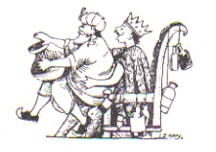
For, who would not delight to learn about the activities of the royal folks and subjects of Bombagarh, a fictitious kingdom, where the king keeps dried mango candy framed on his walls, the queen roams around with a pillow tied to her head, the citizenry does cartwheels on catching a cold, the king’s aunt plays cricket with pumpkins, and the minister beats an urn while sitting on the king’s lap?

In Gaaner Gunto or Musical Knock, he talks about the voice of the great Bhishmalochan Sharma—who starts singing on a scorching summer day—traveling from Delhi to Burma. People fall off and die by the dozens, unable to survive the “good vibrations” rampaging through the streets. Scores of animals fall prey to this thunderous singing session too, until a crazy goat knocks Bhishmalochan down with its menacing horns. That’s when his savage vocal chords are finally laid to good rest.

Sukumar Ray becomes a child’s friend in the most effortless way, just as Lewis Carroll or Edward Lear do. For here is someone who gives them the license to not only ponder on nonsense, but also to have limitless fun with it.

Ha Ja Ba Ra La or Mumbo Jumbo is a novelette peopled by strange creatures who are governed by even more outlandish rules. This complete nonsensical story is often compared to Alice’s Adventures in Wonderland in style and presentation. Yet, Ha Ja Ba Ra La, which is actually a random ordering of six Bengali consonants, remains peculiarly Bengali in its idiom and rendition.

While in your childhood, Sukumar Ray and his creations entertain you as dear friends, as an adult, you begin noticing the subtle satirical undertones in his works. He takes a dig at corrupt politicians in Ha Ja Ba Ra La, pokes fun at non-laughing pseudo intellectuals in the poem Ramgarurer Chhana (Ramgarur’s Offspring), and even some of the images in Bombagarher Raja insinuate the lack of activity that leads members of the royalty to find inane vocations to busy themselves with.

Over the course of the next few posts, I will introduce you to Dashu, a character created by Sukumar Ray. Be alarmed; Dashu is a bundle of surprises, accidents, and craziness. If you don’t like laughing, you may not be interested in knowing about him. But otherwise…stay tuned!

And now, keeping this a strictly funny business, may I anchor the AW Chain Ship at Andrea’s port, situated in the charming town of Southern Expressions.

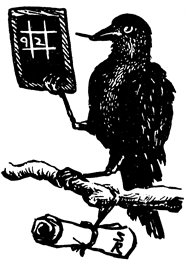
Note: Illustrations by Sukumar Ray

, , , , ,

Orchestrated Disharmony?


Music Video entitled, “Vande Mataram”.

Mother, I bow to thee!
Rich with thy hurrying streams,
bright with orchard gleams,
Cool with thy winds of delight,
Green fields waving Mother of might,
Mother free.

Glory of moonlight dreams,
Over thy branches and lordly streams,
Clad in thy blossoming trees,
Mother, giver of ease
Laughing low and sweet!
Mother I kiss thy feet,
Speaker sweet and low!
Mother, to thee I bow.

(Translation of Vande Mataram, by Sri Aurobindo)

That is the essence of India‘s national song. Translated literally, Vande Mataram would mean “Hail the Mother.” In this case, Mother refers to motherland. The song is at the centre of raging political furore these days. It started with an innocuous central government directive to state governments, asking for the song to be sung at public functions on September 7, the day marking the end of Vande Mataram’s centenary year.

The directive sparked off protests from a quarter of Muslim politicians and intellectuals, who felt the song’s lyrics went against the tenets of Islam. How so? Because it hails the motherland, as opposed to Islam’s advocating the worship of none other than Allah. They demanded the government make the singing of the song optional, not mandatory. The government agreed. Which in turn invited the anger of Hindu nationalist politicians, who declared those averse to singing the national song should leave the country.

It’s the contextual relevance of the song, which is sadly getting overlooked in this political slugfest. Vande Mataram was a war cry for Indian freedom fighters during the British reign. Every nationalist, irrespective of his or her religious affiliation, had these two words on their lips. The chant became such a potent symbol of nationalism that the British banned its utterance in public and arrested anyone who violated this diktat. To this day, if seen in films and music videos, the song stimulates a degree of patriotic fervor in Indians, including for those of the post-independence generation like me.

Is the letter too hard to overlook to appreciate the spirit of the song? This is a song which united Indians to rally against the biggest imperialist power. Politicians in independent India are using it as an instrument to incite divisive sentiments. What could be more ironic?

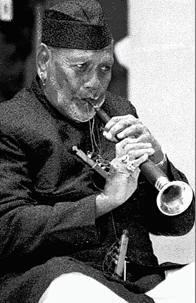
Perhaps the fact that our elected representatives chose to create a ruckus over this, on the 22nd of this month, the very next day after Ustad Bismillah Khan passed away. The legendary shehnai maestro, while belonging to the Muslim faith, had realized the oneness of all humans and believed music was the cord that kept us strung together. In his last interview with the editor of a national daily, this 91-year-old icon of India‘s pluralistic culture said:

Q: Khan saheb, you have never differentiated between religions, you believe all are one.

Ustad Bismillah Khan: They are one, absolutely one. It’s impossible for there to be any division. This voice you hear, it’s that which we call sur*.

*Sur: Musical note.

, ,


Old Story, New Contest

Old story:

Back in June, I took part in the Midnight Road short fiction contest, hosted by Jason. Part of the contest is the learning that comes with it. So here’s my entry, in a modified version. I incorporated some of the suggestions Jason gave me in his feedback. Do let me know how you like it. Thanks, Jason.

The Eyewitness

“You know, you should just quit it.” Her words stiffened his limbs every evening, as he lumbered his way back home. They had arrived in the neighborhood just last month, and while everything else seemed okay, the dark stretch vexed her as much as it paralyzed him.

If only he had the luxury of not pursuing the part-time MBA classes after work every evening.

Difficult to admit though it was, he hated the fact that it was the only route back home from college. It was a weird road; he didn’t doubt that. No matter how many times the municipality fixed the street light, it would stop functioning.

It’s always midnight here.

“Silly girl, always thinking the worst. I am not the only one who walks on that road,” he would tell her.

Faking reassurance. Easy. Plodding through that dark track every evening. Creepy. In the back of his mind, snapshots lurked—of pickpockets ruffling his trousers’ back pocket…

A .410 handgun did it in the end. It was Diwali eve, and he bought her favorite sweets. As he wound his way through the dark road, humming a song, three gun shots twisted his gait into a red rivulet. Unarmed civilians were the best targets to drive home the demand for a separate state.

His cell phone, lying unclaimed with his corpse, beeped twice. There was just one eyewitness—a live, mute electric pole.

It was midnight when the police contacted her to identify the body.

[The End]

New Contest: Lonely Moon Short Fiction Contest


If the story left you a bit glum, here’s something to cheer you up. Our gracious host, Jason Evans, is hosting yet another short fiction contest. Using the picture you see, write a story of 250 words or less. The deadline is August 29, 11 pm, EST. The details are here. Jason’s contests keep getting better each time. This time, it takes a big leap with bestselling author, Anne Frasier, joining the event. Anne’s new book, Pale Immortal, is going to be launched on September 5. And no less exciting is the fact that the winners of the Lonely Moon contest will get autographed copies of Pale Immortal as prizes.

What are we waiting for then? Let’s get busy, writing!

, ,

Cricketing Sagas — Imprinted

Cath, who passed me the AW chain baton, mentioned how it was during her first vacation without her family that she took to writing seriously. Evidently, she was in England with a group of friends when the incurable writing malady infected her. And alongside writing and frolicking with friends, Cath’s post also talks about her watching county cricket.

Aha! Cricket. One of those words that make me smile naturally. For, the game of cricket is one of the biggest loves of my life. As I write this post on the eve of India‘s Independence Day, I can proudly say being passionate about cricket adds as much to my Indianness as the food I eat and the language I speak do.

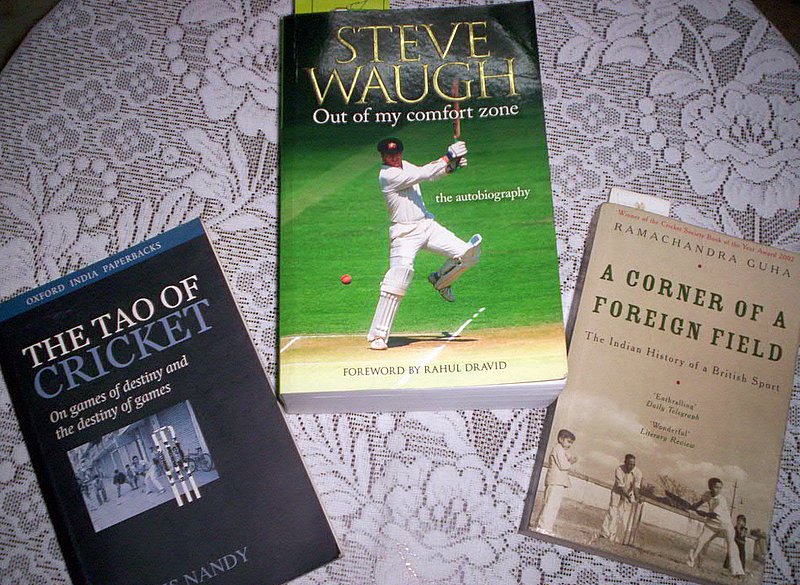
The sport has become so integral to the Indian ethos, that in his book, The Tao of Cricket, eminent sociologist, Ashis Nandy, professes Cricket is an Indian game accidentally discovered by the British…

So when my brother recently handed me this hefty tome as a belated birthday gift, I was elated beyond measure. Steve Waugh, the former Australian cricket captain, had remained my favourite for most of his cricketing career. Not just because of his skill with the game, but for his indomitable mental toughness and his commitment to social causes, which includes his work with an institute in India that is a haven for children of leprosy patients. I would always be stunned by his ability to singlehandedly rescue his team from near-losses. His record as captain is no less spectacular. Under his leadership, the Australian team became an impenetrable wall of attack, which no team in the world could match in terms of either flair or tactics.

That’s about what I’ve managed to read of the book thus far. Admittedly, I am a slow reader and bulky books always intimidate me. But Waugh does a great job telling his life story—he maintains a conversational tone, is admirably honest, and gives a fascinating glimpse into facets of his personality that remained masked by cricket. For who could ever tell, this gritty player, who even came across as a cold and calculated strategist while leading his side, detested being in the spotlight? Or that he wrote long, wistful letters to his teenage love (and later his wife), while on his first tour outside home in England? Steve Waugh is also candid about the uneasy and somewhat strained relationship with his twin Mark, who himself was part of the same squad his brother captained, and has an illustrious track record to his credit.

Hopefully, I would finish the Waugh treatise in a few months. I must, because I also have to read the other two books you see in the picture. I am particularly interested in A Corner of a Foreign Field, which presents “The Indian history of a foreign sport.”

What sports do you like? Does its history draw you? Or the life stories of its legends?

A sport teaches us so much, even if we don’t play it.

And now, may I pass the baton to Matt at Mad Scientist Matt’s Lair.

The entire chain:

Peregrinas

Pass the Torch

The Road Less Travelled

Fireflies in the Cloud

Even in a Little Thing

The Secret Government Eggo Project

Curiouser and Curiouser

At Home, Writing

Mad Scientist Matt’s Lair

I, Misanthrope – The Dairy of a Dyslexic Writer

Beyond the Great Chimney Production Log

Flying Shoes

Everything Indian

The Hal Spacejock Series

Organized Chaos

Of Chapters and Reels

Just a Small town girl

Midnight Muse

Kappa no He

, , , ,

Guest Blog – Bhupinder Singh

At Home, Writing is pleased to welcome its wonderful readers to the first Guest Blog. I am excited at the opportunity to learn from the perspective of fellow bloggers. I hope you all would enjoy interacting with these discerning guests too.


We begin with Bhupinder Singh’s review of:

Santa Evita
By: Tomás Eloy Martínez

In the short span of six years between 1946 to 1952, Eva Perón, the wife of the Argentinean dictator and founder of the Perónist party, Juan Perón, won over the Argentinean people so much so that her popularity was said to rival, if not exceed, that of Juan Perón himself. Having risen from obscurity, the youngest daughter of an unwed mother, her rise had been all the more spectacular.

Tomás Eloy Martínez’s Santa Evita could have been termed as a biographical account Eva Perón’s life had the author chosen to write about her short but eventful life.

Instead, he has chosen to write about her corpse.

Eva Perón’s body, like Lenin’s, was embalmed after she died of cancer at the age of 33, at the height of her popularity. However, before the corpse could be housed in a mausoleum for public display, Juan Perón was overthrown in a military coup, and thus began the after- life journey of Eva Perón, as the incumbent military government wondered what to do with the embalmed body.

To bury the corpse could have, they feared, incited the loyal Perónists and even the masses. And Eva dead was perceived as more dangerous than the living one.

Even a few replicas were created to mislead any followers, and attempts were made to bury them. For over a decade, the corpse and the replicas changed hands and locations, traversing within Argentina and to Europe- one replica was buried in Bonn and the actual corpse in Milan, Italy from where it was finally recovered and returned to Juan Perón after his return from exile in Spain.

Martínez recounts the stories of all those that came in contact with the corpse, and the often calamitous ends that they came to. Insidious accidents awaited those entrusted with the corpse.

Some were haunted till death, some met with inexplicable accidents and others were relentlessly followed by a mysterious person called the ‘Commander of Vengeance’.

It is characteristic of Martínez to write a novel that takes the after- life of Eva Perón rather than her not less eventful life as its theme. He does show us slices of her life too, but often as flashbacks and in recollections of those that he meets with.

In a sense, therefore, he underlines the persona that outlived Eva Perón herself.

This is akin to his previous novel, the redoubtable The Perón Novel, where he focused not so much on Peron’s politically active years, but the seemingly innocuous journey of an exiled dictator returning to his home country in old age.

Santa Evita is a novel within a non- fictional account where Martínez goes out in search of information about Eva Perón’s corpse- the story emerges as he interviews people associated with Eva or later with her restless corpse.

He makes the reader an accomplice in this journey of discovery- it becomes very much like a mystery in which the reader has as many, and more often as few, clues as the writer. This makes the novel extremely readable, if not racy.

Santa Evita turned out to be unputdownable, and I finished it within a week. Along with The Perón novel, it has been one of my best reads from Latin America in the last one year.

Note:Bhupinder Singh is the author of a reader’s words–a blog encompassing a wide spectrum of the literary world. From Dalit literature to Latin American authors, and from regional Indian writers to Leftist writings, Bhupinder covers it all. His blog is not limited to just books and authors, though. The subtitle–comprising keywords such as literature, left, liberal, socialism, globalization, dalit, books, Urdu poetry, south Asia, Indiais indicative of the inclusive nature of his blog.

, , , , ,