Balika Ashram — Abu Hasan Shahriar

471b1d36f2bd8bf9ca843fa72080bdaf

Translation: Bhaswati Ghosh

– 6 –

Open page forty-nine of the heart:
This is a river of sorrow; it flows from the mountain of hurt

Now go to page one hundred and thirty-two of the eyes:
This is the story of a bicycle; a boy’s pakkhiraaj horse

Turn to page ninety-two of the chin:
This is a monsoon poem; painted in the watercolour of her first kiss

Pause on page one hundred and sixty-nine of her hair:
A night ballad, this is where Chandrabatis bloom

Let’s move on to the end then:
This is a moth-eaten chapter, never to be retrieved.

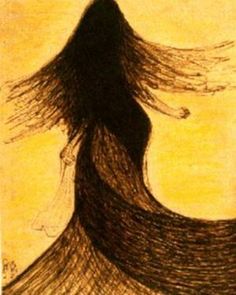
Image: Painting by Rabindranath Tagore, source: https://www.pinterest.com/DoraGrant3/art-east-indian/

Remembering U. R. Ananthamurthy

URAM-portrait@800The year, 1997. Me, a freshly-pressed journalism graduate, itching to join the Indian print media. A dream that wouldn’t come to fruition. But I would get to scribble a few odd stories as a freelance writer. Ratnottama Sengupta, Times of India’s arts editor, would assign me stories on culture and literature–a “soft” beat I happily lapped up.

One of those stories was on Sahitya Akademi’s translation awards. U.R. Ananthamurthy was the Akademi’s chairperson at that time. What follows next is as hazy as the darkness of that early (or was it late) winter evening that swept the outside once the award ceremony was over. But not without light following it.

I don’t remember if it was part of my brief to interview him following the awards or if that was something I wanted to do. Nor do I remember how that interview was set up–did I ask him personally on the awards evening? Did I make a phone call to fix the appointment?

All I remember is I got some time to speak to him the next morning–he invited me to join him for breakfast at IIC–the awards venue and also his place of stay in Delhi. As I sat across him at the breakfast table, URA had enlisted his latest admirer. Given his stature, his manner of speaking–soft, respectful, involved–moved me at once. A light breakfast fare–idlys, coconut chutney, small uttapams, diced papaya–lay in the small table between us. He insisted I have some, despite my polite resistance. Introductions and breakfast over, we moved to his room for the interview. I had no recorder with me so longhand note-taking would have to do.

My knowledge of translations then was as limited as my knowledge of languages is now. As indicated above, my memory of our conversation is blurry. I do remember, however, the lambent beam of light streaming in through the window and the lush cover of green beyond it. When URA started speaking, his words seemed engulfed in a similar beam–gentle, yet radiant with insights and committed interest.

I remember him lamenting the fact that a lot of translation of Indian language works have to happen through a link language like English or Hindi. He wished there were more direct translations–from Kannada to Bengali, Marathi to Kashmiri and so on. His eyes lit up when he shared his vision of a day when school-going children in one region would learn a language from another region. And I wondered why wasn’t this happening already? Why could I not learn Malayalam or Assamese in school? And even then I understood, this wouldn’t just be about learning a new language, but also about making friends with a new culture and its people, if only through the solitary medium of books.

At the end of our conversation, I touched his feet (a mark of deference I  extend with considered discretion). He smiled and said, “We need more bright people like you.Thank you so much.” Even though I didn’t believe that about myself, the warmth and sincerity of his tone, the genuine spark of hope in his eyes made those words credible to me.

So long then, Sir.

 
Image source: http://kvsas.by2coffeefilms.com/blog

Of the Sickness of Love

Last night, I decided to close the book I had been reading for months now, with a determination as unyielding as the pace with which I advanced with this book. Gabriel García Márquez “Love in the Time of Cholera” is a chronicle of love–wherein, possibly the most powerful of human emotions is in a constant tussle against a range of obstacles.

Narrating a tale that is set for a considerable part around ships, the book starts by taking the reader on an interesting voyage–with the introduction of the key characters, their strange life stories and stranger personal quirks. It is the story of the romance between two people, as dissimilar to each other as can be.  A promising story of young love, unbridled passion and an almost illogical fable of romance, marked by long letters and little more.
Fermina Daza, the female protagonist, continues this amorous association despite her father’s ruthless opposition to the same. And just as the passionate affair reaches an exciting bend, the author brings in a clever twist in the story. All of a sudden, without any provocation or apparent logic, Fermina spurns the advances of her lover, Florentino Ariza. The stage is set for an interesting drama to unfold, and I was ready for the voyage.

Except that I had boarded a ship that seemed to be without a compass. This isn’t because the author bypassed the convention of a linear narrative; it’s more than that. My problem with the novel’s middle was that it seemed direction-less and loaded with extraneous information. For page after page, equaling nearly half a century in terms of the story’s timeline, the reader is subjected to the endless affairs Florentino Ariza has with about as many different women. Yet, he doesn’t really love them, but only “uses” them to bide his time, until he can return to the love of his life. In this time, Fermina Daza has  married a wealthy doctor and is a leading lady of the elite society. We learn about the ebbs and flows of her married life, complete with certain insights on what marriage entails, which seemed to me, to be the author’s own suppositions on the institution of marriage. Basically, the story doesn’t move in this phase. One learns a lot about human quirks and their implications in varied dimensions of life–marriage, family, society, professional career, but there is so little action that bears any significance to the main plot that one wonders the purpose of it all. I struggled to remain motivated to read the book through end; the  enervated narrative  fell short of providing enough encouragement. This could have been the author’s way of reinforcing the long, almost hopeless wait that Florentino Ariza endures to reclaim his love.

I am glad my persistence paid off as the story neared its end. In the twilight of their lives, the two lovers whose paths had crossed in youth only to diverge, meet again. They are brought together by the strange dynamics of fate, as Fermina’s husband dies of a most bizarre accident. Here on, the ship that had seemed aimless for so long, suddenly cruises with a frenetic speed, along with our lovers–old in their bodies, but not in their passion. As they defy social conventions, physical constraints and even the doubts of their own minds, we celebrate their journey through the river–breezy, uncertain, excitable–not too different than their romance itself.

Cholera has been used as a motif in various places throughout the story, and in the end it becomes a device to checkmate possible hazards that come in the way of love. I tend to think cholera is also symptomatic of the fact that love is a kind of sickness. The kind in which the disease is its own cure.