The fabled crop of winter

First published in DNA

For the past two years, from the time of my intercontinental drift to North America, winter hadn’t coiled me in its viper-like grasp. I had thus brushed off warnings of “bitter, brutal Canadian winters” as hoax spun by hyperbolic weaklings. Then, the winter of 2013-14 happened. Like a nightly creature that keeps its movements hushed, it pounced on me — surreptitiously and with a bloodthirsty vengeance.

Curiously enough, while I found myself abjectly underprepared to deal with the onslaught of the season’s icy blows, my imagination experienced an odd and even mystifying boost. A spruce tree coated with the first dust of snow became a young-at-heart old man for me. A pine tree, resolute in its evergreen dignity, seen from the window next to my seat at work, became a trusted companion when all the other trees surrounding it bared their branches. Snow-covered cupped hedges appeared as giant ice-cream cones ready to be licked clean by overgrown kids like me. As my mostly unimaginative mind ran wild with wintry metaphors, I began digging into winter in fiction.

To my delight, I discovered that this bone-numbing, grinding stone of a season has moved many a storyteller’s creative muscles. In The Snow Man, O Henry sets the winter scene up in the countryside amidst a menacing snowstorm. Arguably not in league with his finest short narratives, the story nevertheless resonated with me — because the narrator’s disdain for snow equalled mine.

Of all the curious knickknacks, mysteries, puzzles, Indian gifts, rat-traps, and well-disguised blessings that the gods chuck down to us from the Olympian peaks, the most disquieting and evil-bringing is the snow… [The Snow Man, O Henry]

Interestingly, the story opens with this sentence, “Housed and windowpaned from it, the greatest wonder to little children is the snow.” Going by the number of times schools in our area shut down this winter owing to snow-related danger on the roads, I suspect I know why children love the white stuff as much as they do.

At the same time, the prospect of snow days can prove to be a jolting annoyance in the routine lives of stay-at-home parents. Winters were frustratingly mild in North Carolina, but the year I was in the fifth grade we got lucky. Snow fell, and, for the first time in years, it accumulated. School was cancelled, and two days later we got lucky again. There were eight inches on the ground, and, rather than melting, it froze. [Let it Snow, David Sedaris]

By late November, snow had enveloped every house, building, tree and park in the laidback Ontario town where I live. My city was a white-hooded mischief maker; even street signs hid behind pillows of snow, conning rush-hour traffic. Amnesiac fields of snow quizzed me, “What is the colour of green?” In the eyes of Dominican-American author, Julia Álvarez’s young protagonist, snow resembles something much more sinister. At the Catholic school she goes to after immigrating to the United States, her teacher draws a picture of mushroom cloud on the blackboard to explain the consequences of a nuclear war in the prevailing Cold War environment.

Then comes the girl’s first snowfall. The months grew cold, November, December. It was dark when I got up in the morning, frosty when I followed my breath to school. One morning as I sat at my desk daydreaming out the window, I saw dots in the air like the ones Sister Zoe had drawn random at first, then lots and lots. I shrieked, “Bomb! Bomb!” Sister Zoe jerked around, her full black skirt ballooning as she hurried to my side. But then Sister Zoe’s shocked look faded. “Why, Yolanda dear, that’s snow!” She laughed. “Snow”. [How the Garcia Girls Lost Their Accents, Julia Álvarez]

Between December and February, the winter of 2013-14 unleashed its redoubtable fierceness. A massive ice storm hit parts of Ontario, knocking out electricity and bringing entire cities to a standstill.

Arctic gales blew mercilessly as did blizzards and snow squalls. It was no longer just a matter of battling nature’s forces. Despite being wrapped under layers of clothing, the promise of central heating and the luxury of a fireplace, I recoiled as the cold pulled me into its vortex.

This was a chakravyuh no limping flame, no pale sun could touch. In a visually arresting winter story by Tobias Wolff, three hunting friends brace not just frigid shrapnel but also the frosty chill of mind games and human bitterness.

The wind was blowing into their faces. The snow was a moving white wall in front of their lights; it swirled into the cab through the hole in the windshield and settled on them. Tub clapped his hands and shifted around to stay warm, but it didn’t work. [Hunters in the Snow, Tobias Wolff]

Wolff’s story is a rough territory where the dense vegetation of a forest and the cutting arrows of winter contend against the complex equation between the three hunters. It’s hard to tell what stings the skin more — the slap of blowing snow or the barbed comment of a comrade.

20171110_094037.jpg

This feeling of being left cold at a deeper, psychological level is portrayed superbly by James Baldwin in Sonny’s Blues, the gut-wrenching story of a young musician struggling with addiction, and the “icy dread” his older brother, the narrator, feels at various points during their interactions.

“It’s terrible sometimes, inside,” he said, “that’s what’s the trouble. You walk these streets, black and funky and cold, and there’s not really a living ass to talk to, and there’s nothing shaking, and there’s no way of getting it out — that storm inside…” [Sonny’s Blues, James Baldwin]

As winter continues to exert its inexorable grip where I live, usurping spring, threatening to blot out even summer, I wonder what is it that ticks a writer’s fancy in the wintertime.

Is it the result of forced solitude — months spent cooped-up inside? Or is imagination the only escape, the only coping mechanism, when the daily reality is that of zero-visibility on the roads, a mountain of snow to shovel before work, and watching one’s step all the time to avoid slipping into ice?When hope, optimism and anticipation all fade before the determination of this year’s winter, I take refuge in Oscar Wilde’s words in The Selfish Giant, a story he wrote for children.

One winter morning he looked out of his window as he was dressing. He did not hate the Winter now, for he knew that it was merely the Spring asleep, and that the flowers were resting. [The Selfish Giant, Oscar Wilde]
Ma’s return journey

A version of this poem first appeared in Trainsorm-An Anthology of Alternative Train Poetry

Shantiniketan 036

The envelope flitted
between your fingers,
before you
tore open the invitation.

Not unbidden, nor unexpected,
yet at once an exile,
self-imposed.
An escape
(freedom seemed so selfish then)
from Father’s disciplining,
Mother’s drudgery,
the dampness of never
having enough.

For three nights,
the train, Typhoon Express,
ruled by mosquitoes
and with snails for wheels
chugged along.
You crouched on the
frozen bunk, the warmth
of Mother’s shoulder
and hearth fading
into smoky ether.

At the university,
squirrels and bou-kotha-kow tweets
would share your
open-air classrooms.
Friends’ banter,
a professor’s insults
and another’s excessive kindness
kept you in balance.
On stormy afternoons,
you foraged for green mangoes,
mirth, berries and
songs.

Half a century later,
friends flew away,
and all but the
benevolent professor
crossed over to
the other shore.

Here you are,
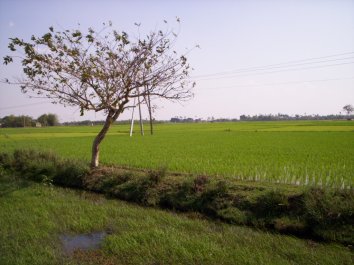
looking out of a train window–
paddy soaking in muddy water
and goats tethered to mud houses,
roots–slippery, shifting–

–on your way to exchange
the tears you left behind
for age-old, old-age laughs
with the kind professor.

Secrets and memories

Hateship, Friendship, Courtship, Loveship, Marriage
Alice Munro
Penguin Canada

First published in DNA

https://i.gr-assets.com/images/S/compressed.photo.goodreads.com/books/1407175370i/17431483._UY475_SS475_.jpg

As I unroll the reels of my life’s movie, the stories of my mother and grandmother, two women who shaped my growing up unravel before me. All three of us have lives distinctly different from each other’s. Yet, when I look closely, I see we have all been shape shifters — slipping into moulds we scarcely anticipated, not necessarily with ease or delight, but always with the readiness that our circumstances demanded. In Hateship, Friendship, Courtship, Loveship, Marriage, Alice Munro’s collection of nine short stories, I found many of our comrades — women across small towns and big cities juggling domesticity and the rigours of the professional world — slipping into and out of moulds and bearing the consequences of their actions with or without grace.

The book derives its title from a counting game young girls play with the names of potential boyfriends. Yet time and again, Munro’s adult protagonists prove that their lives need not remain constrained within the clusters of hateship, friendship, courtship, loveship and marriage. Like an ocean’s waves that don’t adhere to a boundary while undulating, the women of Munro’s stories don’t hesitate to spill outside the defined perimeters of their existences.

In the opening story, which shares the book’s title, Johanna takes the bull by its horns, torso and tail, when unbeknownst to herself, she falls for a prank played by two young girls. The girls write her love letters on behalf of one of their fathers, who lives in a different province. Johanna finds not just emotional succour in the letters, but true to her working-class industry, she smells an opportunity to banish her status as a pitiable spinster once and for all.

Johanna’s success in achieving what she sets out to establishes the book’s tone. In Munro’s more-real-than-real-life stories, women are not always in control of their destinies — sometimes by choice and at other times, without any. But what arrests the reader is their remarkable refusal to be pathetic, sympathy-arousing creatures. And they accomplish this with utterly ordinary, non-awe-inspiring actions.

In Floating Bridge, my favourite story of the collection, Jinny, a cancer patient, steps into the light — metaphorically speaking — even as she is engulfed in darkness. Thanks to a stranger, a young man, she walks on a floating bridge for the first time while her husband socialises with the same man’s family. But that’s not all. Jinny also receives the youth’s passionate kiss as he guides her steps on the bridge — an affection without any nomenclature, a fleetingly eternal moment of breathtaking freedom.

“What she felt was a lighthearted sort of compassion, almost like laughter. A swish of tender hilarity, getting the better of all her sores and hollows, for the time given.” [Floating Bridge]

Weaving inter-generational tapestries that span not just months or years but decades isn’t an easy act to pull together in short fiction, but Munro achieves this with the effortlessness of a teenager’s unabashed giggle. Even as the characters and stories swing back and forth in time, one is left amazed and bewildered by the author’s ability to carry the innocent reader through her intricately mapped-out territories. This is brilliantly evidenced in Family Furnishings, a story that interlaces family drama, the female protagonist’s brisk, nonconformist quips clashing with the deep-set conventional thinking of other family members, and finally intrigues and secrets that make the reader see the same character in a completely new light.

In this collection, Munro explores the idea of fidelity in marriage in more than one way, with no easy answers or moral positioning for the reader. And not all trespassing, if one could call them, happen in a blatant, deliberate manner. Stories like Comfort, What is Remembered, and The Bear came over the Mountain show how ephemeral and impulsive a moment of ‘stepping out’ can be at times. And not necessarily sexual in nature either.

“Ed Shore puts an arm around Nina. He kisses her — not on the mouth, not on her face, but on her throat. The place where an agitated pulse might be beating, in her throat.” [Comfort]

Memory can be a treacherous, manipulative and even therapeutic poultice. We realize this while reading the layered narratives of Nettles, What is Remembered and The Bear came over the Mountain. In What is Remembered, Meriel cherishes the sole pulsating whiff of an extramarital affair that breezes through her long married life, yet she wants to remember things differently than the actual sequence of events that took place.

https://images.randomhouse.com/author/21567

Transitions — geographical and otherwise — often form the metaphorical motif of Munro’s stories. Nettles, Queenie and Family Furnishings, chart the perplexity-ridden phase between young adulthood and grown-up in Munro’s spade-is-a-spade candour.

“I know exactly how old he was because that is something children establish immediately, it is one of the essential matters on which they negotiate whether to be friends or not.” [Nettles]

And it is this sense of negotiation, the constant trading of emotions, personal space, the necessity of belonging — that guides Munro’s characters, especially her women. This is not always easy or even plausible and must be done on the sly, but the women that we come across in Hateship, Friendship, Courtship, Loveship, Marriage aren’t shy of doing so.

“Young husbands were stern in those days…What a lot they had to learn, so quickly. How to kowtow to bosses and how to manage wives. How to be authoritative about mortgages, retaining walls, lawn grass, drains, politics…It was the women then, who could slip back — during the daytime hours, and always allowing for the stunning responsibility that had been landed on them, in the matter of children — into a kind of second adolescence. A lightening of spirits when the husbands departed. Dreamy rebellion, subversive get-togethers, laughing fits that were a throwback to high school, mushrooming between the walls that the husband was paying for, in the hours when he wasn’t there.” [What is Remembered]

I came to Munro as a reader with her first book of stories, Dance of the Happy Shades. Every story in that anthology charmed me as I read about young girls and women at crossroads, getting a taste of the bitter truths of life and coming of age. In Hateship, Friendship, Courtship, Loveship, Marriage, I met women who had already come of age and were mature and daring enough to dance and even miss a step or two on the paths that beckoned them.

Whenever I read Munro, I am seized with both the thrill and dread of a scientist in a laboratory, who discovers the minutiae of organic life under a microscope. Munro turns the spotlight on lives around us with such astonishing alacrity that it is but impossible not to find strains of one’s own living reality in her stories. The modern-day fables in Hateship, Friendship, Courtship, Loveship, Marriage hold a clear-as-daylight mirror to women’s lives — imperfect and rocky, but never without the possibility of a spark, a fresh leaf and a redeeming edge.

The Rendezvous by Bhaswati Ghosh (flash fiction)

You never approved of it as a meeting point; I always found it interesting.

After all, the whole city’s lovers would converge in Victoria Memorial, Nicco Park, or even the not-one-bit romance inspiring Moidan. I found my intensive coaching for the IIT entrance test to be a boon. Stealing those few minutes by the graying walls meant we weren’t thrown amid that snuggling, juvenile mass of couples in public places. For me, this secret (or was it, with the housewives peeking out of their first and second floor windows?) meeting with you every alternate evening worked perfectly. Until Baba appeared on the scene, that is. Not in my wildest dreams would I have imagined him passing by this stretch, catching a glimpse of me tapping on books, waiting for you.

“What were you doing in that neighborhood?” He asked me at dinner that night.

“Umm, where, Baba?” I looked as startled as I felt.

“In that lowly North Calcutta area. What took you there?”

“A friend lives there,” I muttered.

His caustic glare didn’t escape my eyes. The son of a sugar magnate, I wasn’t supposed to step into a North Calcutta ghetto. His look scared me he would find out. He did. For three months, we didn’t talk.

One evening, while trotting toward the gray walls, I saw Baba talking to some people. He had met your parents afterwards. A month later, he blessed us. At our wedding.

I still love those leaking pipes lining our gray, you know.

First published in The Clarity of Night “Silent Grey” short fiction contest.

Satirical Films Have a Lot to Say About India’s ‘Baba’ Culture

First published in The Wire

Stills from <em>Mahapurush</em> and <em>Ab Ayega Mazaa</em>.

Miracles, magic, superhuman powers, grand events – the works. Divine grace hides in samosas, the answer to fatal diseases in pranayama routines and relief from brutal office stress in pricey retreats and workshops. Science is debunked, its “helpless” limits made to capitulate before extraordinary and divine-blessed powers. The stories of many a spiritual guru in India would make for cracking comedy if it weren’t for the tragedy of real masses of converts being swindled in broad daylight, mostly of their own volition. As the court case involving Gurmeet Ram Rahim Singh unravelled recently, I returned to Mahapurush (Satyajit Ray) and Ab Ayega Mazaa – two films that satirise ‘babadom’ at its hilarious best.

Based on Birinchi Baba, a story by Rajshekhar Basu, one of the greatest Bengali satirists, Ray’s Mahapurush shows how babas appear in many stripes to take care of every kind of gripe. In a discussion among three men – two chess players and their friend who is in search of a baba who would rescue him from his broke status – there’s mention of Mirchi Baba, a godman who gives his followers hot chilli peppers for curing all their distress and Radio Baba, who taps into electricity from the sky and turns it into sparks to combust any problems his disciples face. Not too long ago a real baba, who used to prescribe remedies involving the distribution of hot samosas and muffins among folks, went bust. The darbars of Nirmaljeet Singh Narula, Nirmal Baba to his followers, were a lesson in the incredible human capacity for suspending disbelief in front of a guru who sits on a gaudy throne and dishes out barkat (Urdu for abundance or blessings) via samosas, gol gappe and wearing ties, as if the sky were dispensing showers in the monsoon. Babas in India disseminate their abundance in different ways. Ramdev does it via kapalbhati and Patanjali, the efficacy of both of which have been questioned; Singh in the form of drugs and liquor rehabilitation, and Sri Sri Ravi Shankar and Jaggi Vasudev by elevating the appeal of that elusive elixir called a “heightened state of consciousness” into something of a corporatised business model.

Read the rest in The Wire

Book Review: Rashida Murphy’s ‘The Historian’s Daughter’

First published in Cafe Dissensus

Title: The Historian’s Daughter
Author: Rashida Murphy
Publisher: UWA Publishing, 2016

The Historian’s Daughter could well have been titled The House of Secrets. Isn’t that what a “house with too many windows and women” is likely to be? The historian in question is the father of Hannah, the novel’s secret-digging young protagonist. Throughout the first-person narrative, she refers to her father as the Historian because of his real-life profession and her mother as the Magician due to her spell-inducing sweetness. Why then isn’t the book called The Magician’s Daughter? That’s a secret Hannah must accidentally come upon, and one that her creator Rashida Murphy guards with skilled control as she takes the reader on a voyage spanning familial and political upheavals and migrations across continents and personal mind maps.

Hannah’s fetish for secret busting is a natural function of her environment. History is the kernel wrapped in its homonym cousin – mystery. Both mystery and history flow freely in Hannah’s house in the hills, which she shares with her parents, older sister Gloria, brothers, Warren and Clive and her numerous aunts who come visiting and stay put for extended periods of time. Her historian father’s library – one he has inherited from his “despicable” British father – is the first depository that would trigger, and in time train, her sleuthing skills. A series of books on the English “conquistadors” of India sets her off on her quest to understating and even confronting the past, however unsettling.

The dramas and dark corners of family life dominate the early part of Hannah’s – and the book’s – world. While she’s happy to be under Gloria’s elder-sisterly wings and bask in the Magician’s affection, what makes her recoil at the sight of her father is a muddied phantasm the reader must, like Hannah, uncover in layers. This is also the part of the novel that brims with Persian fragrances – black tea with mint and carrot halwa; and with fables – of heroes Rustom and Sohrab, which the Magician reads to her daughters and of Rani, a less-than-heroic aunt dubbed crazy and living practically under house arrest.

The dynamics of this universe of chaotic delight changes forever when Sohrab, an Iranian young man – enters the scene. An acquaintance of Farah, the Magician, Sohrab bears about him an uneasy wind – that of the turmoil sweeping through Iran during the period of the country’s revolution in the late 1970s.

As with seeds that winds disperse all over the place, the lives of Hannah and her family get scattered, and Hannah finds herself in Australia as an immigrant. Transplanted without the nourishing support of her mother or sister, it is in Perth that Hannah has to find her own bearings. This is also where she finds love as well as a reason to return to the continent she came from – first in Iran in search of her sister, then in India to look for the Magician. Through it all, she must not only witness but also endure – hardship and the excesses of revolutions; cruel family secrets and the maturing of love, loveless hearts and an infant’s unbridled affection. The story in this part oscillates between physical and mental spaces as Hannah negotiates the distance between her present and her memories. The narrative feels somewhat jerky at times, perhaps not too different from the rugged emotional terrain Hannah herself treads through.

Through it all, Hannah also finds her own voice as a woman – one that’s not shaped or seasoned by the stronger women of her childhood. She’s funny and sharp, confident, and vulnerable – a mass of real flesh and blood. She is bold but her courage isn’t about an absence of fear. It is about running with – not away from – fear. She’s impulsive and a passionate lover, but most of all, she’s a baton-bearer of the two women who she first learned to love from – her mother and sister. This is what makes The Historian’s Daughter a remarkably feminist novel in the garb of a family saga. Rashida Murphy is clear about fashioning it so, whether it is by making Gloria prevent Hannah’s genital mutilation by their aunt; the girls’ mother staging her own silent rebellion; or Hannah’s firmness in chasing her convictions, regardless of self-doubt and social pressure. These are strong women who aren’t afraid to acknowledge their weaknesses. 

The Historian’s Daughter engages as much with its plot twists as with its honesty and narrative sweep. The language is crisp, the imagery vibrant, and the plotlines like stable trellises for the vines they support. This is Murphy’s first book and, for me, a wellspring of promise and anticipation. The malleability with which her love of history, research, politics, and storytelling meld into a whole makes her a writer to look forward to.

‘The Historian’s Daughter’ is available on: Amazon.com

Cutting Through Mountains to Build a Statue

An excerpt from Somendranath Bandyopadhyay’s My Days with Ramkinkar Baij where the sculptor and painter shares with the author his experience of sculpting the Yaksha-Yakshi statues that stand outside the central bank in New Delhi.

Translated by Bhaswati Ghosh

Kinkarda’s innocence amuses me. He is oblivious to the gigantic cost of cutting through a mountain. I know that once he had to pay the price for this inexperience. Recalling the incident I say, ‘You did do a major work by cutting stones later, though. In front of New Delhi’s Reserve Bank.’

‘Yes. The Reserve Bank governor had provided me with a lot of conveniences. Their only request was “Do something”.

‘I made Yaksha-Yakshi. Many people call it ‘Kuber’. Arre, why should it be Kuber? It’s not Kuber. It is Yaksha. They aren’t even husband and wife, but brother and sister. Yakshi. Had it been the wife, she would have been called Yakshini.

‘In Bharatpur and Sanchi, I had seen ancient Yaksha-Yakshi statues. Their limbs were broken. I also studied a few of those at the Patna Museum.

Yakshi holds the territory of land and agriculture. And Yaksha reigns over wealth. Kuber is above them. You must have read Coomaraswamy’s book; that contains everything.

‘You might have noticed that I’ve placed a discus in my sculpture’s hand. That was my idea. Addition. It’s a modern-day machine and is symbolic of industry. I got the idea for the flower and paddy cluster in Yakshi’s hand from the old statues. You know what Yaksha held in the ancient statues? A mallet. And a bag in the left hand. I have placed that too. Money bag. My Yaksha is completely modern – with a machine and a money bag. And is it possible to have the money bag and not have a fat belly? Yakshas do have protruding bellies, my dear. You must have seen ancient Yaksha statues. My Yaksha has it too.’

Read the rest in The Wire.


Who is Abani, at whose house, and why is he even there?

[In the words of Brajendranath Mandal]
Samir Sengupta
Translated from the Bangla by
Bhaswati Ghosh
Originally published in Parabaas

Half-dissolved, I slide into sleep
Amid the heart’s distant pain.
Suddenly, the night rattles my door,
“Abani, are you home?”

[‘Abani, are you home’ by Shakti Chattopadhyay]

I never got to know Shakti Chattopadhyay in person. Until the other day, I didn’t even know who he was. I’m a villager and make my living by growing potatoes and gourds. This year I planted tomatoes and chili peppers — the tomatoes did really well, I got about two and a half quintals per katha (720 square feet). Honestly, I didn’t expect such a good yield. Although it didn’t bring me a good price in the end, I still recovered the cost and even made a bit of profit.

Kolkata is far from our village. You have to first walk nearly four kilometers through the fields. Despite many efforts, no roads have come to the village. Newly-wed brides have to enter the village on foot; the sick have to be carried to the hospital on cots like the dead to a crematorium. Even though our village is in the Hooghly district, it’s on its northern edge, bordering Bardhaman. As I was saying—see, this losing track of what I was talking about is a sign of my getting old—after walking the four kilometers, you’d better sit down at a teashop to catch your breath.

Next, you need to get onto a bus that’s usually so packed that even the roof is crammed with people and luggage. If you can somehow stay inside the bus by hanging onto an overhead rod for an hour and a half, you’ll reach Gudup station, and from there to Kolkata in another two hours.

DSC02644

But tell me, where do I find the time to visit Kolkata? A farmer’s life is a busy one. My day starts early. People like you who only eat chilies probably have no idea what it takes to cultivate them. Imagine harvesting all the peppers from the plants. This is a young man’s job. But if you hire someone like that, you need to pay him well. The price one gets for the chilies doesn’t cover the cost of labour. So we have to get young boys for the job. These days one hears a lot of noise against child labour; apparently, it amounts to exploiting children. But if I didn’t hire them, the boys would starve that day. On top of the wage, I also give them a basket of muri and lunch. Is that worse than them going a day without work and food? Can one get education on an empty stomach? I don’t know. The politicians in our village say a lot of big words like “literacy” and such.

I didn’t study much — didn’t get the opportunity. You see, I had to accompany my father to the fields since I was five years old. I know my soil well. By placing a mere fleck of soil on my tongue I can tell you what would grow on it. I’m familiar with hundreds of weeds and can tell at least 70 types of insects. Back in the day, when it would start raining at the end of Magh, I would go to the field in the middle of the night to get drenched. I can’t do that any longer — the womenfolk don’t allow me to. But I’m a farmer’s son. My father used to say that if the farmer doesn’t bathe in the season’s first rain, the field doesn’t absorb enough moisture to hold the plow. One doesn’t use the plow that much these days; power tillers rented by the hour do the job. Still it makes me sad to miss bathing in the season’s first showers.

My father didn’t know how to read or write. I was his eldest son and he enrolled me in a school. There was no school in the village at the time; I had to make my way to a school in Bishnubati eight kilometers away and couldn’t study beyond Class Four. I have only one son and three daughters. Against all odds, I made sure my son passed the matriculation examination. He didn’t leave me and go to the city to work, though. He lives with me and looks after the farm. I’m 78 and can’t work as hard anymore. I named him Sudeb. He too has made sure his eldest son got an education. My grandson studies in the college.

Our village doesn’t have any graduate yet; the neighbouring village of Sarelkhola has three. My grandson’s name is Ranajit Mandal; we call him Runu. I love him a lot. We won’t drag him into farming, I’ve decided. Let him go to the city and dab a new scent on his skin; let a new breeze blow in our house. School teachers earn well these days, maybe he can get a job like that? He’s into politics too, a smart youngster. I think he’ll do well.

Runu studies Bengali honours. Doesn’t just study, he also writes. Recently he gave me a magazine to read that he and his friends bring out. I’m not into reading that much, but I can manage to read a bit by joining the letters. My eyes aren’t as good as they used to be, either. Runu sometimes brings home friends from his group. Since he started college, I got a room built for him to the north of mine. That’s where the boys get together — I can hear them from my room.

The buzz of their discussions and heated debates delight me. We didn’t get to experience any of this, you see. They even held a meeting in our house once. One of their professors came with them, and after lunch, they all gathered in the area around our banyan tree, which I had got cemented. A lot of people from our village came to listen to them. Folks attending a literature meet in a farmer’s house — now isn’t that special? More power to my grandson, I say. I had gotten the area around the tree cemented after Sudeb’s birth. At the time, I also secretly gave his mother a pair of silver bangles; a good yield of pawtol (pointed gourd) helped that year.

At the end of their club’s meeting, Runu’s teacher — a young man, new to his job — gestured a namaskar to me and said my grandson writes well. Maybe he does, how can I tell?

Winter is taking its time to show up this year. Usually at this time of the year we need to wrap the blanket tighter in the mornings and cover our necks and heads with comforters. Labourers from the west light fires to keep warm. This year, there’s no sign of any of that and no frost so far. I didn’t sow a late autumnal crop of paddy but wonder what it must be like for those who did. It’ll be a low yield for sure and the grain won’t be of good quality.

Every morning, I sit by the pond until the sun comes up. There aren’t any houses on the other side of the pond, only vast stretches of green fields; it’s a lovely sight. Runu comes to the pond around this time to take a dip. After his bath, as he wipes his body, he often recites poems. The other day I heard him say out loud for the first time, “অবনী বাড়ি আছো? / Abani, are you home?” I felt intoxicated; when he was finished, I asked him to repeat it. Runu smiled and recited it again. And again. Then he left.

He left, but not before getting me hooked onto something. As the sun broke out that morning, I saw farmers making their way to the fields from my seat by the pond. The poem clasped me. I kept hearing in my ear the knock on the door, the rain that falls here all year long, the clouds that graze the skies like cows, the grass that hugs the door — there, by our kitchen, overgrown young grass has indeed closed up on the doors — nobody even noticed. A pain pierces my heart; the day my bawro boudi (elder brother’s wife) died — she loved me so much…

Someone, something calls me — I wake up in the dead of the night and sit on the bed — someone calls me and says, “Are you home, Abani?” “Brajen, are you home?” “Keep awake, Mandal, the night is forbidding; be ready, you’ll have to come with me, Brajen…”

Following is the poem, translated by Bhaswati Ghosh:
অবনী বাড়ি আছো
দুয়ার এঁটে ঘুমিয়ে আছে পাড়া
কেবল শুনি রাতের কড়ানাড়া
‘অবনী, বাড়ি আছো?’

বৃষ্টি পড়ে এখানে বারোমাস
এখানে মেঘ গাভীর মতো চরে
পরান্মুখ সবুজ নালিঘাস
দুয়ার চেপে ধরে—
‘অবনী, বাড়ি আছো?’

আধেকলীন—হৃদয়ে দূরগামী
ব্যথার মাঝে ঘুমিয়ে পড়ি আমি
সহসা শুনি রাতের কড়ানাড়া
‘অবনী, বাড়ি আছো?’

Are you home, Abani
The neighbourhood is asleep behind closed doors,
I hear the night’s knock on my door
“Abani, are you home?”

It rains all year round here
Clouds graze the skies like cows
Young green grass, keen,
Clasps the door —
“Abani, are you home?”

Half-dissolved, I slide into sleep
Amid the heart’s distant pain.
Suddenly, the night rattles my door,
“Abani, are you home?”

The original article titled “Ke Abani, kaar baaRi, kenoi baa achhe” (কে অবনী, কার বাড়ি, কেনই বা আছে) was first published in the magazine Poetry Review, Shakti Chattopadhyay Special Issue, November 25 2000. It has been later collected in Amar Bondhu Shakti (আমার বন্ধু শক্তি) by Samir Sengupta; published by Parampara, Kolkata in 2011.